
24/7 Customer Support

Free returns

Same-day & Next-day Delivery

Quality Guaranteed

Unlock Your Welcome Offers: FREE Delivery | Up to 80% OFF | Free 30-day JoyPlus trial
Download the APP
A roast dinner, homemade loaf or frozen ingredients can become awkward to slice when a standard kitchen carving knife drags, tears or requires repeated sawing. An electric carving knife can make these jobs more manageable, but the product listings are not always as informative as they appear.
The main risk is paying for headline power figures while overlooking the blade system, cleaning process or handling design. Before choosing, watch for these common buying traps:
For regular household use, compare wattage alongside the controls and handle. A 120W electric knife can provide useful cutting power for roast meat, bread, fruit and vegetables, while a motor speed figure such as 22,000 RPM indicates the motor’s stated operating speed.
These figures should not be treated as a guarantee that every food will cut effortlessly. Food temperature, thickness and texture still affect performance. A button that operates only while pressed can offer more direct control than a permanently running switch, particularly when slicing around a roast.
A slim, non-slip handle is also worth checking. If the grip is bulky or the controls are poorly positioned, even a powerful electric meat slicer may feel inconvenient during longer preparation tasks.
The blade configuration determines how versatile an electric carving knife is. A standard carving blade is generally intended for cooked meat, bread and softer produce. A coarse blade may be more suitable for firmer or frozen foods, but always follow the manufacturer’s instructions and avoid bones, extremely hard foods and non-food items.
Look for stainless steel carving blades with a stated length. Blades around 22cm provide useful coverage for many household roasts and loaves. Dual blades can be more practical than one universal blade because you can select the attachment according to the food.
Do not assume that a long blade automatically produces uniform slices. A stable food position, smooth guiding motion and suitable cutting angle remain important. For deli-style preparation or larger quantities, a manual stainless steel meat slicer may be more appropriate than a handheld electric knife.
A dishwasher-safe electric knife can reduce the effort involved in cleaning, but check exactly which parts are suitable for the dishwasher. The motor handle should normally be wiped clean rather than immersed.
Useful features include:
Always unplug the appliance before changing or cleaning blades. Keep fingers away from exposed blades, supervise children around the appliance and store attachments out of reach. A fork can help steady food, but it does not replace careful handling.
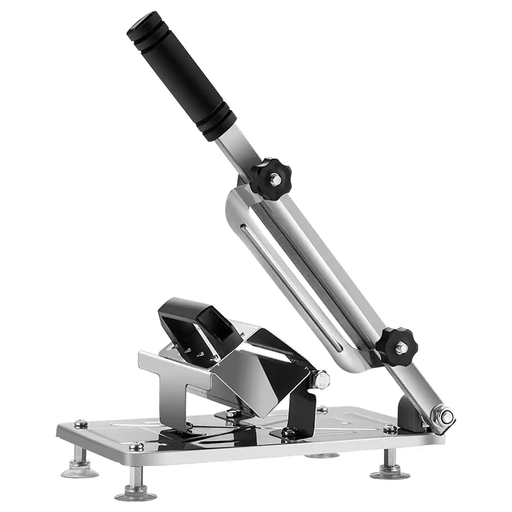
Why This Fits Their Persona: A straightforward option for home cooks who prioritise a long blade and manual control for roasts, ham, poultry and firm vegetables.
Its listing identifies the extended blade and food-grade stainless steel construction, helping shoppers avoid vague blade descriptions. It is a manual meat slicer rather than an electric appliance, so there is no motor or powered control to maintain.
Extended-length blade; stainless steel construction; suitable for manual slicing of several food types.
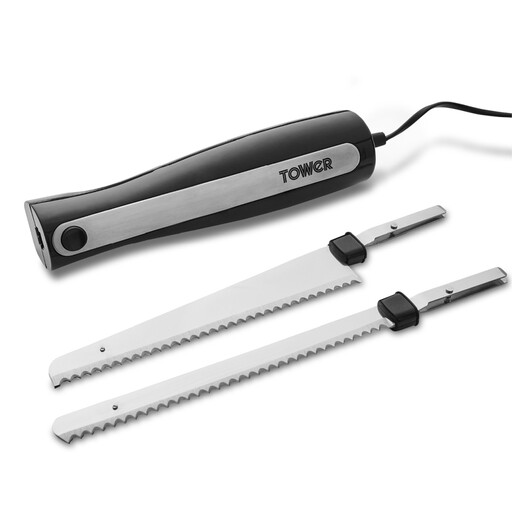
Why This Fits Their Persona: A practical fit for UK households wanting an electric carving knife for roast dinners, bread, fruit, vegetables and occasional frozen-food preparation.
It specifies a 120W motor, dual 22cm stainless steel blades, one-touch operation and a blade release button rather than relying only on broad performance language.
Carving and coarse blades; 22.5cm carving fork; dishwasher-safe blades and fork; included storage case.
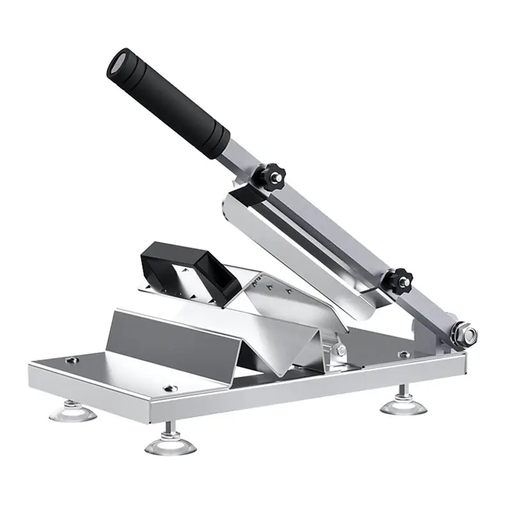
Why This Fits Their Persona: A focused choice for cooks preparing rolled lamb or beef and looking for a dedicated manual slicing tool rather than a multi-purpose electric bread knife.
The product title clearly identifies it as a domestic SS304 meat slicer and names its intended food applications, making the use case more specific than a generic kitchen gadget listing.
304 stainless steel specification; dedicated design for lamb and beef rolls; manual operation for direct control.
We have compiled a complete, real-time list of products that fully satisfy these strict selection criteria and UK safety regulations.
Place the cooked meat, loaf or vegetable on a stable chopping board. If supplied, use the electric carving knife with fork to hold the food away from the moving blades. Insert the selected blade only while the appliance is unplugged, ensuring it clicks securely into position.
Plug in the knife, hold the operating button and guide it steadily. Avoid forcing the blade through the food, cutting bones or using a frozen-food setting where the instructions do not permit it. When finished, unplug the appliance before removing the blade.
For cleaning, separate the removable blades according to the manual. Wash them by hand or place them in the dishwasher only if the product specification allows this. Wipe the handle and keep the complete appliance dry.
Many models can work as an electric bread knife, but suitability depends on the blade design and manufacturer’s instructions. A carving blade may handle softer loaves, while a serrated or coarse attachment can be more appropriate for crusty bread. Use a stable board and guide the knife without pressing heavily.
Some models include a coarse blade designed for frozen foods. The Tower T19028, for example, lists a carving blade and a coarse blade, with frozen foods among its stated applications. This does not mean it should be used on ice, bones or extremely hard items. Check the manual and allow food to soften where instructed.
A 120W appliance uses approximately 0.12 kilowatt-hours per hour of continuous operation. In normal household use, slicing usually takes only a short time, so the electricity cost is generally determined by local tariffs and frequency of use. The motor’s wattage is useful for comparison, but it should be considered alongside control, blade options, cleaning and storage.