
24/7 Customer Support

Free returns

Same-day & Next-day Delivery

Quality Guaranteed

Unlock Your Welcome Offers: FREE Delivery | Up to 80% OFF | Free 30-day JoyPlus trial
Download the APP
Carving a magnificent roast dinner, only to end up with uneven, torn slices, can be a frustrating experience. Whether it's the centrepiece turkey at Christmas or a simple Sunday roast, presentation matters. An electric carving knife promises effortless, uniform slices every time. However, the market is filled with models that often fail to deliver, leaving you with a gadget that gathers dust in a drawer.
As a Joybuy Product Recommendation Officer, my role is to help you see past the marketing jargon. Many buyers find themselves disappointed by common design flaws that aren't obvious on the box. Before you make a purchase, be aware of these frequent pitfalls:
To avoid these issues, focus on a few core features that determine a knife's performance and longevity. Understanding these will help you select a tool that is a genuine asset in your kitchen.
The power of an electric knife's motor, measured in watts (W), is the single most important factor for performance. A low-wattage motor will struggle and overheat when tackling tougher tasks.
Not all blades are created equal. The quality of the steel and the type of serration are crucial for different foods.
A powerful knife is useless if it's uncomfortable or unsafe to handle. Pay attention to the physical design. The handle should feel balanced and provide a secure grip. The power button should be easy to operate without requiring an awkward hand position.
For a tool that might only be used for special occasions, like a dedicated turkey carving knife, storage is also a key consideration. An electric knife with a case is highly practical. It keeps the handle and sharp blades safely organised in one place, protecting them from damage and preventing accidents when stored in a kitchen drawer.
Based on these practical criteria, here are a couple of recommendations matched to different types of home cooks in the UK.
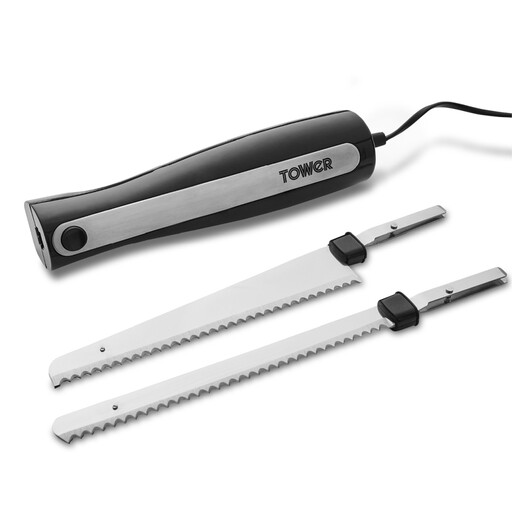
Why This Fits Their Persona: This user needs a robust tool for big occasions like Christmas dinner or large family gatherings. The powerful motor and dual blades can handle a large turkey or a dense joint of beef, while the included storage case keeps everything tidy and safe between uses.
Its 120W motor directly counters the "underpowered" pitfall, providing ample strength to slice cleanly without tearing. The included storage case solves the problem of safely storing sharp, loose components.
Includes two sets of 22cm stainless steel blades (standard and coarse) for maximum versatility. The ergonomic handle and one-touch operation offer straightforward control.
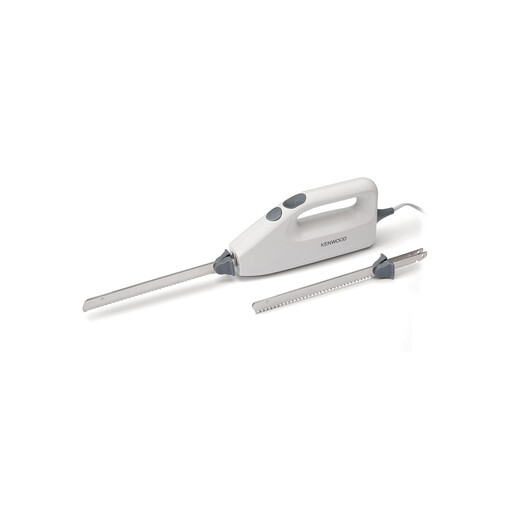
Why This Fits Their Persona: This user wants a no-fuss tool for more frequent tasks like slicing a homemade loaf, a cooked ham or a weeknight roast chicken. Its compact, lightweight design and simple operation make it an easy-to-grab kitchen staple rather than a special-occasion-only item.
The quick-release, dishwasher-safe blades directly solve the "hygiene headache," making cleanup effortless. Its simple, safe on/off button and lightweight body address the "awkward handling" flaw.
Comes with two sets of stainless steel blades (standard and freezer) for versatility. The compact design and included blade protector make it easy and safe to store in a drawer.
We have compiled a complete, real-time list of products that fully satisfy these strict selection criteria and UK safety regulations.
1. Can you sharpen the blades of an electric carving knife? Generally, it is not recommended to sharpen the serrated blades of an electric knife at home. The complex shape of the serrations requires specialised equipment to sharpen correctly. Attempting to do so can damage the blades and impair their cutting ability. Most models rely on the quality of the factory edge, which should last for many years with proper care.
2. Is an electric knife really necessary for carving a turkey? While a skilled person with a high-quality manual carving knife can certainly do a good job, an electric knife offers distinct advantages. It requires significantly less physical effort and skill to achieve consistently thin, even slices. This is particularly helpful for those with limited hand or wrist strength and can make the often-stressful task of carving the holiday centrepiece much faster and neater.
3. How should I clean my electric knife safely? Safety is paramount. First and foremost, always ensure the knife's handle is unplugged from the power source. Press the blade release button and carefully remove the two blades, holding them by their plastic guards, not the sharp edges. Most modern electric knife blades are dishwasher-safe, but you can also wash them by hand in warm, soapy water. The motorised handle should never be submerged in water; simply wipe it clean with a damp cloth.