Small-batch dressing makers
You mainly squeeze lemons and limes for vinaigrettes, marinades or sauces. A container that helps you measure small amounts and parts that are straightforward to wash matter more than making a large batch.


A compact electric citrus juicer with a measured bowl is a sensible choice if you mainly squeeze lemons and limes for dressings. If you also make orange or grapefruit juice for guests, consider a larger jug and cones suited to different fruit sizes; check the exact model’s cleaning instructions before buying.
You mainly squeeze lemons and limes for vinaigrettes, marinades or sauces. A container that helps you measure small amounts and parts that are straightforward to wash matter more than making a large batch.
You may prepare a dressing and serve orange or grapefruit juice in the same visit. Fruit-size flexibility, a visible container and a way to control pulp are worth considering.
You want electric assistance rather than sustained manual squeezing. Check how the press starts, how its parts are cleaned and whether its operating instructions suit your household.
For dressings made when friends visit, decide how much juice you need at once before weighing up fruit sizes, pulp texture and clean-up.
| Concern | What to check | Who this matters to |
|---|---|---|
| Portioning juice | Look for visible measurement markings and a container size that suits the quantities you prepare. | If I am adding lemon or lime juice to a dressing, I want to judge the amount before mixing it with other ingredients. Around 40% of consumers put measured dressing preparation first. |
| Pulp and fruit sizes | Check whether pulp can be adjusted and whether the cone suits both the small and large citrus fruit you use. | When I switch between dressings and drinks for visitors, I want the texture and fruit size to suit each use. For around 30% of consumers, that flexibility is the primary concern. |
| Cleaning and handling | Read the exact model’s washing instructions and check how its parts are removed. | After preparing food for guests, I want a cleaning routine I can follow without leaving juice or pulp behind. Straightforward clean-up and handling come first for around 30% of consumers. |
A motor rating does not establish how much juice a model extracts, how quickly it works or how easy it is to clean.
Start with the fruit you use, the amount you need and the model’s pulp and cleaning features instead.
Cleaning instructions differ by model: an Amazon UK listing describes dishwasher-safe parts for the Braun CJ3000, while Salter’s EK5025 manual says that model is not dishwasher safe.
Check the instructions for the exact juicer before putting any part in the dishwasher.
Smoother dressing juice and juice served to guests may call for different pulp levels. A cone suited to a lime may not be the most convenient choice for a grapefruit.
If you make both dressings and drinks, check the stated pulp controls and which fruit sizes the supplied cone or cones accommodate.
The Food Standards Agency explains that bacteria can spread between food, surfaces and equipment. Keep preparation equipment clean when making ready-to-eat food for visitors.
Clean the juicer and worktop between tasks. Switch the appliance off and unplug it before cleaning, following its model-specific instructions for the electrical base.
The CJ3000 is a compact bowl-style option for small amounts of citrus juice.
The EK5878 is a jug-style option for consumers who want to vary pulp and use different citrus sizes.
The CJF11CRUK uses a manual-pressure electric press format.
The JE6SR is an electric citrus press with interchangeable cones.
These electric citrus juicers are options for preparing citrus juice at home. If dressings are your main use, check how you would measure a small portion before choosing a larger container.
 No image available
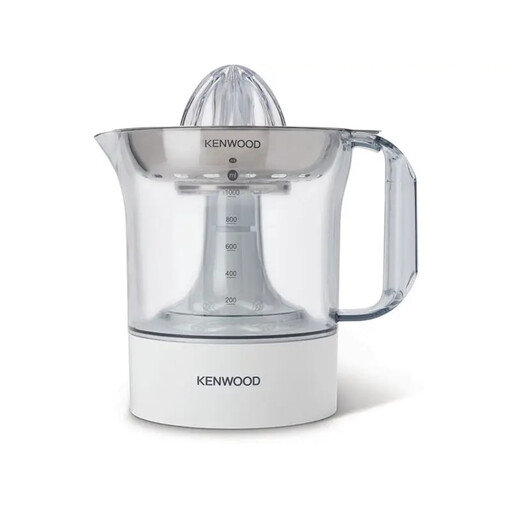
Consider this electric citrus juicer for dressing preparation if its container suits the amounts you make. Check measurement markings, pulp control and the cleaning instructions for the JE290A before choosing it for your routine.
 No image available
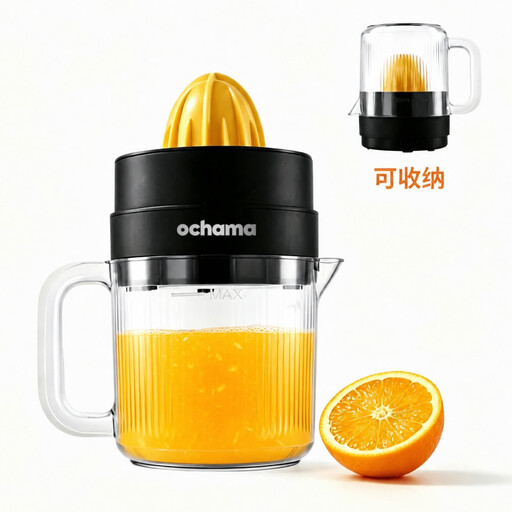
This semi-automatic press is an option if you also prepare juice beyond a small dressing portion; its stated capacity is 1.4L and its electrical rating is 30W. Check for measurement markings, adjustable pulp control and the model’s washing instructions if those matter to you.
Start with how much juice your recipes call for, not the largest available container. An Amazon UK listing specifies a 350 ml measured bowl for the Braun CJ3000, while Salter specifies a 500 ml measured jug for the EK5878; a larger container is more relevant if you also prepare drinks or several dressings in one session.
You can if the exact model has a pulp-control setting. Salter specifies five settings for the EK5878, and an Amazon UK listing describes adjustable pulp control for the Braun CJ3000; check the particular model rather than assuming the feature is standard.
Only put parts in the dishwasher when the exact model’s instructions allow it. The Braun CJ3000 is listed with dishwasher-safe parts, but Salter’s manual says its EK5025 is not dishwasher safe.
Switch it off and unplug it before cleaning. Salter’s EK5025 manual also instructs users not to immerse that model’s electrical base in water; follow the cleaning steps for your own model.