Small-counter grapefruit drinkers
You make grapefruit juice at home but need an appliance that fits the available worktop and cupboard space.


Choose an electric citrus juicer whose exact model information confirms grapefruit suitability, then compare its appliance dimensions with both your worktop and storage space. A press-on reamer still needs downward pressure; a lever-assisted press changes the pressing workflow but needs clearance for its arm and serving vessel.
You make grapefruit juice at home but need an appliance that fits the available worktop and cupboard space.
You expect to juice grapefruit regularly and want to consider a lever-assisted press rather than repeatedly pressing fruit onto a reamer.
You care about pulp preference and washable working parts, not just whether the juicer fits in a small kitchen.
Decide whether limited space or a lever-assisted pressing workflow matters more, then check grapefruit suitability and the parts you will need to wash on the exact model.
Choose when: Worktop and storage space are your main constraints, provided the exact model is suitable for grapefruit.
Trade-off: You still have to press each fruit half onto the cone.
Choose when: A lever-operated workflow matters more to you than keeping the appliance low-profile.
Trade-off: Allow space to lift the arm and position a glass or jug.
| Concern | What to check | Who this matters to |
|---|---|---|
| Footprint and storage | Compare appliance width, depth and height with both locations; allow room to lift a lever arm. | I need to put the juicer away after use without crowding the worktop; around 36% of consumers put space and storage first. |
| Grapefruit suitability | Check the full model code and explicit grapefruit wording, rather than relying on a picture or the word “citrus”. | If grapefruit is the fruit I usually squeeze, I need confirmation that the exact model accommodates it. Grapefruit suitability comes first for around 29% of consumers. |
| Pressing and serving | Check for a press-on cone or lever and, if serving into a glass, the space beneath the spout. | For frequent use, I would rather use a lever than press every half directly onto a cone; around 21% of consumers prioritise the pressing and serving workflow. |
| Pulp and clean-up | Check whether pulp is adjustable and which removable parts the maker says are dishwasher-safe. | I want the texture I prefer without making washing up awkward in a small kitchen. For around 14% of consumers, pulp and clean-up are the primary concern. |
A description that mentions only smaller citrus fruits does not establish grapefruit suitability for that model.
Check the exact model code and look for explicit grapefruit wording or a maker’s stated all-size citrus cone.
A narrow base does not tell you whether a juicer fits beneath a wall cabinet or where you plan to store it.
Measure usable width, depth and height, then allow clearance for a lever arm and your glass or jug.
A listing can describe a model even when that particular offer is unavailable.
Check current availability, the seller and the complete model code before ordering.
Plug, voltage and product-market information can differ between versions of an electrical appliance.
Confirm the supplied plug, rated voltage and applicable marking information for the exact model and sale destination.
Smeg UK describes the CJF11 as a press-on-reamer citrus juicer and explicitly includes grapefruit among the fruits it accommodates.
Sage Appliances explicitly names grapefruit for its Citrus Press and Citrus Press Pro lever-assisted models.
Braun Household’s CitrusQuick range includes a bowl-style CJ3000WH and a lever-assisted CJ7050BK, which answer different serving and pressing preferences.
This press-on citrus-juicer option is for shoppers considering grapefruit juice in a small kitchen; compare the exact model information with your space and electrical requirements.
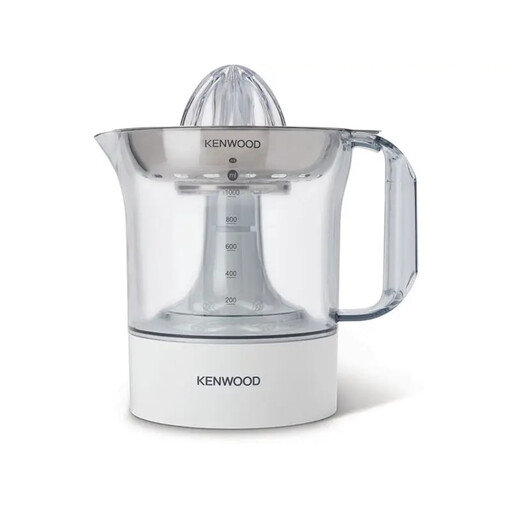 Image unavailable
Consider this model if you want a press-on citrus juicer for grapefruit and can accommodate its dimensions in your kitchen. Pressing fruit onto the reamer still requires downward force; confirm the supplied plug, voltage and applicable marking information for the exact version before ordering.
Yes, if the exact model is suitable for grapefruit; the category name alone is not enough. Smeg UK explicitly names grapefruit for the CJF11, and Sage Appliances does so for the Citrus Press and Citrus Press Pro. For Braun’s CJ7050BK, which Braun describes as accommodating small and large citrus, check grapefruit wording on the exact seller listing.
Measure usable width, depth and height where you will use and store the juicer, then compare them with appliance dimensions rather than packaging dimensions. If you choose a lever press, leave room to raise its arm and place and remove your glass or jug.
Follow the instructions for the exact model rather than assuming the whole appliance is dishwasher-safe. Sage Appliances lists the Citrus Press cone, collector, filter basket and fruit dome as dishwasher-safe; unplug the appliance before removing parts for cleaning.
For products placed on the market in Great Britain, GOV.UK guidance says CE marking continues to be recognised alongside or instead of UKCA marking where the applicable product-regulation requirements are met. Check the exact model’s plug, voltage and product information for your sale destination; Northern Ireland follows different processes.