Family batch juice makers
You want several breakfast servings without repeatedly emptying a small bowl. A stated working capacity helps you judge a jug model; if you prefer direct serving, consider how many glasses you will fill in succession.


Start with a juicer whose cone is specified for grapefruit or large citrus fruit, then choose how you want to serve several glasses. A measured jug lets you collect juice before pouring, while a direct-serve spout fills glasses one at a time; a lever may help if repeated pressing is your main concern. Check the exact model’s cleaning instructions and fruit fit rather than assuming those features come with a particular design.
You want several breakfast servings without repeatedly emptying a small bowl. A stated working capacity helps you judge a jug model; if you prefer direct serving, consider how many glasses you will fill in succession.
You regularly juice large citrus halves and need to check the exact model’s cone fit, rather than relying on a general citrus label.
You want pulp control and a washing routine that fits a busy morning. Check which components detach and follow the cleaning instructions for the model you choose.
Check grapefruit fit first, then decide whether collecting juice or filling individual glasses suits your breakfast routine. Consider pulp preferences, washing and pressing effort separately.
| Concern | What to check | Who this matters to |
|---|---|---|
| Capacity and serving | Compare stated working capacity with the amount you usually serve; for direct serving, check glass clearance. | If I want to bring several glasses to the table together, I need a collection and pouring routine that works for breakfast. Around 27% of consumers put capacity and serving flow first. |
| Grapefruit fit | Look for explicit grapefruit suitability or a cone specified for large citrus on the exact model. | When grapefruit is the fruit I juice most often, the cone must accommodate its larger halves. Grapefruit fit is the primary concern for around 33% of consumers. |
| Pulp and cleaning | Check pulp settings, removable parts and the exact model’s washing instructions. | If people at my table prefer different textures, I want pulp control without a washing routine I will avoid. Around 20% of consumers prioritise texture and cleaning. |
| Pressing effort and drips | Check for a lever or pressure-activated operation and a documented anti-drip spout. | When I am juicing several halves, repeated pressing and drips can make preparation less convenient. Easier pressing and mess control come first for around 20% of consumers. |
A general citrus label does not establish how the exact cone accommodates large fruit.
Check for explicit grapefruit suitability or a cone specified for large citrus before ordering.
A motor rating alone does not establish juice yield, noise or how quickly you can prepare several servings.
Check cone fit, collection capacity and serving method alongside the motor specification.
Cleaning rules vary by model. A Salter citrus-juicer manual says its referenced appliance is not dishwasher suitable and its base must not be immersed.
Read the instructions for the exact model, including which parts must be washed by hand.
Salter’s citrus-juicer instructions call for switching off and unplugging before cleaning or maintenance.
Disconnect the appliance before cleaning it, and follow its own manual for handling the base and removable parts.
Braun’s CitrusQuick range includes direct-serve models; the separate CJ3000 uses a collection bowl.
Lakeland offers a measured-jug electric citrus juicer for collecting juice before serving.
Salter’s EK5878 combines a collection jug with stated grapefruit suitability and pulp adjustment.
Duronic’s JE6SR is an electric citrus press with interchangeable cones and a spout.
This electric citrus juicer is a model to consider for family breakfast preparation. Check its grapefruit fit and collection capacity against the number of glasses you intend to serve.
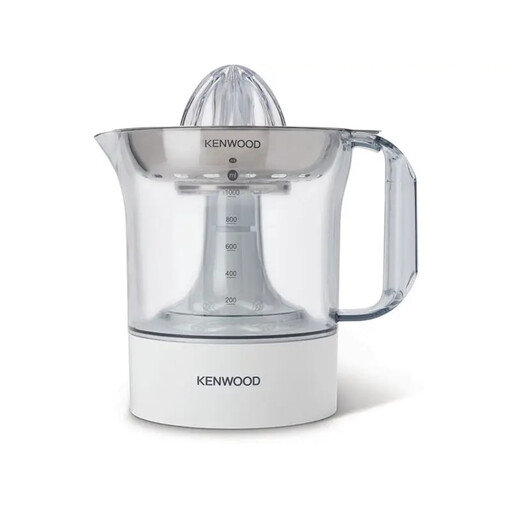 Image unavailable
For a family grapefruit breakfast, consider this electric citrus juicer if its cone fit and collection method suit the way you prepare several drinks.
Confirm the exact model’s grapefruit suitability, working capacity, pulp options and supplied plug type before ordering.
Choose a stated working capacity that fits the amount your household usually drinks at breakfast, or plan to empty the jug and continue. Lakeland specifies 600 ml for its electric citrus juicer and Salter specifies a 500 ml jug for the EK5878; neither figure promises a particular number of grapefruit servings.
Choose an exact model specified for grapefruit or large citrus fruit rather than assuming a general citrus cone will fit. Salter identifies its larger cone for oranges and grapefruits; Braun describes the CitrusQuick 5 cone as suitable for big and small citrus fruit.
Follow the cleaning instructions for your exact model and each removable part. A Salter manual for one citrus-juicer model says that appliance is not dishwasher suitable and that its base must not be immersed; those instructions should not be extended to every Salter model.
Stop using the appliance. Salter’s citrus-juicer instructions say to cease use if the cord, plug or appliance is damaged or malfunctioning and to have repairs carried out by a qualified electrician.