Choose an electric citrus juicer with a small cone documented for limes, or a universal cone whose maker expressly covers small citrus. A 1 L collection jug gives you more room to prepare several drinks before pouring, while a 500 ml jug may need emptying sooner. If pressing effort or clearing up matters more, compare the lever mechanism, pulp handling and care instructions for the exact model.
Who is this for?
Hosts making a batch of drinks
If you prepare several cocktails, mocktails or table drinks before serving, a measured, pourable collection jug may matter more than the smallest appliance footprint. Kenwood and Quest both describe 1 L citrus-juicer containers.
Hosts who mainly squeeze limes and lemons
When small citrus is your usual fruit, look for a cone documented for it rather than assuming an orange-focused design will suit. Salter specifies a small cone for lemons and limes on the EK5878.
Hosts focused on pressing and clean-up
If you are making drinks while guests are present, a press lever, drip control and the cleaning instructions for removable parts may shape your choice. Braun describes a lever and anti-drip spout on its CitrusQuick 7.
What matters when choosing?
Check lime compatibility on the exact model, then choose a collection size and cleaning routine that suit the drinks you usually make.
| Concern |
What to check |
Who this matters to |
| Batch capacity |
Check the stated jug capacity and whether it has measuring marks and a pouring lip. |
For a round of drinks, I want to collect enough lime juice before I start pouring. Around 40% of consumers would put batch capacity first. |
| Lime fit and pulp |
Look for a small cone stated for limes or a universal cone documented for small citrus; check how the model handles pulp. |
If I mainly squeeze limes for guests who prefer different textures, I need a suitable cone and a way to manage pulp. Roughly 30% of consumers would make lime fit and drink texture their primary concern. |
| Effort and clean-up |
Compare the pressing mechanism, drip control and care instructions for the exact removable parts. |
When drinks preparation runs into clearing up, I want less hand pressure and fewer drips. Around 30% of consumers would put effort and clean-up first. |
Buying pitfalls
-
Assuming every citrus cone suits small limes
Fruit-size fit matters when you are pressing one lime half after another. Salter documents a dedicated small cone on the EK5878, while Braun describes a universal press cone for the CitrusQuick 7.
Check the exact model’s product information or manual for a small lime cone or an expressly suitable universal cone.
-
Using motor wattage to judge batch size
Wattage and collection capacity answer different questions. A 500 ml jug may need emptying during a larger drinks round, regardless of the motor rating.
Choose the jug size for the amount you plan to collect before pouring, then assess fruit fit and pulp handling separately.
-
Assuming the whole juicer can go in the dishwasher
Cleaning instructions differ by model. Smeg and Braun describe dishwasher-safe removable parts on specified models; Salter’s manual for a different, deluxe model says that juicer is not dishwasher-safe.
Read the instructions for the model you are buying to identify which parts can be washed in a dishwasher, and keep the powered base out of water.
Brands to consider for this task
Braun
Braun offers both a cone-and-jug model and the lever-operated CitrusQuick 7, so the model matters as much as the brand name.
- Braun lists five pulp settings and two-way rotation for the CJ3000; its CitrusQuick 7 has a lever, universal press cone and anti-drip spout.
- Those features belong to different models. Check which mechanism and cleaning instructions apply to the one you choose.
Smeg
The CJF11 suits consumers who want a countertop appliance and need the maker to document its use with limes.
- Smeg specifies a universal stainless-steel reamer, pressure-activated start, a non-drip spout and dishwasher-safe removable parts for the CJF11.
- Its stated 70 W motor does not, by itself, establish how much juice it will extract from limes.
Kenwood
The JE290A is worth considering if a measured collection container is central to preparing several drinks.
- Kenwood specifies a 1 L measuring container with a pouring lip, a 40 W motor, two-way rotation and a stainless-steel filter.
- Confirm the exact model’s suitability for small limes before choosing it primarily for lime drinks.
Salter
The EK5878 addresses small-fruit fit with a separate cone documented for lemons and limes.
- Salter specifies two cone sizes, five pulp-control levels and a 500 ml jug for the EK5878.
- The jug may need emptying during a larger drinks round. Check the EK5878’s own care instructions rather than applying instructions from another Salter model.
Joybuy products for lime drinks
This cone-and-jug model is a choice to consider when collecting a measured batch for several drinks. Confirm its suitability for small limes on the exact listing before ordering.
 No image available
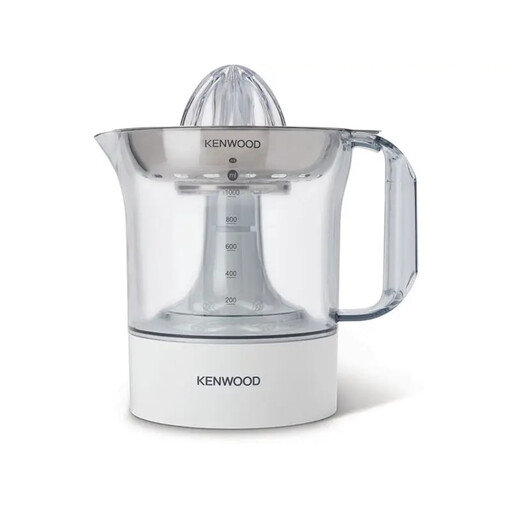
Kenwood JE290A Citrus Juicer, White
Consider the JE290A if you want to collect and pour juice for several drinks: Kenwood specifies a 1 L measuring container with a pouring lip. The model has a stated 40 W motor, two-way rotation and a stainless-steel filter. Check its suitability for small limes and follow the exact model’s cleaning instructions.
View on Joybuy
Common questions
Do I need a separate cone for limes?
Not necessarily: a universal cone can also be an option if the maker documents its suitability for small citrus. Salter specifies a small lime-and-lemon cone for the EK5878, while Smeg and Braun describe universal reamers or cones on the CJF11 and CitrusQuick 7 respectively. Check the exact model rather than assuming every citrus cone fits limes.
Is a 500 ml jug enough when friends visit?
A 500 ml jug can suit a smaller batch, but you may need to empty it when making more drinks. Salter specifies 500 ml for the EK5878; Kenwood specifies a 1 L measuring container for the JE290A. Choose by how much juice you want to collect before pouring, not by capacity as a measure of extraction performance.
Can I put an electric citrus juicer in the dishwasher?
Only put parts in the dishwasher when the instructions for your exact model allow it. Smeg and Braun describe dishwasher-safe removable parts on specified models, while Salter’s manual for its deluxe juicer says that model is not dishwasher-safe. The powered base should be cleaned as its manual directs, not immersed in water.
What should I do with an electric juicer at the end of its life?
Check a suitable household electrical-equipment collection route rather than putting the juicer in ordinary rubbish. GOV.UK explains that the UK waste electrical and electronic equipment framework aims to encourage recovery, reuse and recycling; check your local council or retailer for the route available to you.


