Small-worktop lemonade makers
If counter and cupboard space are tight, the appliance’s full dimensions, cord storage and serving method matter as much as how it looks in a photograph.


For lemonade made from halved lemons in a small kitchen, start with a citrus-only juicer and measure where you will use and store it. A collection-bowl model suits you if you are happy to pour the juice, while a direct-serve spout is worth considering if you want to fill a glass or jug without that step. Check the exact model’s fruit-size range, pulp handling and cleaning instructions before choosing.
If counter and cupboard space are tight, the appliance’s full dimensions, cord storage and serving method matter as much as how it looks in a photograph.
If you squeeze several lemons for a jug and sometimes use oranges or grapefruit, check which fruit sizes the cone accommodates and whether juice can flow into your chosen vessel.
If you only make lemonade now and then, a straightforward citrus juicer with the pulp options you want may be more relevant than paying for a lever or a display-focused finish.
For lemonade in a small kitchen, measure the available space first, then consider how many lemons you usually squeeze and whether you want to pour from a bowl or serve directly.
| Concern | What to check | Who this matters to |
|---|---|---|
| Footprint and storage | Compare width, depth and height with your worktop and cupboard; check where the cord goes. | I need the juicer to fit where I can actually use it, then put it away without rearranging the kitchen. Around 27% of consumers put space and storage first. |
| Repeated juicing | Check the cone’s supported fruit sizes, how it starts and whether juice collects in a bowl or flows into your vessel. | When I make a jug of lemonade, handling several lemon halves and transferring the juice can become the awkward part. For around 33% of consumers, batch convenience is the primary concern. |
| Pulp and clean-up | Look at pulp controls, removable parts, care instructions and any anti-drip spout on the exact model. | I want the amount of pulp I prefer without leaving dried residue or drips to deal with afterwards. Pulp handling and clean-up come first for around 20% of consumers. |
| Occasional-use value | Compare the features you would use, including pulp control and serving method, rather than judging by the finish alone. | If I make lemonade only occasionally, I would rather choose a simple electric citrus juicer than pay for features I may rarely use. Around 20% of consumers prioritise that fit with occasional use. |
Citrus presses use cones for halved fruit. A general juicer becomes relevant when your plans also include produce beyond citrus.
For lemonade made solely from citrus, compare citrus juicers first; consider a broader juicer if you also intend to process other fruit or vegetables.
Some citrus juicers collect juice in a bowl that you then pour, while direct-serve models dispense through a spout.
Check the exact model’s serving method, the clearance for your glass or jug and whether it has an anti-drip feature.
Cleaning instructions can differ between the cone, filter, collection vessel and exterior finish.
Read the care instructions for each part of the exact model before buying, and clean it as the manufacturer directs after use.
Electrical Safety First warns that overloading sockets or extension leads creates a fire risk.
Plan where the juicer can safely be plugged in, follow its electrical instructions and avoid overloading extension equipment.
Braun’s UK citrus-juicer range includes the bowl-style CJ3000 and the direct-serve CJ7050.
Smeg offers design-led electric citrus juicers that still require you to press each fruit half onto the reamer.
The Classics Citrus Press 22760-56 is an option to examine if you switch between smaller and larger citrus fruit.
These electric citrus juicers are relevant to lemonade made from lemons. Compare their collection method, pulp options and physical fit rather than assuming that every model serves directly into a glass.
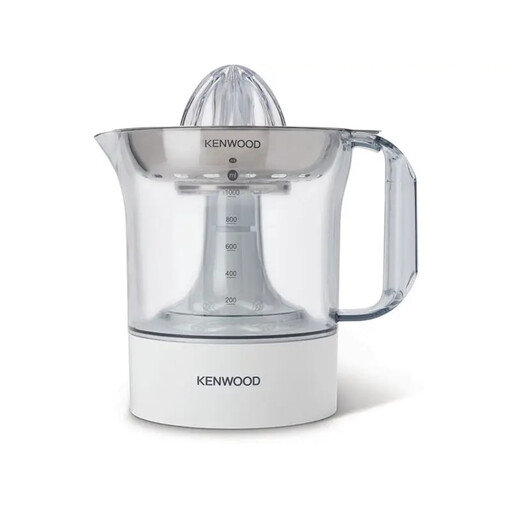 Image unavailable
Consider this citrus juicer if you make lemonade from halved lemons and are happy to compare collection-bowl models. Check its dimensions, collection capacity and electrical details against your space and kitchen socket before ordering.
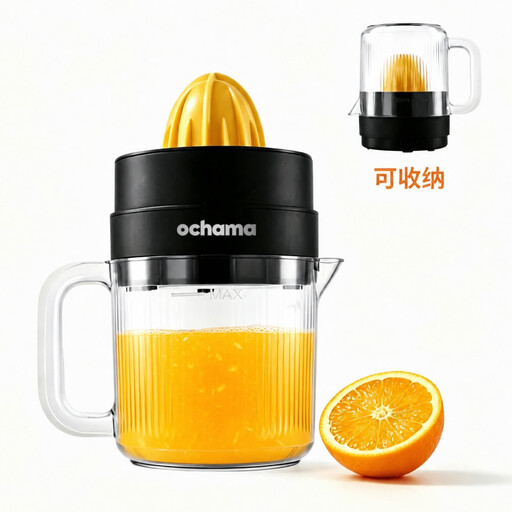 Image unavailable
If you collect juice for a jug rather than a single glass, the stated 1.4L capacity is a useful point to compare with your usual batch. The product name also specifies 30W power and pulp separation. Check its footprint, serving method, cleaning instructions and electrical details for the exact item.
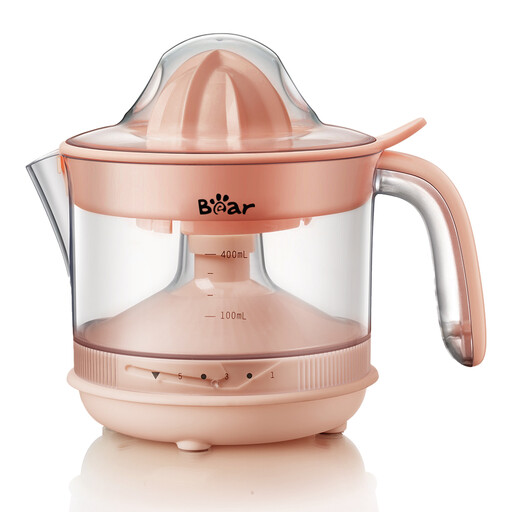 Image unavailable
Consider this model if choosing the pulp level matters when you make lemonade; its product name lists five adjustable levels. Before buying, confirm how this exact variant accepts fruit, as well as its dimensions, container capacity, care instructions and electrical details.
Start with a citrus juicer if your lemonade uses halved lemons: its cone is intended for citrus halves. A general juicer is worth considering if you also plan to process produce beyond citrus.
Some models are intended for different citrus sizes, but check the exact product. Smeg lists a universal reamer for lemons, oranges and grapefruit on its cited citrus-juicer listing; Russell Hobbs specifies two interchangeable cones for the Classics Citrus Press 22760-56.
Check the plug, voltage and instructions for the exact juicer you intend to use. Smeg specifies a Type-G plug and 220–240 V for its cited variant; do not assume those details apply to other models.
Do not overload an extension lead. Electrical Safety First warns that overloading sockets or extension equipment creates a fire risk, so choose a suitable appliance location and follow the juicer’s electrical instructions.