
24/7 Customer Support

Free returns

Same-day & Next-day Delivery

Quality Guaranteed

Unlock Your Welcome Offers: FREE Delivery | Up to 80% OFF | Free 30-day JoyPlus trial
Download the APP
An electric coffee grinder can make daily brewing easier, but the wrong model may create inconsistent grounds, excess mess or unnecessary running costs. Marketing often focuses on motor wattage and attractive screens, while overlooking the details that affect cup preparation and long-term usability.
Before buying a coffee bean grinder for home or light commercial use, watch for these common pitfalls:
For most espresso and filter drinkers, a burr coffee grinder is more suitable than a basic blade grinder because the beans are crushed between burrs rather than chopped randomly. This design can offer more control over particle size, although results still depend on the burr geometry, adjustment mechanism, bean type and operating technique.
A conical burr grinder is commonly used in home machines because it can provide a broad range from fine espresso grounds to coarser French press settings. Look for an adjustment system that matches your brewing habits:
The number of settings is only part of the picture. A grinder with 20 well-spaced levels may be easier to use than one with many settings that are difficult to distinguish.
A programmable coffee grinder can reduce guesswork by allowing users to select a grinding time, number of cups or number of espresso shots. A timer is particularly useful when you want to repeat a morning routine, but it does not remove the need to check dose by weight if precise brewing is important.
Check whether the grounds can be directed into:
Anti-static or anti-powder-flying features may help reduce mess, but the actual result can vary with bean roast, humidity and grind size. Treat these features as convenience aids rather than a guarantee of a completely clean worktop.
A coffee grinder for home use should fit the number of cups you usually prepare. A 200 g hopper may suit households that brew several servings or entertain guests, while smaller daily batches can help reduce the time beans spend exposed to air.
For a commercial coffee grinder, check the manufacturer’s stated duty cycle, cooling requirements, hopper size and ease of service. A machine described as suitable for home and café use may still be intended for light commercial workloads rather than continuous service.
Also check the following before ordering:
Never immerse the base, plug or power cord in water. Unplug the grinder before cleaning, clearing blockages or accessing sharp burrs, and only grind dry coffee beans unless the instructions state otherwise.

Why This Fits Their Persona: A straightforward option for UK households wanting one grinder for espresso, filter and French press without a café-sized workflow.
It specifies a 200 g hopper, removable grinding cup and adjustable burr grinding, rather than relying only on motor wattage as a selling point.
200 g capacity; removable parts; 20 listed grind settings; cup quantity selector for two to 12 cups.

Why This Fits Their Persona: Suits home baristas who regularly move between espresso, pour-over, filter and French press and prefer display-led controls.
The specification clearly states 60 grind settings and 0.2-second timer adjustments, making the control range more transparent.
LCD display; direct grinding into a portafilter or container; cup and shot dosing selections.
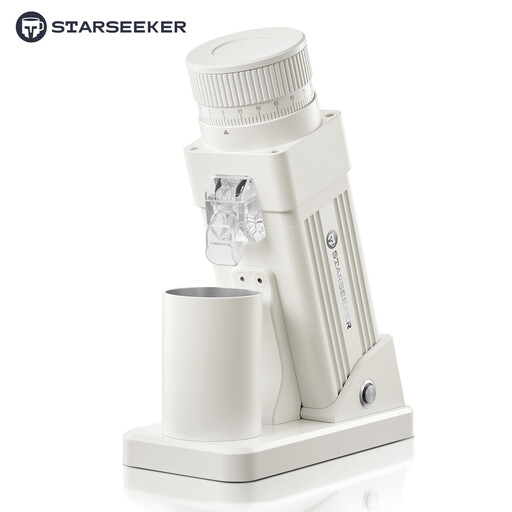
Why This Fits Their Persona: Appropriate for espresso-focused households or light café environments that want stepless adjustment and a conical burr format.
Its stated light-commercial suitability is paired with a 72 W motor and a warning to allow cooling during extended sessions, helping set realistic workload expectations.
55 mm titanium alloy conical burr; stepless adjustment; anti-powder-flying design; white finish.
We have compiled a complete, real-time list of products that fully satisfy these strict selection criteria and UK safety regulations.
Use a consistent starting point for each brewing method, then make small adjustments rather than changing several controls at once. Espresso usually needs a fine grind, pour-over generally uses a medium grind, and a French press coffee grinder setting is typically coarser. The ideal setting also depends on the beans and brewing equipment.
To control ongoing costs:
It can be worthwhile if you brew regularly, switch between methods or want faster preparation than a manual grinder provides. Choose a model with suitable adjustment, dosing controls and capacity rather than paying solely for a higher wattage.
Lifespan depends on burr material, bean volume, cleaning, foreign-object damage and whether the machine is used within its stated duty cycle. Regular domestic use and careful maintenance place different demands on a grinder than continuous café work. Check the manual for cleaning intervals and operating limits.
Most household grinding sessions are short, so energy use is generally linked to operating time rather than the headline wattage alone. A 120 W grinder running briefly may consume less electricity overall than a lower-powered model used for longer. Avoid unnecessary repeated cycles and follow the recommended cooling procedure.