
24/7 Customer Support

Free returns

Same-day & Next-day Delivery

Quality Guaranteed

Unlock Your Welcome Offers: FREE Delivery | Up to 80% OFF | Free 30-day JoyPlus trial
Download the APP
Freshly ground coffee can improve convenience and control at home, but choosing an electric coffee grinder is not simply a matter of selecting the highest wattage or largest hopper. Marketing descriptions often emphasise speed, gear counts or burr size while leaving out details that affect daily use.
Three common buying traps deserve attention:
For most home coffee enthusiasts, a burr design is a practical starting point. A conical burr grinder is commonly selected for home use because the conical arrangement can offer a compact form and a broad adjustment range. However, the product description should also explain the burr material and support structure.
The STARESSO D6E PLUS, for example, specifies a stainless steel burr, triple coaxial alignment system and dual bearing support. These are tangible construction details that may help reduce burr wobble during operation. It is listed for espresso, moka pot, pour-over and French press use.
Burr size also needs context. Larger burrs may be relevant to users grinding regularly or preparing several servings, but size alone does not establish the final cup quality. Look for information about adjustment, cleaning and intended workload as well.
An adjustable coffee grinder should match the way you brew:
The HiBREW G3 offers a 34-gear scale, while the STARESSO D6E PLUS uses a point-adjust grind control. A step-based system can make it easier to return to a previous setting, whereas a stepless design may provide finer adjustment between marked positions. The right option depends on whether you prioritise repeatability or incremental control.
Capacity should reflect your routine rather than a promotional number. A smaller chamber may suit one or two cups and reduce the amount of beans sitting in the grinder. A larger coffee bean grinder can be more convenient for families, office use or batch preparation.
The HiBREW G3 has a 210g bean container and 100g powder tank, making it suitable for users who prepare multiple servings. It operates from a 220–240V, 50Hz supply. The STARESSO D6E PLUS has a 1000mAh rechargeable battery and Type-C charging, with an approximate charging time of 2.5 hours. That makes a rechargeable coffee grinder practical for desks, travel or camping where mains power may not be available.
Cleaning instructions are equally important. Removable parts and a dry brush can simplify maintenance, but do not rinse burrs unless the manufacturer specifically permits it. Coffee grounds can remain in the burr chamber, so check whether the design includes a removable container, air blower or accessible brush-cleaning area.

Why This Fits Their Persona: A compact option for UK flats, home offices and occasional travel, with one-touch operation rather than manual cranking.
The stainless steel burr and stated adjustable grind control provide more information than a basic blade grinder listing.
Rechargeable 1000mAh battery; Type-C charging; suitable for espresso, moka pot, pour-over and French press.
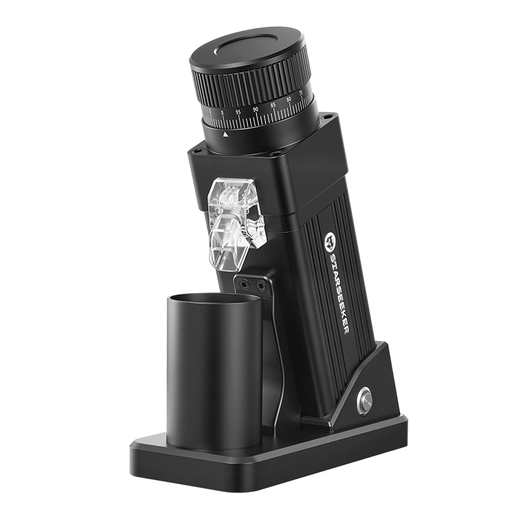
Why This Fits Their Persona: Designed for home baristas and café-style setups that prioritise a metal body, larger burr specification and espresso-focused adjustment.
Its listing identifies a 55mm titanium alloy conical burr and stepless adjustment, rather than relying only on a high gear-count claim.
55mm titanium alloy conical burr; 72W AC motor; anti-powder-flying technology is specified.
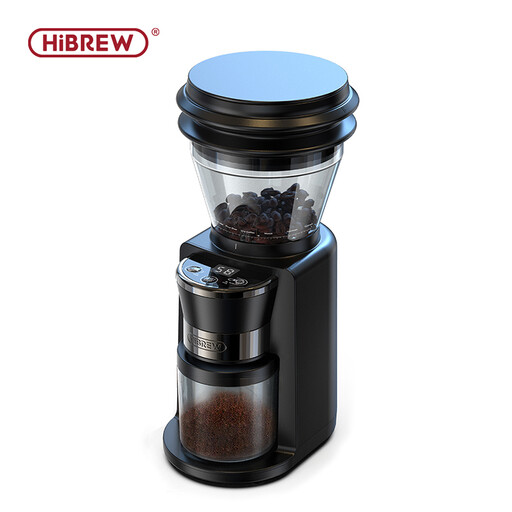
Why This Fits Their Persona: A larger home coffee grinder for households, shared kitchens or users preparing several cups across the day.
The listing states a maximum of ten grinding cycles before cooling, helping buyers account for workload rather than assuming continuous operation.
34 grind settings; 210g bean container; 100g powder tank; anti-static function and integrated air blower.
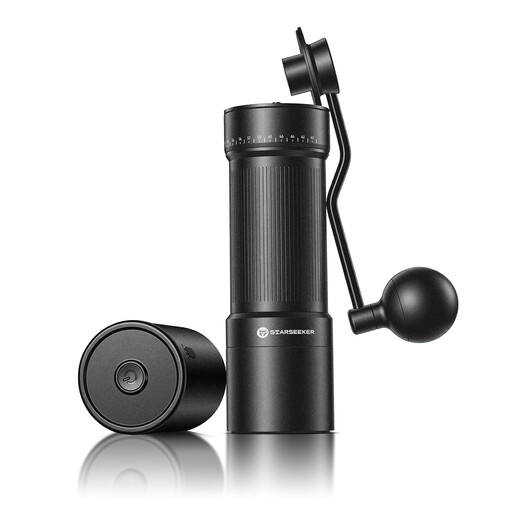
Why This Fits Their Persona: Suitable for users who want electric convenience at home with a manual alternative for selected travel or power-limited situations.
The two operating modes provide a practical fallback, provided the motor is switched off before changing between attachments.
Hand-cranked and electric operation; designed specifically for coffee beans; cleaning guidance recommends a brush and air blower.
We have compiled a complete, real-time list of products that fully satisfy these strict selection criteria and UK safety regulations.
It can be, provided it offers a sufficiently fine range and practical adjustment. Stepless adjustment may help users make smaller changes, while a stepped grinder can make settings easier to repeat. Always check the product’s stated brewing applications.
Lifespan depends on burr wear, motor workload, cleaning and frequency of use. Avoid foreign objects, do not grind unsuitable ingredients and respect the recommended operating cycle. A grinder used for occasional home brewing will typically experience a different workload from one used for several daily batches.
A domestic grinder normally runs for a short period per dose, so total electricity use depends more on frequency and motor rating than on the headline wattage alone. A rechargeable coffee grinder can reduce the need for a permanent mains connection, while a 220–240V home model may suit regular kitchen use.