
24/7 Customer Support

Free returns

Same-day & Next-day Delivery

Quality Guaranteed

Unlock Your Welcome Offers: FREE Delivery | Up to 80% OFF | Free 30-day JoyPlus trial
Download the APP
Freshly ground coffee can improve the control you have over flavour, but choosing an electric coffee grinder involves more than comparing grind-setting numbers. A model that suits espresso may be inconvenient for pour-over, while a large hopper can be unnecessary if you usually brew one or two cups at a time.
Before buying, look beyond attractive screens, impressive burr measurements and broad claims about “professional” performance. The practical details below can help UK buyers avoid common mistakes and choose a coffee bean grinder that matches their brewing habits.
A grinder may advertise 34, 48 or 60 settings, but the spacing between those settings still matters. Stepped adjustment is easy to use, although the ideal point for a particular coffee may fall between two settings. A stepless adjustment system offers more gradual control, which can be useful when dialling in espresso.
However, a high setting count is not a guarantee of uniform grounds. Burr design, alignment, motor behaviour and the condition of the beans also influence the result.
A large bean hopper can be useful in a busy office or café, but storing beans in the hopper for long periods may not suit people who switch between coffees. For many home users, a smaller dose-by-dose workflow makes it easier to keep beans sealed between brews.
Also check where the ground coffee goes. Direct dosing into a portafilter is convenient for espresso, while a removable container may be more practical for a French press or pour-over coffee grinder setup.
Fine espresso grounds can collect around the burrs and outlet. Static may cause powder to cling to the container or scatter across the worktop. A grinder that is difficult to open and clean can become frustrating to use.
Electrical and mechanical safety also deserve attention. Look for clear voltage information suitable for the UK, read the supplied instructions and check the manufacturer’s stated conformity markings. Do not immerse the body, cord or plug in water, and always unplug the appliance before cleaning or clearing a blockage.
A burr coffee grinder crushes beans between two surfaces rather than chopping them with a blade. This generally gives users more control over particle size. Conical burrs are common in home coffee grinders and can cover espresso, moka pot, filter and pour-over applications when correctly adjusted.
Burr size is only one part of the specification. For example, the Starseeker E55 Pro models list 55mm titanium alloy conical burrs, while the HiBREW G7 uses a 420 stainless steel conical burr with a stated 30mm inner and 48mm outer diameter. These measurements are objective, but they do not alone determine whether a grinder suits your coffee or workflow.
An adjustable coffee grinder should offer enough range for your preferred methods. Espresso typically needs a fine setting, whereas pour-over, cafetière and cold brew require progressively coarser grounds.
Timed dosing can improve repeatability, but the stated increments differ between products. The HiBREW G7 specifies timing accuracy of 0.1 seconds, while the Sage Smart Grinder Pro allows adjustment in 0.2-second increments. Actual dose weight can still vary with roast level, bean density and grind size, so weighing beans or grounds remains useful when consistency matters.
Check the bean hopper and grounds container capacity against your routine. The HiBREW G3 lists a 210g bean container and 100g powder tank, which may suit several drinks or shared use. A compact portable coffee grinder is easier to store and carry but may have a smaller motor and require more breaks between doses.
For UK kitchens, offices and small cafés, consider the available worktop space, ventilation and noise. Confirm that the power supply is appropriate for local use; the HiBREW G7 specifies 220V and the G3 specifies 220–240V, 50Hz. Always follow the product manual rather than relying on a general assumption about compatibility.
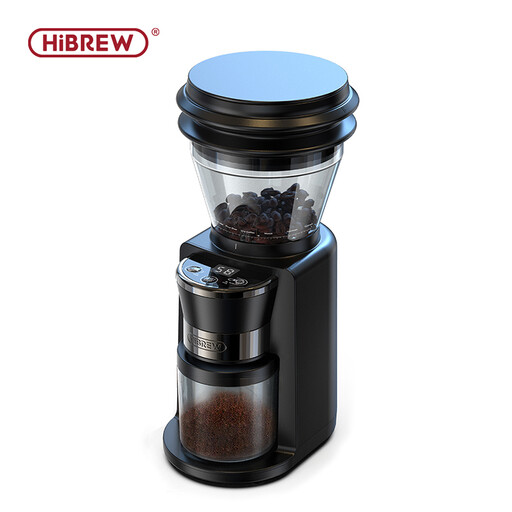
Why This Fits Their Persona: A practical home coffee grinder for users moving from pre-ground coffee to adjustable grinding without needing a large café-style setup.
Its 34 grind levels and quantitative single- and double-cup functions provide clearer control than an on/off blade grinder.
48mm conical burr; 210g bean container; built-in anti-static function and 100g powder tank.

Why This Fits Their Persona: Suitable for home users who want a clearly displayed, programmable workflow across espresso, filter coffee and French press.
Its LCD shows grind setting, grind time and selected shots or cups, making key settings easier to repeat.
60 grind settings; 0.2-second dosing adjustment; direct dosing into a portafilter or airtight container.
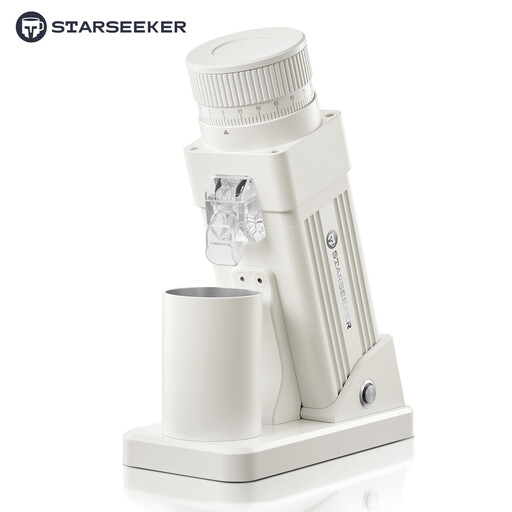
Why This Fits Their Persona: A choice for espresso-focused households, small offices or light commercial environments that value gradual adjustment.
Stepless adjustment avoids relying only on widely spaced preset clicks when making espresso changes.
55mm titanium alloy conical burr; 72W AC motor; anti-powder-flying design; intended for home and café use.
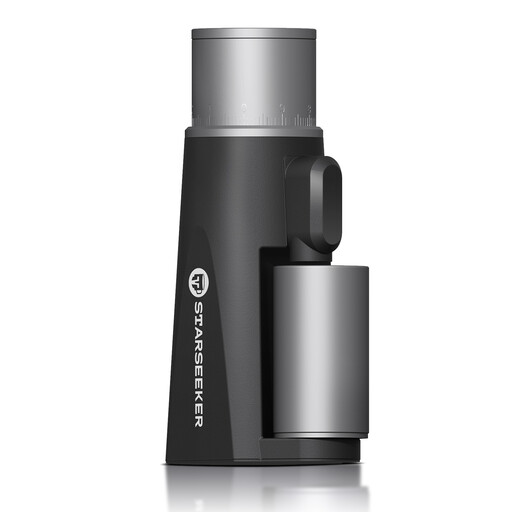
Why This Fits Their Persona: Designed for camping, commuting, office use and trips where a mains socket may not be available.
Its wireless design avoids dependence on a power socket, while the product information clearly notes that static and clumping may occur.
38mm conical burr; 100-step stepless adjustment; built-in 2600mAh battery; USB-C charging.
We have compiled a complete, real-time list of products that fully satisfy these strict selection criteria and UK safety regulations.
Yes, provided it has a sufficiently fine-to-coarse adjustment range. An espresso coffee grinder needs controlled fine settings, while pour-over requires a coarser range. A conical burr model with adjustable dosing can support both, although you may need to record settings for each coffee.
Lifespan depends on burr material, cleaning, bean type and workload. Follow the stated duty cycle, allow the motor to cool during repeated grinding and avoid oily, wet or contaminated beans unless the manual specifically permits them. Replaceable burrs and accessible cleaning areas can make long-term maintenance more manageable.
Running cost is usually linked to motor wattage and operating time rather than the grinder’s headline power alone. To estimate consumption, multiply the wattage by hours of use and your electricity tariff. Short daily grinding sessions generally use less energy than prolonged operation, but always follow the manufacturer’s instructions for safe running periods.