
24/7 Customer Support

Free returns

Same-day & Next-day Delivery

Quality Guaranteed

Unlock Your Welcome Offers: FREE Delivery | Up to 80% OFF | Free 30-day JoyPlus trial
Download the APP
Freshly ground beans can improve the aroma and flavour of coffee, but choosing an electric coffee grinder is not simply a matter of picking the model with the most impressive number on the box. UK shoppers often discover that a grinder designed for espresso is inconvenient for filter coffee, while a compact rechargeable model may struggle with large household batches.
This guide from the Joybuy Product Recommendation Officer focuses on the practical details that matter before you buy.
A high setting count can provide useful control, but it does not automatically indicate consistent grinding. Some products advertise dozens of levels without explaining whether the adjustment is stepped or stepless, or how suitable the burr system is for espresso.
For everyday use, check:
A small coffee bean grinder may be convenient for one person but frustrating when preparing several cups. Conversely, a large hopper can occupy considerable worktop space and may not suit someone who changes beans frequently.
Look beyond the hopper size. Check the capacity of the grounds container, whether parts are removable, and whether coffee can be ground directly into a portafilter or filter basket.
Coffee oils and fine particles can collect around the burrs and outlet. A grinder that is difficult to clean may develop stale residues, clumping or blockages. Rechargeable models also require attention to charging, moisture and battery care.
Always check the instructions for:
A burr coffee grinder crushes beans between two surfaces, allowing more controlled adjustment than a blade design. A conical burr grinder is commonly used in home machines because it can cover a broad range from fine espresso to coarse cafetière grounds.
Burr material also matters. Stainless steel is specified on several models in this selection, while the Starseeker E55 Pro lists 55 mm titanium alloy conical burrs. These descriptions are objective construction details, not a guarantee of a particular flavour result.
For espresso, look for fine adjustment and a stable burr assembly. For a coffee grinder for French press or pour-over, coarse settings and straightforward clean-up may be more important than extremely fine increments.
An adjustable coffee grinder should make it easy to repeat a preferred setting. Stepped controls provide clear positions, while stepless adjustment allows finer changes but can take longer to calibrate.
Dosing features are also worth comparing. Timed grinding, cup selectors and shot selectors can reduce guesswork, although the correct amount still depends on the beans, brew method and personal recipe. A digital display showing grind setting and grind time can be useful for repeatability.
For a home coffee grinder, capacity should match your routine. A 200 g hopper is practical for multiple servings, while a 50 g portable grinder is more suitable for individual brewing. Motor power should not be viewed alone: operating limits and cooling instructions are equally important.
A rechargeable coffee grinder or portable coffee grinder is useful for offices, camping and travel, but battery models may grind more slowly than mains-powered machines. Check charging time, stated battery capacity and whether the device is intended for repeated espresso doses.
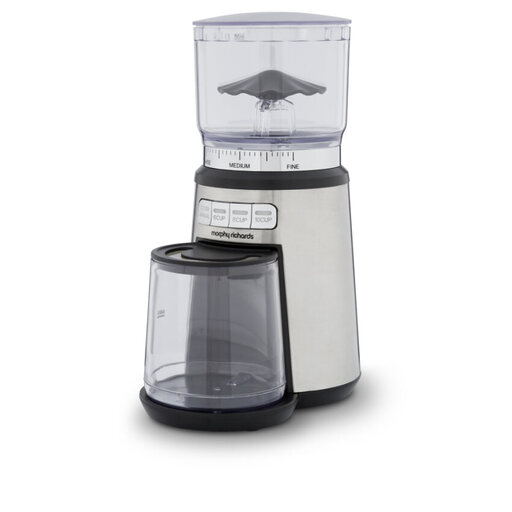
Why This Fits Their Persona: Its 200 g bean capacity and cup selector suit households making several drinks, while the removable grinding cup supports easier transfer and cleaning.
It provides a burr mechanism, adjustable fine-to-coarse control and a clearly stated hopper capacity rather than relying only on broad marketing claims.
200 g hopper; 20 listed grind settings; 120 W motor; removable grounds cup.
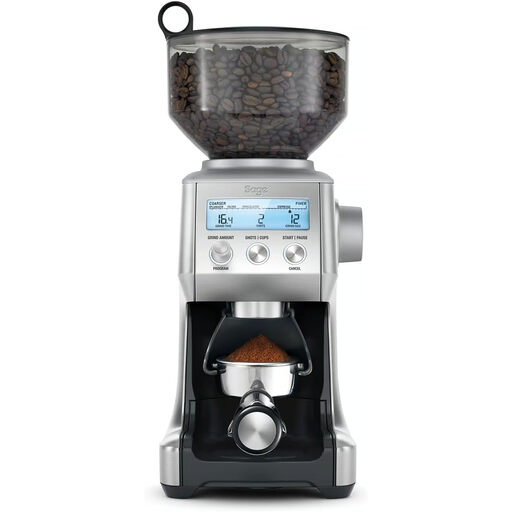
Why This Fits Their Persona: This mains-powered model is suited to home baristas who regularly move between espresso, filter and French press brewing.
Its specification lists 60 grind settings, an LCD display and 0.2-second grind-time adjustments, making the controls easier to understand and repeat.
60 settings; cups and shots dosing options; direct grinding into a portafilter or container.
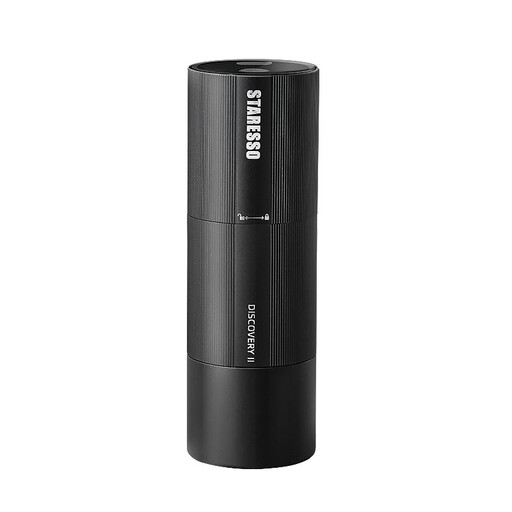
Why This Fits Their Persona: Its compact metal body, one-touch operation and Type-C rechargeable battery are practical for offices, travel, camping and kitchens where a small footprint is useful.
It states the battery capacity, charging method and cleaning approach clearly, so buyers can assess cordless convenience against charging requirements.
1000 mAh battery; Type-C charging; stainless steel burr; suitable for espresso, pour-over and French press.
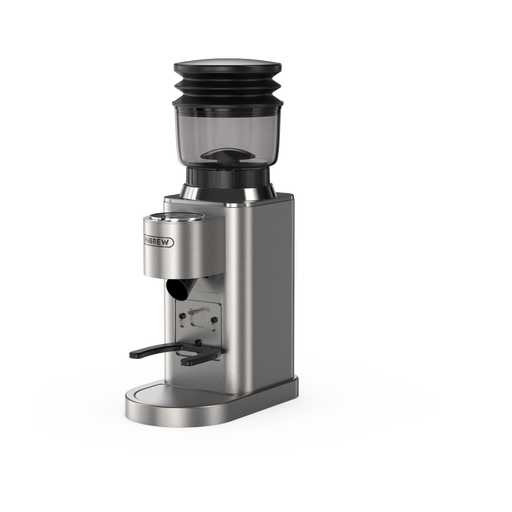
Why This Fits Their Persona: Its digital touchscreen and portafilter modes are useful for households that switch between espresso equipment and other brewing styles.
It specifies 48 grind levels, timed grinding with 0.1-second accuracy and compatibility with 51 mm, 54 mm and 58 mm portafilters.
150 W rated power; 48 settings; touchscreen control; 220 V specification.
We have compiled a complete, real-time list of products that fully satisfy these strict selection criteria and UK safety regulations.
It can be, provided its adjustment range covers both fine and coarse grounds. An espresso coffee grinder needs controlled fine adjustment, while a coffee grinder for French press needs a reliable coarse setting. Always follow the manufacturer’s adjustment guidance and recalibrate when changing beans.
Brush away loose grounds regularly and clean the hopper and grounds container according to the manual. Do not immerse an electrical base in water. Rechargeable models may require particular care around the USB-C port, and some burrs should only be cleaned with a dry brush.
Mains-powered grinders are generally used for short periods, so the cost per grinding session is usually modest. Actual consumption depends on motor power and grinding time. A rechargeable model shifts the energy use to charging, but battery life, charging time and the number of daily doses should be considered before purchase.