
24/7 Customer Support

Free returns

Same-day & Next-day Delivery

Quality Guaranteed

Unlock Your Welcome Offers: FREE Delivery | Up to 80% OFF | Free 30-day JoyPlus trial
Download the APP
A reliable electric coffee grinder can make daily brewing more convenient, but choosing one based only on wattage, burr size or attractive marketing claims can lead to disappointment. UK buyers should consider how they brew, how often they grind and whether the grinder can be cleaned and operated safely in a typical kitchen.
Several common purchasing traps are worth checking before you order.
Motor wattage does not tell the whole story. A higher-rated motor may support faster operation, but grind consistency also depends on the burr design, adjustment mechanism, heat management and how evenly beans enter the burrs.
A grinder that is used for occasional filter coffee has different requirements from one preparing several espresso doses each morning. Check the full specification rather than choosing by wattage alone.
A coffee bean grinder advertised with many numbered settings may still make large changes between one setting and the next. For espresso, small adjustments can be useful when you are tuning the dose and extraction. A stepless coffee grinder allows more continuous adjustment, although it can take longer to learn because there are no fixed clicks to guide you.
Numbered settings can be practical for households switching between cafetière, pour-over and espresso. The important question is whether the adjustment range matches your brewing methods.
Fine coffee grounds can cling to the chute, container and surrounding worktop. This is particularly inconvenient when switching from an espresso grinder setting to a coarser grind. Anti-static features may help reduce powder dispersal, but they do not remove the need for regular brushing and emptying.
Avoid models that are difficult to open or whose instructions do not explain how to clear residual grounds. Electrical bases, plugs and motors should never be immersed in water.
Burrs crush beans rather than chopping them with a blade. A conical burr coffee grinder generally uses a cone-shaped inner burr and an outer burr to create the grind. Burr diameter is one useful specification, but it should be considered alongside the adjustment system and intended workload.
For home brewing, 48mm to 55mm burrs may provide a practical balance between size and countertop footprint. Larger 63mm burrs may suit users who want a larger grinding mechanism, but they can also increase the appliance’s physical size and price.
Look for clearly stated materials, such as stainless steel or titanium alloy. These descriptions identify construction, not a guarantee of a particular flavour result or service life.
Choose the adjustment type according to your brewing routine:
A 34-gear grinder offers defined steps, while a stepless model can provide more gradual adjustment. Neither format is automatically suitable for every user.
A larger hopper can reduce refilling, but beans should not be left exposed for longer than necessary if freshness is a priority. Check both the bean container and ground coffee receptacle capacity.
A home coffee grinder normally needs short operating periods, whereas a café or light-commercial user may require repeated doses. Follow the manufacturer’s duty-cycle guidance and allow the motor to cool when required.
For UK use, confirm that the product’s electrical specification, plug arrangement and instructions are suitable for your household supply. Keep the grinder on a stable, dry surface, unplug it before cleaning and keep fingers and utensils away from sharp burrs.
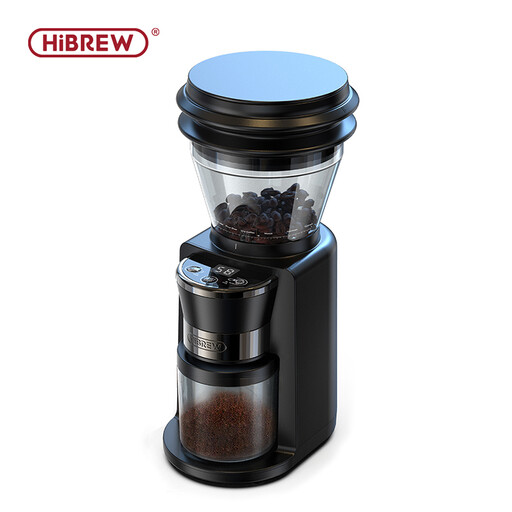
Why This Fits Their Persona: Its 34-gear scale and manual/automatic modes give new home brewers room to try espresso, filter and cafetière recipes without immediately moving to a more specialised appliance.
The specification states the adjustment count, container capacities and anti-static function instead of relying only on general consistency claims.
48mm conical burr, 210g bean container, 100g powder tank and built-in powder-clearing features.
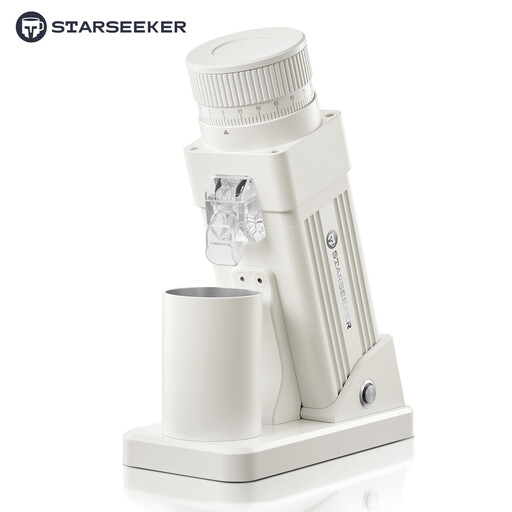
Why This Fits Their Persona: Espresso-focused home users and small coffee stations may value its continuously adjustable format and 55mm burr specification.
The product information identifies the 55mm titanium alloy conical burr, stepless adjustment and anti-powder-flying technology, making the main purchase criteria easier to verify.
55mm titanium alloy conical burr, 72W AC motor, stepless adjustment and a design listed for home and café use.
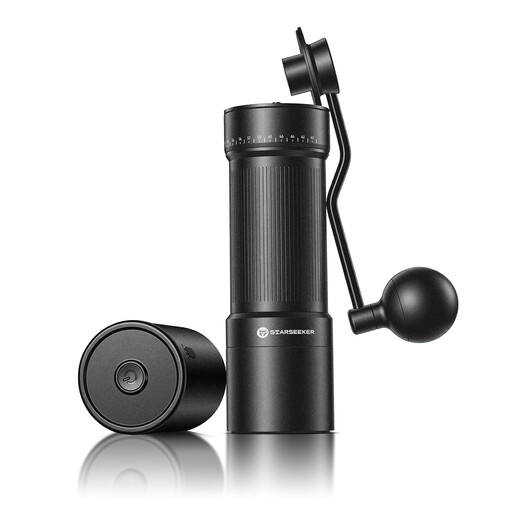
Why This Fits Their Persona: Useful for households that want electric convenience but also value a hand-cranked option for flexible brewing or use away from a socket.
The dual-mode design avoids locking the buyer into electric operation, while the instructions clarify that the motor must be disengaged before attaching the crank.
Combines manual and electric coffee grinder operation and includes guidance for cleaning with a brush and air blower rather than water.
Electricity use is usually a small part of grinder ownership because the appliance operates for a short time per dose. To estimate running cost, multiply the grinder’s kilowatt rating by its operating time in hours and your electricity tariff. Cleaning, burr replacement availability and the cost of wasted beans can have a greater practical effect.
Use only coffee beans, inspect them for stones or other hard objects and avoid forcing unusually hard beans through the finest setting. If the motor becomes unusually hot, produces smoke or makes abnormal noises, unplug it and follow the manual’s instructions.
For models with a stated operating limit, respect it. For example, the HiBREW G3 guidance says not to operate continuously for more than 10 grinding cycles and recommends cooling after an “E-2” error. These instructions matter more than a headline motor figure when planning repeated use.
We have compiled a complete, real-time list of products that fully satisfy these strict selection criteria and UK safety regulations.
Some are, provided the adjustment range covers fine espresso settings and coarser filter settings. A stepless model can offer gradual control, while a geared grinder may be easier to repeat once you have found a preferred setting.
Service life depends on cleaning, workload, burr material, foreign-object damage and whether the motor is operated within its recommended duty cycle. Keeping the burr chamber clear and allowing cooling between extended sessions can help reduce unnecessary strain.
Anti-static features can reduce the amount of ground coffee that clings to the chute or scatters around the worktop. They are useful for tidy preparation, but they do not replace brushing, emptying the receptacle and following the manufacturer’s cleaning instructions.