
24/7 Customer Support

Free returns

Same-day & Next-day Delivery

Quality Guaranteed

Unlock Your Welcome Offers: FREE Delivery | Up to 80% OFF | Free 30-day JoyPlus trial
Download the APP
Freshly ground coffee can improve the aroma and flavour of a morning brew, but choosing an electric coffee grinder is not simply a matter of picking the model with the most settings. UK shoppers often pay for features they rarely use, overlook cleaning requirements or choose a grinder that cannot handle their preferred brewing method.
Whether you make espresso before work, prepare pour-over coffee at weekends, supply an office kitchen or grind beans while camping, three common buying traps deserve attention.
A grinder advertised with dozens of settings may still offer large jumps between fine and coarse positions. This can make espresso dialling-in frustrating, particularly when a small change affects the extraction time.
A stepless or finely graduated adjustment system can provide more control than a high number of poorly spaced presets. However, the ideal range depends on your brewing method. French press users need a reliable coarse setting, while espresso drinkers need repeatable fine adjustment.
A burr coffee grinder generally offers more control over particle size than a basic blade grinder, but burr size, motor performance and adjustment design still matter. A coffee bean grinder intended for filter coffee may not provide the consistency or fine control needed for espresso.
Check whether the product description specifically mentions espresso, portafilter compatibility or a fine-grind range. For mixed households, a coffee grinder for espresso and pour-over should offer enough adjustment without making coarse brewing unnecessarily difficult.
A powerful motor is useful for regular grinding, but continuous operation can generate heat. Some products include cooling or overheating protection; others specify limits on consecutive batches. A portable electric coffee grinder may also have a smaller motor and battery, making it more suitable for individual servings than large household batches.
Static can scatter grounds around the worktop, especially in dry indoor conditions. Anti-static features, an enclosed grounds container and an easy-to-clean chute can make more practical difference than decorative finishes.
A conical burr grinder uses opposing cone-shaped surfaces to crush beans. It is widely used in home and portable designs because it can provide a broad grind range in a relatively compact body. Larger burrs may process beans more efficiently, but burr size alone does not guarantee a better cup.
For example, the Starseeker E55 Pro lists 55 mm titanium alloy conical burrs and a 72W AC motor. It is described for home and café use, with stepless adjustment and anti-powder-flying technology. Buyers should still follow the stated duty-cycle guidance and allow the motor to cool during extended sessions.
An adjustable coffee grinder should make it straightforward to move between espresso, moka pot, pour-over, filter and French press settings. Timers, dose selectors and digital controls can help repeat a recipe, but they should be checked against the way you actually brew.
The HiBREW G7 provides 48 grinding levels, a touchscreen interface and timed grinding with 0.1-second adjustment. It also supports 51 mm, 54 mm and 58 mm portafilter modes. These details may appeal to espresso users who change baskets or share the grinder with other brewing methods.
A larger hopper is practical when serving several people, but it can take up more worktop space and encourage beans to remain exposed for longer. A compact grinder may be preferable for one or two daily servings.
For a home coffee grinder, consider hopper capacity, footprint, noise and whether grounds can be dispensed directly into a portafilter or container. For camping and travel, check battery capacity, charging method, weight and the manufacturer’s operating limits. Portable models should not be judged by benchtop commercial coffee grinder expectations.
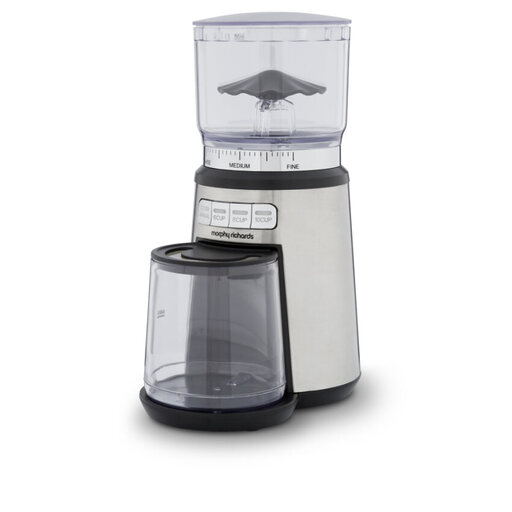
Why This Fits Their Persona: A practical choice for UK households wanting one grinder for espresso, filter and French press without a complicated interface.
Its stated 20-setting range and removable parts make the specification easier to understand and maintenance more manageable.
200g hopper, 120W motor and removable grinding cup. The instructions specify a 60-second maximum continuous cycle.
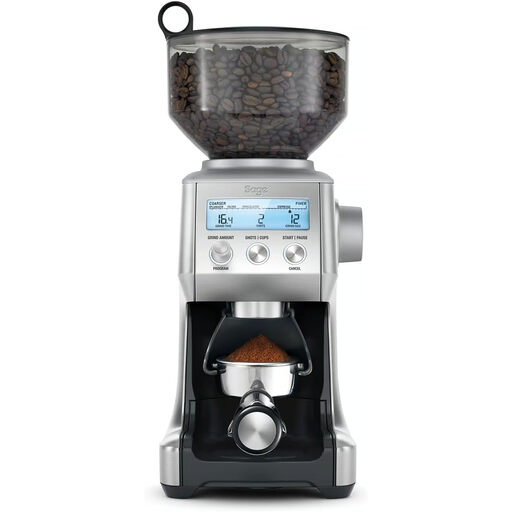
Why This Fits Their Persona: Suits home baristas who want programmable dosing and a clear display for repeatable daily recipes.
The LCD shows grind setting, time and selected shots or cups, so buyers can see what has been programmed.
60 grind settings, 0.2-second dosing adjustments and direct grinding into a portafilter or airtight container.
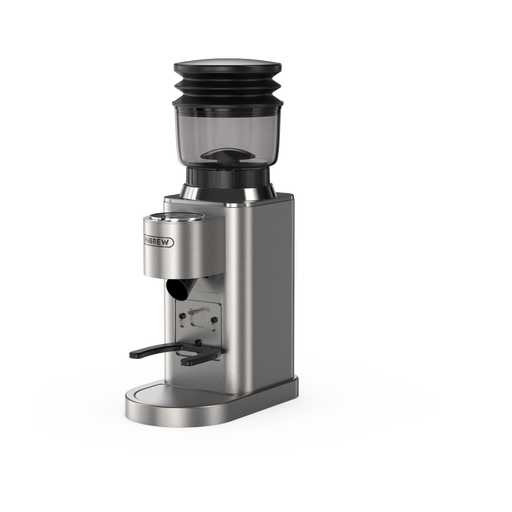
Why This Fits Their Persona: Useful for espresso users who switch between portafilter sizes and also prepare filter coffee or pour-over.
Its 48 levels and three portafilter modes provide specific information rather than relying on a vague “all-purpose” label.
48mm stainless steel conical burr, touchscreen control and 0.1-second timed grinding adjustment.
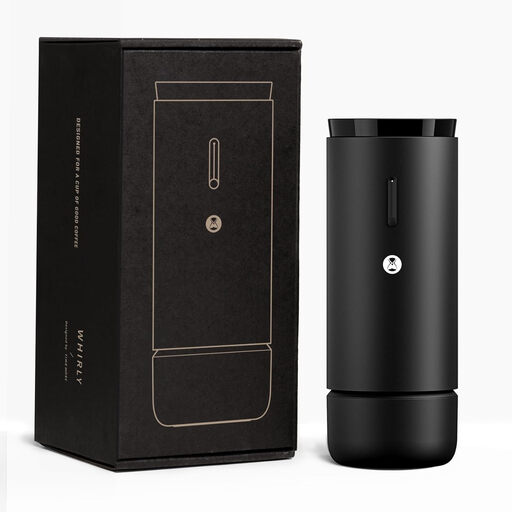
Why This Fits Their Persona: Designed for users who want freshly ground coffee in an office, campervan, campsite or travel bag without a power socket.
The rechargeable design is clearly specified, while the product guidance states limits for continuous batches to help manage overheating.
30 settings, 50g maximum bean capacity, USB-C charging, auto-stop and clog protection.
We have compiled a complete, real-time list of products that fully satisfy these strict selection criteria and UK safety regulations.
Before ordering an electric coffee grinder, confirm:
Never put the motor base, plug or power cord in water. Unplug the appliance before cleaning, clearing a blockage or handling sharp burrs. Use only dry, whole coffee beans unless the product instructions state otherwise.
The running cost mainly depends on electricity consumption, grinding time and how often you brew. Most household grinding sessions are short, so electricity is usually a smaller consideration than the grinder’s purchase price, replacement parts and coffee usage. A timer or dose control can also help reduce wasted beans.
Lifespan varies with construction, bean volume, cleaning and operating habits. Avoid foreign objects, oily or wet ingredients where prohibited, and continuous operation beyond the stated limit. Regularly brush away residual grounds and keep the appliance dry. Burrs may eventually require servicing or replacement, depending on the model.
Look for a wide adjustment range with clearly identified fine and coarse settings. Espresso users may prefer stepless control or many closely spaced levels, while pour-over users need dependable medium settings. If both methods are part of your routine, prioritise adjustment control and repeatable dosing over hopper size alone.