
24/7 Customer Support

Free returns

Same-day & Next-day Delivery

Quality Guaranteed

Unlock Your Welcome Offers: FREE Delivery | Up to 80% OFF | Free 30-day JoyPlus trial
Download the APP
If you've ever wondered why the coffee from your favourite local café tastes so much richer than your brew at home, the secret is often in the grind. Moving from pre-ground coffee to freshly ground beans is the single most significant step you can take to elevate your daily cup. However, with a vast market of machines, choosing the right electric coffee grinder can feel overwhelming.
This guide is designed to cut through the clutter. We will walk you through the key considerations for selecting a home coffee grinder and present a few carefully chosen recommendations to help you find a model that suits your brewing style, kitchen space and budget.
Before diving into specific models, understanding a few core features will help you make a more informed decision.
The most crucial distinction in the world of coffee grinders is the mechanism.
The ideal grind size varies dramatically depending on how you make your coffee. A good grinder should match your preferred method.
Look for a grinder with a range of settings that covers your current and future brewing ambitions.
Consider the practicalities. A larger bean hopper means you can grind for multiple cups at once. A stainless steel coffee grinder not only looks sleek but is also durable and easy to clean. Features like removable grinding cups, anti-static functions to reduce mess and simple controls all contribute to a better user experience.
Here are a few models that cater to different needs, from the aspiring barista to the everyday coffee drinker.
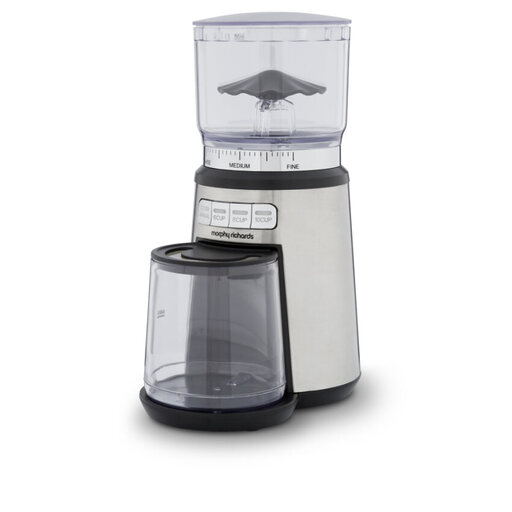
Why It Stands Out: The Morphy Richards Brew & Blend offers a fantastic entry into the world of burr grinding without a prohibitive price tag. It balances user-friendly features with the consistency needed for a noticeably better cup of coffee, making it a versatile workhorse for the modern kitchen.
Pros:
Who is it for? This is an excellent choice for anyone looking to upgrade from a blade grinder or for beginners who want to experiment with different brewing styles. It offers the precision of a burr grinder in an accessible, stylish package.
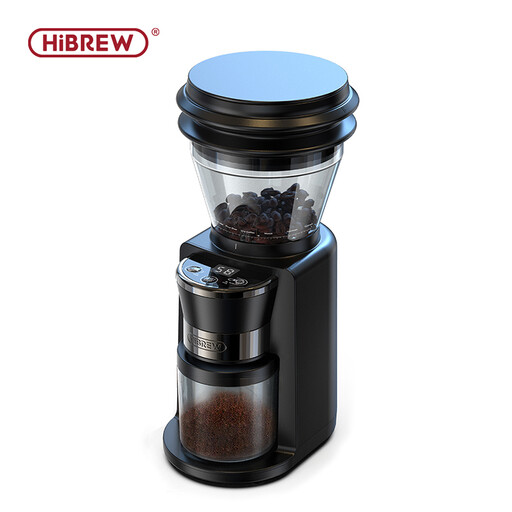
Why It Stands Out: The HiBREW G3 is geared towards the coffee enthusiast who craves precision. With its high-precision conical burrs and an extensive range of settings, it provides the control needed to perfect an espresso shot or a delicate pour-over. The addition of an anti-static function is a thoughtful touch that addresses a common frustration with home grinding.
Pros:
Who is it for? This grinder is for the aspiring home barista who is serious about their coffee. If you are dialling in espresso shots or meticulously timing your pour-overs, the precision and thoughtful features of the HiBREW G3 will be highly valued.
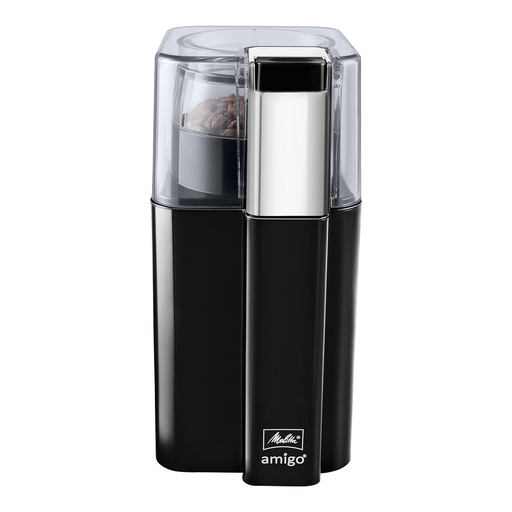
Why It Stands Out: The Melitta Amigo proves that you don't need a large, complex machine to enjoy freshly ground coffee. Its strength lies in its simplicity, compact footprint and versatility. It’s an uncomplicated and effective tool for anyone starting their fresh coffee journey.
Pros:
Who is it for? This is the ideal blade coffee grinder for beginners, students, or anyone with a small kitchen. It's also a great option for those who want a multi-purpose grinder for both coffee and spices.
If you haven't found the perfect fit yet or want to compare more models, there is a wider world of grinders to discover. From professional-grade machines to other compact and convenient options, you can find a device that perfectly matches your coffee ritual. To see more, feel free to explore our full range of coffee bean grinder machines.
Yes, but with a caveat. A blade coffee grinder, like the Melitta Amigo, is often suitable for grinding dry spices. However, coffee oils and spice flavours can linger. It's advisable to either dedicate the grinder to one purpose or clean it exceptionally well between uses to avoid flavour cross-contamination. A burr coffee grinder is designed specifically for coffee beans and should not be used for spices, as they can clog or damage the burrs.
The key difference is consistency. A burr grinder crushes beans between two plates to a uniform size, which allows for even water extraction and a more balanced flavour. A blade grinder chops beans with a spinning blade, resulting in a mix of fine and coarse particles, which can lead to an inconsistent brew. Burr grinders offer more control, while blade grinders are more affordable and versatile.
For espresso, you need a very fine, consistent grind, often described as feeling like powdered sugar or fine table salt. This fine grind creates the necessary resistance for the high-pressure water to extract flavour properly, producing a rich shot with a stable crema. Achieving this requires a capable espresso grinder, which is almost always a burr model with fine adjustment capabilities.