
24/7 Customer Support

Free returns

Same-day & Next-day Delivery

Quality Guaranteed

Unlock Your Welcome Offers: FREE Delivery | Up to 80% OFF | Free 30-day JoyPlus trial
Download the APP
Choosing between electric cookers, a portable induction hob, an electric hot pot or a built-in electric oven depends on your kitchen, household size and cooking habits. A compact appliance may suit a student or renter, while a family may need a freestanding electric cooker with a ceramic hob and double oven.
However, product listings can make similar appliances appear interchangeable. Before buying, check the details that affect everyday usability, installation and running costs.
A higher wattage can indicate faster heating, but it may also mean greater electricity use when the appliance is running. A 1,600W multifunctional electric cooking pot may boil a large volume more quickly than a 600W compact pot, but it is not automatically more suitable for every household.
Consider capacity, heat controls and cooking time together. A small non-stick cooking pot with two power settings may be more practical than a large appliance if you mainly prepare individual meals.
A built-in electric oven or full-size freestanding electric cooker may require a dedicated electrical connection. For example, the Hisense 60cm electric cooker is specified as hard-wired with an approximate 45A requirement. Installation should be completed by a qualified electrician and checked against your kitchen’s available supply.
By contrast, a portable induction hob or small multicooker normally plugs into a suitable UK socket. Always check the product listing, plug type, cable length and installation instructions rather than assuming every electric cooker is plug-and-play.
A ceramic hob has a smooth surface that can be wiped clean, but spills may become difficult to remove if they are left until the surface cools and hardens. Similarly, catalytic liners in a double oven cooker can help break down grease but do not remove the need for occasional cleaning.
For small appliances, check whether the cooking pot, glass lid or steamer is detachable and dishwasher-safe. Never immerse the powered body, plug or cable in water.
Match capacity to the number of people you usually feed:
Do not rely only on external dimensions. Check the actual internal capacity, cooking area and clearance around ventilation openings.
A ceramic hob works with a broad range of flat-based cookware, although it can take time to cool. An induction hob heats compatible ferromagnetic pans directly and generally offers responsive control, but aluminium or non-magnetic cookware may not work unless it has a suitable base.
The 2,000W portable induction hob listed above includes 10 power settings, six preset functions, a safety lock and boil-dry protection. It is a useful option for renters, small kitchens or temporary cooking areas, provided your pans are induction-compatible.
Energy ratings help compare appliances within the relevant product category, but actual electricity costs depend on cooking time, temperature, household tariff and usage frequency. Built-in ovens with an A rating, such as the Simfer FO60S, FO60W and FO60B models, may be worth considering when replacing an older oven.
Other practical features include:

Why This Fits Their Persona: Its compact 1.2L format suits students, couples, office kitchens and renters who need flexible cooking without installing a full cooker.
The two power settings make it easier to select lower heat for porridge, eggs and stews rather than relying on maximum output for every meal.
600W high and 300W low settings; supplied with a glass lid and steam basket. The lid and basket are dishwasher-safe according to the listing.
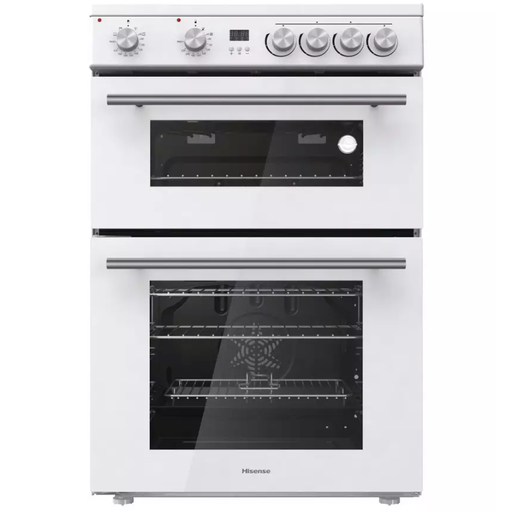
Why This Fits Their Persona: This freestanding electric cooker is designed for households that want separate oven spaces, a ceramic hob and features for regular family cooking.
The listing clearly identifies the hard-wired connection, 60cm width and 4-zone ceramic hob, helping buyers check compatibility before ordering.
68L fan-assisted main oven, 31L conventional top oven, integrated grill, catalytic liners and a programmable LED timer.

Why This Fits Their Persona: The large capacity is suited to family gatherings, shared hot pot meals, batch stews and households that cook substantial quantities.
Its 7L capacity and 30.5cm opening are stated clearly, so buyers can judge whether they have enough storage and worktop space.
1600W output, high and low heat modes, UK plug and a titanium-uranium non-stick coating specified by the product listing.

Why This Fits Their Persona: Its slim format can provide an additional cooking zone in a flat, shared or compact kitchen where a permanent installation is impractical.
The listing states that only ferromagnetic cookware is suitable, reducing the risk of buying pans that will not heat correctly.
10 power settings, six cooking functions, touch controls, child lock and boil-dry protection.
We have compiled a complete, real-time list of products that fully satisfy these strict selection criteria and UK safety regulations.
Running cost depends on the appliance’s wattage, cooking duration, temperature and your electricity tariff. Smaller electric hot pots and multicookers use less power at a time than many full-size ovens, but capacity and cooking time also matter. Compare the energy rating where provided and avoid heating a large oven for a small portion when a compact appliance is suitable.
Many freestanding electric cookers and built-in ovens require hard-wiring by a qualified electrician. Check the product specification before purchase and confirm that your kitchen supply can support the stated requirement. Portable hobs and smaller cooking pots may use a plug, but they still need a stable, heat-resistant surface and clear ventilation.
Lifespan varies according to construction, frequency of use, cleaning and maintenance. To support safe operation, follow the manual, avoid abrasive tools on non-stick or ceramic surfaces, keep ventilation openings clear and arrange repairs when controls, cables or heating elements show signs of damage. A manufacturer’s warranty, such as the one- or two-year cover listed on selected products, provides a defined period of support but does not guarantee a particular total lifespan.