
24/7 Customer Support

Free returns

Same-day & Next-day Delivery

Quality Guaranteed

Unlock Your Welcome Offers: FREE Delivery | Up to 80% OFF | Free 30-day JoyPlus trial
Download the APP
Replacing a cooker or adding an extra hob can quickly become expensive if the product looks suitable online but does not match your kitchen, cookware or electrical supply. As Joybuy Product Recommendation Officer, I focus on practical specifications rather than promotional wording, so you can compare appliances with fewer surprises.
The main buying traps are straightforward:
Measure the available space, including ventilation clearance and access for delivery. A 60cm electric cooker is a common width, but check the full dimensions: products may measure approximately 900mm high and 600mm deep.
Built-in appliances require additional planning. For example, a built-in induction hob may need a worktop cut-out of around 560 × 490mm, suitable ventilation beneath the surface and a correctly rated electrical connection. The installation should follow the manufacturer’s instructions and be completed by a qualified electrician where required.
Portable models are more flexible for renters, students and kitchens with a small footprint. However, they still need a stable, heat-resistant surface, clear ventilation openings and a socket capable of handling the appliance’s rated power.
A ceramic hob cooker uses radiant heating beneath a smooth glass-ceramic surface. It can work with a wider variety of flat-based pans, but the surface remains hot after switching off. Look for residual heat indicators, temperature limiting and a surface that is easy to wipe clean.
Induction transfers heat to a compatible pan through electromagnetic technology. It generally provides responsive control and avoids heating the entire hob surface in the same way as radiant cooking, although the glass panel can still become hot from the pan.
For a 2000W induction cooker, check:
A magnet placed against the base of a pan is a simple compatibility check. If it does not attach firmly, the pan may not be suitable.
Households cooking several dishes at once may prefer a double oven electric cooker. A main fan oven can support larger meals and batch cooking, while a smaller top oven with grill is useful for toast, smaller trays or finishing dishes.
For compact kitchens, a multicooker, pressure cooker, slow cooker or rice cooker can add useful functions without requiring another full-size appliance. These products are particularly practical for stews, rice, steamed food and one-pot meals.
Energy labels help comparison, but running cost depends on cooking time, power level, food quantity and local electricity tariffs. An energy-efficient kitchen appliance can reduce unnecessary consumption when its capacity and cooking method match your routine.

Why This Fits Their Persona: Its slim portable format suits renters, students and households needing an extra cooking zone without replacing a complete cooker.
The stated 2000W rating is paired with 10 power settings, rather than offering only a single high-heat mode. Boil-dry protection and a child lock are included, though supervision remains necessary.
Six preset functions, touch controls and a wipe-clean glass panel in a space-saving design.
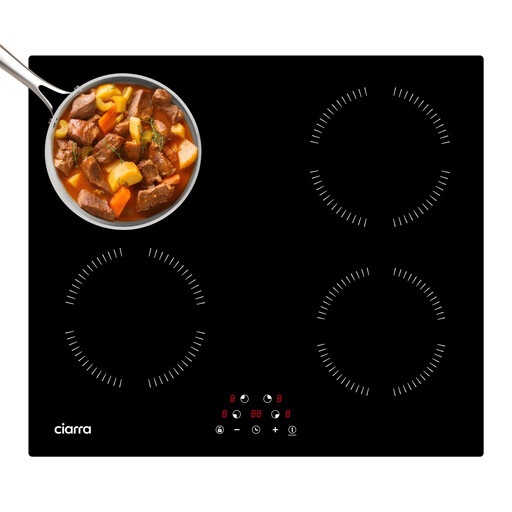
Why This Fits Their Persona: A four-zone surface is suited to homeowners upgrading a fitted kitchen and cooking multiple pans regularly.
The listing specifies the cut-out dimensions, 32A fuse requirement and professional installation guidance, helping buyers check compatibility before ordering.
Four zones, nine power levels, individual timers, pan detection, residual-heat alerts and automatic switch-off.
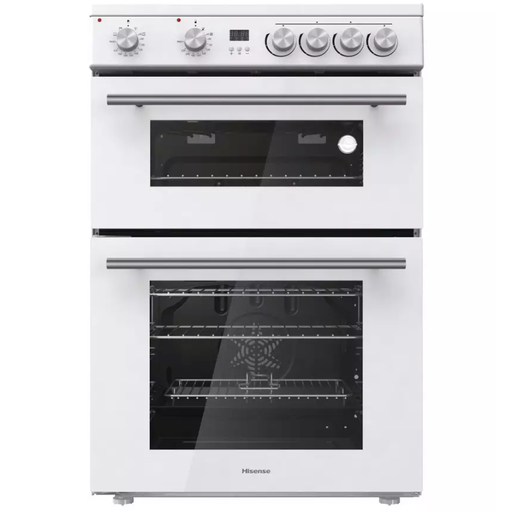
Why This Fits Their Persona: Families can use the 68L fan-assisted main oven, 31L top oven and integrated grill for larger meals and separate cooking tasks.
The specification lists oven capacities, dimensions, hardwired installation and catalytic liners, making it easier to assess space, cleaning and electrical needs.
Four-zone ceramic hob, fan-assisted main oven, programmable LED timer, defrost function and double-glazed doors.

Why This Fits Their Persona: It suits busy UK households wanting pressure cooking, slow cooking, rice cooking and steaming in one worktop appliance.
The functions are specified individually rather than relying only on a broad “multi-function” label. Its 6L capacity and included steamer clarify what the appliance is designed to handle.
Ten programmes, stainless-steel inner pot, sauté function, warming mode and accessories for steaming and serving.
A mains-powered portable induction hob is suitable for accommodation, caravanning sites or an outdoor kitchen with a reliable electricity supply. For off-grid trips, a camping cooking system such as the Fire Maple Fixed Star is a different category: it uses standard threaded isobutane gas canisters, stores its stove and accessories inside a 1L pot and does not include the gas canister.
Check fuel compatibility, wind protection, packed size, stability and cookware support before taking a stove outdoors. Never use a fuel-burning appliance indoors or in an enclosed tent and follow the manufacturer’s ventilation and handling instructions.
We have compiled a complete, real-time list of products that fully satisfy these strict selection criteria and UK safety regulations.
Running cost depends on the appliance’s power, cooking time, pan size, food quantity and your electricity tariff. Induction can transfer heat directly to compatible cookware, while ceramic hobs heat through a radiant element. Compare wattage and cooking habits rather than assuming one option will always cost less.
Many 2000W portable models are designed for a standard UK socket, but always check the product label and instructions. Do not use a damaged lead, overloaded extension or socket that is unsuitable for the rated load. Built-in induction hobs and freestanding electric cookers commonly require hardwiring by a qualified electrician.
Lifespan varies with build quality, frequency of use, cleaning and maintenance. Avoid abrasive cleaners, keep ventilation openings clear and do not use a hob with cracked glass. Check the warranty, spare-part information and installation requirements before purchase, as these can affect the appliance’s practical service life.