
24/7 Customer Support

Free returns

Same-day & Next-day Delivery

Quality Guaranteed

Unlock Your Welcome Offers: FREE Delivery | Up to 80% OFF | Free 30-day JoyPlus trial
Download the APP
As a Joybuy Product Recommendation Officer, my role is to help you navigate the crowded market of home goods. When it comes to equipping your kitchen, the sheer number of electric cooking appliances can be overwhelming. Marketing claims often promise revolutionary convenience, but the reality can be an appliance that gathers dust after a few uses. This guide cuts through the clutter, focusing on the practical considerations that ensure you choose an appliance that genuinely serves your household's needs.
Before you invest, let's look at a few common pitfalls that UK buyers frequently encounter.
To avoid these pitfalls, focus on a few core parameters that define an appliance's real-world performance and suitability for your home.
The first step is to match the appliance's size to your needs and space. For countertop kitchen appliances like a microwave oven or air fryer, consider the internal capacity in litres. A 3-litre air fryer might suit an individual, but a family of four will need 5 litres or more to cook a meal in one go. For larger installations like a built-in electric oven or a freestanding cooker, check the main oven capacity (a 65-litre cavity is a good standard for families) and the physical dimensions (H x W x D) to ensure it fits your kitchen layout.
Understanding the technology helps you match the appliance to your cooking style.
Look for clear, precise controls. A responsive digital cooking timer with an auto-shutoff function can prevent many a burnt dinner. For ovens, retractable dials keep the fascia looking clean and prevent accidental knocks. For cleaning, look for catalytic liners (which absorb and burn off grease at high temperatures), pyrolytic functions (which burn all residue to a fine ash) or smooth enamel interiors that can be wiped down easily.
Based on these practical criteria, here are a few appliances suited to different UK household needs.
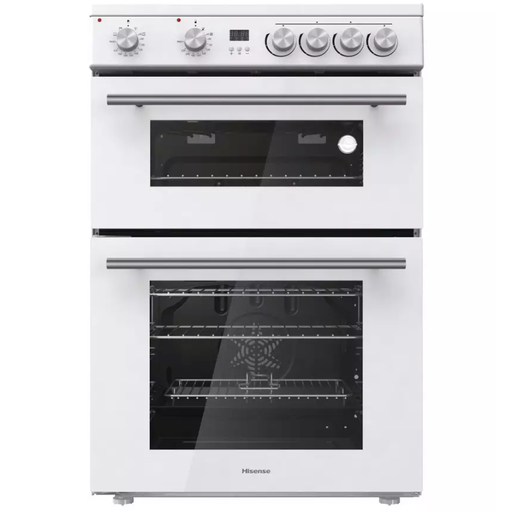
Why This Fits Their Persona: This freestanding cooker is a workhorse for family life. The double oven allows you to cook a roast in the main fan oven while the kids' fish fingers cook in the top oven. The smooth ceramic hob is quick to heat and simple to wipe down after spills.
It directly addresses the cleaning pitfall with catalytic liners that absorb grease. Its A+/A energy rating also tackles the running cost issue, making it an economical choice for a high-use appliance.
The combination of a 68L main fan oven and a 31L top conventional oven/grill provides genuine, not gimmicky, multitasking capability for preparing complex family meals.

Why This Fits Their Persona: For those designing a sleek, contemporary kitchen, this built-in oven offers a seamless, high-end look. It integrates perfectly into a standard 60cm housing unit and its performance matches its aesthetics.
It avoids the cleaning pitfall with a smooth GranitEnamel interior designed for easy wiping. Its Energy Class A rating ensures it is efficient to run, addressing the cost concern for a premium appliance.
The 3D Hotair technology is a specific, verifiable feature that ensures even heat distribution, allowing for successful cooking on multiple levels simultaneously without flavour transfer—a tangible performance benefit.
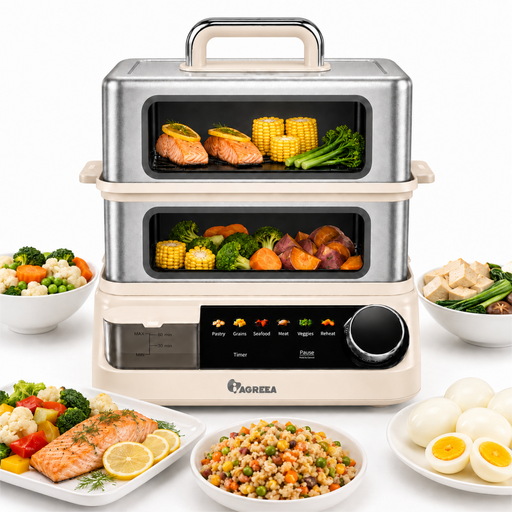
Why This Fits Their Persona: This appliance is perfect for anyone prioritising healthy eating. Steaming preserves nutrients and flavour without added fats. The dual-tier design allows a whole meal—like fish, potatoes and vegetables—to be cooked at once.
This is a specialised appliance, not a weak "all-in-one". It focuses on one task and performs it well with a powerful 2000W heating system for fast, consistent steam, avoiding the trap of mediocre multifunctionality.
The 14L family-sized capacity and panoramic viewing windows are practical features that enhance usability, allowing you to cook large meals and monitor progress without releasing heat and steam.
We have compiled a complete, real-time list of products that fully satisfy these strict selection criteria and UK safety regulations.
A standard fan assisted oven has a heating element around a fan, which circulates hot air to cook food evenly. It is excellent for general baking and roasting. A multifunction oven is a more advanced type of fan oven that also includes other cooking functions. These can include a conventional setting (using top and bottom heat only), a grill, a fan-grill combination or even special modes for pizza or defrosting. This gives you more control and versatility for different types of recipes.
Yes. For any appliance that needs to be hardwired into your home's electricity supply—such as a built-in electric oven, an induction hob or a freestanding cooker—you must use a qualified electrician. This is critical for safety, to ensure the appliance functions correctly and to validate your manufacturer's warranty. Plug-in countertop kitchen appliances like a microwave oven or deep fat fryer do not require professional installation.
The running cost depends on three things: the oven's power rating (in kilowatts, kW), how long you use it and your electricity tariff (price per kilowatt-hour, kWh). An oven with an A energy rating is more efficient. For example, a 2.5 kW oven used for one hour will consume 2.5 kWh of electricity. You can calculate the cost by multiplying this by your provider's rate. Choosing an efficient model and using the correct size appliance for the job can help manage these costs effectively.