Car campers carrying chilled meals
If you pack meat, dairy, salads or leftovers, prioritise a controllable temperature over a cooling figure measured only against the outside air. Check the temperature inside the box when carrying perishable food.


Choose a thermoelectric cool box for short car trips when cooling relative to the outdoor temperature is enough. For perishable food, warmer conditions or a longer stay, choose a compressor box with an adjustable temperature and check its internal temperature during use. Whichever type you choose, match its capacity and power inputs to your car and campsite arrangements.
If you pack meat, dairy, salads or leftovers, prioritise a controllable temperature over a cooling figure measured only against the outside air. Check the temperature inside the box when carrying perishable food.
For drinks and pre-chilled food on a short trip, a compact box with suitable car and campsite power inputs may meet your needs. A thermoelectric model still cools relative to the surrounding temperature, so consider the expected conditions.
More storage may matter on a longer stay, but a larger compressor box also needs room in the boot and a manageable route from car to pitch. Check its external dimensions and empty weight as well as its capacity.
Decide what temperature your contents need first; then check power arrangements and whether the box will fit and be practical to carry.
| Concern | What to check | Who this matters to |
|---|---|---|
| Temperature control | Distinguish an adjustable temperature setting from a cooling figure relative to outside air. For perishable food, check the internal temperature with a thermometer; the Food Standards Agency identifies 5°C as the maximum recommended fridge temperature. | If I am bringing perishable food on a warm or multi-day trip, I need to know its temperature rather than rely on a quoted cooling differential. Around 36% of consumers put controlled chilling first. |
| Power and hook-up | Confirm the exact model’s vehicle and mains inputs. Plan battery runtime for off-grid use and use suitable campsite hook-up equipment rather than a household extension cable. | When I switch between driving power and a campsite pitch, I need connections suited to both without assuming the car battery will run the box overnight. Roughly 29% of consumers make power planning their primary concern. |
| Capacity and handling | Check external dimensions against the boot opening and allow room to open the lid. Consider empty weight and how you will lift a loaded box. | For a family or longer stay, I need enough room for food and drinks, but must still be able to load and move the box. Around 21% of consumers prioritise capacity and handling. |
| Short-trip simplicity | For a thermoelectric model, compare its stated cooling differential with the expected outdoor temperature. Check which car and mains cables are included. | If I mainly want cool drinks and pre-chilled food for a short trip, I may not need an adjustable compressor temperature. About 14% of consumers put straightforward short-trip cooling first. |
Outwell specifies that its ECO Ace 24 cools up to 18°C below the outside temperature. Its internal temperature therefore depends on the conditions, which matters when carrying perishable food.
If dependable chilled-food temperatures are your priority, consider a compressor box with an adjustable setting and monitor the temperature inside it.
A cool box using vehicle or leisure-battery power still needs an adequate power supply. A battery-protection feature is not a measure of how long the box will run.
Identify the battery you will use and check the specific box’s power requirements against the runtime you need before relying on it overnight.
Leads and connections at a campsite can be exposed to water. The Camping and Caravanning Club advises against using a household extension cable for tent hook-up, even one fitted with an RCD plug.
Use proprietary hook-up equipment suited to the pitch and follow the campsite’s electrical instructions. Keep connections off the ground and away from water.
Halfords lists its Advanced 50L Compressor Coolbox at 23 kg empty. Wheels and a handle may help move it, but the box still has to fit through the boot opening and be loaded into the car.
Check external dimensions, empty weight and your route to the pitch before deciding how much capacity you need.
A large box can take up substantial boot space and may need two people to lift once packed.
Dometic’s electric-cooler range includes thermoelectric boxes and CFX compressor models for car travel and camping.
Outwell offers camping-oriented thermoelectric boxes as well as compressor models.
Halfords has a larger car-oriented compressor option for trips where storage capacity is a priority.
These car-camping choices include two compressor boxes for adjustable-temperature cooling and a smaller 12V cooler and warmer for short trips. Check each model’s power and capacity details against how you camp.
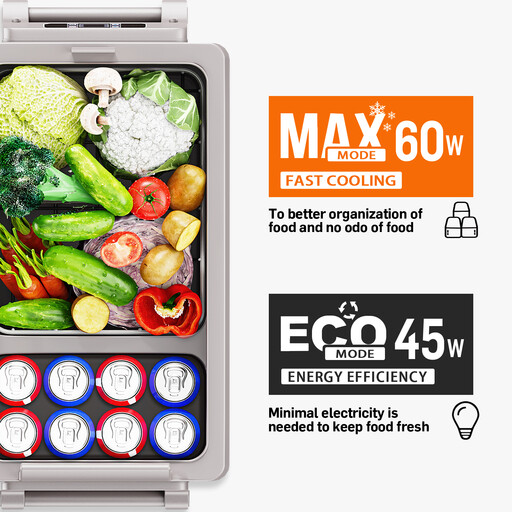 No image available
Consider this model when you need more space for food and drinks on a car-based trip. Its title specifies 49.4 L capacity, compressor cooling, 12/24V DC input and 240V AC input.
Before relying on campsite hook-up, confirm that this exact model’s stated AC input suits the pitch supply. Check its external dimensions, empty weight and expected battery runtime for your plans.
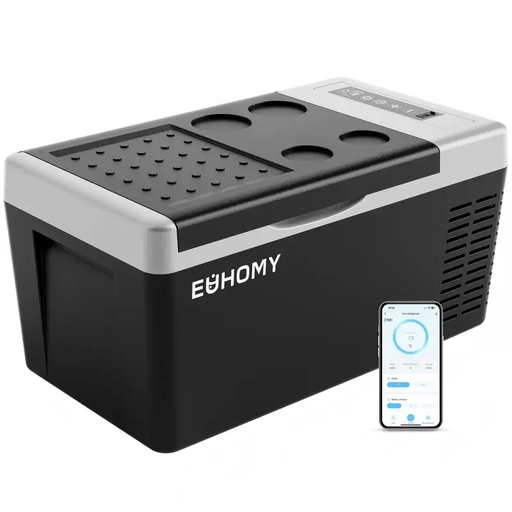 No image available
For a smaller load that needs an adjustable setting, this model’s title specifies 18 L capacity and a -20°C to +20°C range. It also lists 12/24V DC and 100–240V AC inputs.
Check its external dimensions and empty weight for your car. If using battery power away from hook-up, check power requirements and the runtime available from your battery.
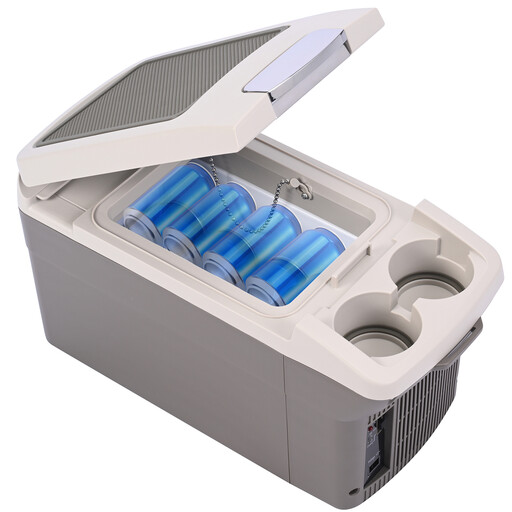 No image available
This 12V car cooler and warmer is a choice to assess for drinks or snacks on a short trip, rather than for a trip requiring controlled refrigeration.
Confirm its capacity before buying: the product information gives both 6 L and 9 L. Also check cooling performance in the temperatures you expect, external dimensions and how you would power it at a campsite.
Not necessarily: thermoelectric cooling is specified relative to the surrounding temperature, not as a fixed fridge setting. Outwell states that the ECO Ace 24 cools up to 18°C below outside temperature; for perishable food in warm conditions, consider an adjustable-temperature compressor box and check its internal temperature with a thermometer.
Yes, if the specific box supports the available supply and you use suitable hook-up equipment. The Camping and Caravanning Club describes campsite hook-up as a nominal 230V, single-phase, 50Hz supply; check the model’s input specification and the pitch’s supply limit before using it with other appliances.
No. The Camping and Caravanning Club advises against household extension cables for tent hook-up, even with an RCD plug. Use proprietary hook-up equipment suited to the pitch and keep its connections off the ground and away from water.
Pack food in food-safe packaging and leave enough room for air to circulate. Outwell’s ECO Ace 24 instructions specify food-safe packaging for items placed inside; clean and dry the box between trips.