Regular carafe refillers
If you fill a separate carafe in the kitchen each evening, focus on how much filtered water is ready to dispense, whether the carafe fits beneath the spout and whether one selection fills it.


For a bedside carafe, start with a countertop dispenser that can hold enough prepared water and dispense an amount that suits your carafe; an ambient filtered-water model may be sufficient when convenient filling is the main goal. Choose reverse osmosis when you want the exact model’s documented filtration approach and can accommodate its preparation and maintenance routine. Hot and chilled functions are worth considering only if you will use them for other drinks too.
If you fill a separate carafe in the kitchen each evening, focus on how much filtered water is ready to dispense, whether the carafe fits beneath the spout and whether one selection fills it.
If you have a defined reason to consider reverse osmosis, compare claims for the exact model and allow for its tank and filter-maintenance routine. A countertop appliance is not a substitute for investigating a problem with your water supply.
If the same appliance will serve other drinks, temperature choices may matter alongside carafe filling. Check the space it needs, its cleaning instructions and hot-water safety guidance.
Decide whether you primarily need water ready to pour, a particular filtration process or extra drink temperatures. Then compare the capacity and dispensing controls of models that meet that need.
| Concern | What to check | Who this matters to |
|---|---|---|
| Ready-to-pour water | Compare prepared-water capacity with your carafe size, then check the largest selectable dispense and spout clearance. | I want to fill the carafe in one visit to the kitchen, without waiting for another filtration cycle; around 42% of consumers put ready-to-pour convenience first. |
| Filtration approach | Identify the water concern, check the exact model’s filtration claims and review its replacement-filter requirements. | If I am choosing reverse osmosis for a specific reason, I need to understand the model’s claims and accept its upkeep; roughly 33% of consumers make the filtration approach their primary concern. |
| Extra functions and upkeep | Consider whether you will use hot or chilled water, and read the model’s placement, cleaning and hot-water instructions. | When one appliance will also serve other household drinks, those functions matter more to me than a carafe-only routine; about 25% of consumers put added functions and upkeep first. |
The Drinking Water Inspectorate says additional household treatment is not needed as a health-protection measure for public supplies in England and Wales. A filter may still address a preference such as taste, but it will not repair a fault in household pipework.
Identify what is bothering you about the water before choosing a filter. If you suspect a supply or plumbing problem, contact the water supplier or a plumber rather than relying on an appliance.
A reverse-osmosis unit can have separate feed-water and purified-water tanks, so its largest stated tank figure may not describe what is immediately available for the carafe.
Compare the purified-water capacity, preparation time and single-dispense limit with the carafe you use.
Temperature features serve other drinks, but they do not remove the need to check prepared-water capacity and the appliance’s cleaning routine.
Consider those features if you will use them elsewhere in the household; otherwise, assess ambient dispensing against your usual carafe fill.
BRITA’s YOURCE cool guidance includes flushing after periods of non-use. Hot-water models also require attention to their burn warnings; the Joybuy-listed JIMMY R9 Pro calls for children to operate it under adult guidance.
Read the exact model’s cleaning and safety instructions before deciding where it will stand and who will use it.
Its YOURCE cool dispenser is relevant if selectable portions would help you fill a carafe.
AquaTru Classic is a separate-tank countertop reverse-osmosis option for preparing water ahead of time.
Its range includes electric filtered dispensers and countertop reverse-osmosis models, allowing you to compare convenience with a different filtration approach.
The ADD6921DG/10 is a countertop reverse-osmosis dispenser to consider when other household drinks call for temperature choices.
These countertop reverse-osmosis models combine carafe preparation with temperature options. If you only want ambient water for a bedside carafe, decide whether you would use those additional functions before choosing either one.
 No image available
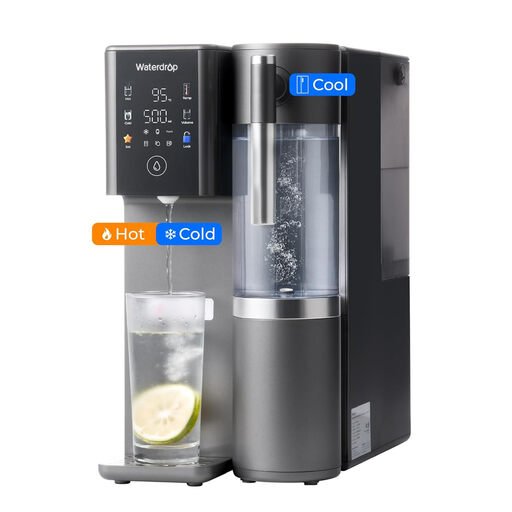
Consider this model if you want countertop reverse osmosis as well as temperature choices for other drinks.
The product name lists six temperature settings and a portable pure-water tank. Check the exact temperatures before purchase, as the supplied descriptions differ on the lowest setting; also check the prepared-water capacity, dispense volumes and clearance against your carafe.
 No image available
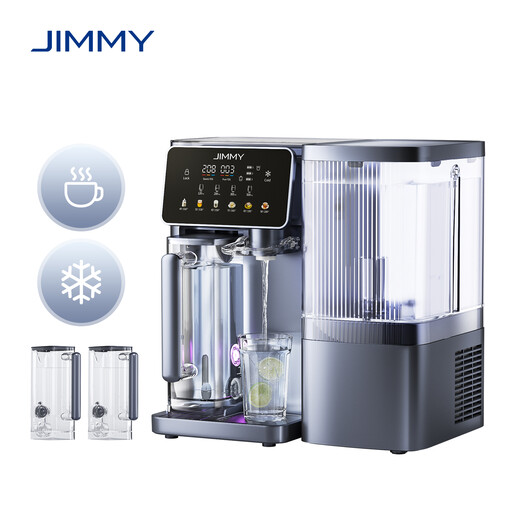
Consider this model if its separate pitchers suit how you prepare and carry water to the bedroom, and you will also use its hot or cold output.
The product name lists a 5.5 L tank, two 1 L pitchers and seven-stage filtration. Confirm how much of the internal tank is purified water ready to use, and check dispensing and carafe clearance. The product information warns that children should operate the unit under adult guidance to avoid burns.
Not as a general health-protection measure for public supplies in England and Wales, according to the Drinking Water Inspectorate. You might still choose filtration for a taste or odour preference; for a specific water concern, ask your supplier about your supply rather than assuming a domestic filter resolves it.
Do not assume that it can. Private supplies need assessment and treatment appropriate to the individual supply: seek testing and advice from the relevant authority before selecting an appliance. The Drinking Water Inspectorate provides guidance for England and Wales; arrangements elsewhere in the UK differ.
Use your carafe’s volume as a starting point, then consider whether other drinks must be served before the appliance refills or filters another batch. Check purified-water capacity separately from feed-tank capacity and confirm that a single dispense suits the carafe.
Follow the instructions for your exact model before drinking from it again. BRITA’s YOURCE cool quick-start guide calls for inner-tube flushing after 24 hours of non-use for ambient and hot water, and for emptying the cold tank if the device has been switched off for more than 24 hours; those timings should not be assumed for other models.