
24/7 Customer Support

Free returns

Same-day & Next-day Delivery

Quality Guaranteed

Unlock Your Welcome Offers: FREE Delivery | Up to 80% OFF | Free 30-day JoyPlus trial
Download the APP
For anyone who loves the aroma of freshly baked bread, the satisfaction of a homemade pizza or the tradition of family recipes, the process of making dough is central to the experience. However, the physical effort and time required for kneading and proving can be a significant barrier. An electric dough maker promises to solve this, but navigating the market can be tricky. Many shoppers end up with appliances that are noisy, inefficient or simply don't deliver the promised results.
As a Joybuy Product Recommendation Officer, my role is to help you sidestep these issues. This guide focuses on the practical considerations for choosing a reliable bread dough machine for home use in the UK, ensuring you invest in a tool that genuinely makes your baking life easier.
Before looking at features, it is crucial to recognise the common pitfalls that lead to buyer's remorse.
dough proofer, leaving you to find a warm spot and hope for the best, leading to inconsistent results.To ensure your new appliance is a help, not a hindrance, focus on these three non-negotiable specifications.
Instead of just looking at the wattage, consider the motor type. A machine with a high-torque DC motor (around 200W) is typically engineered specifically for the consistent, powerful turning motion required for kneading. This design is often significantly quieter than the general-purpose AC motors found in some multi-functional appliances like a stand mixer for dough, making for a more pleasant kitchen environment. It provides ample power for everything from soft brioche to stiffer wholemeal doughs.
For a typical family of four or for those who enjoy batch baking, a 5L capacity is a practical benchmark. This size can usually handle up to 1.6 kg of dry flour, which is enough for two large loaves or several pizza bases. Pay close attention to the bowl material. A 304 stainless steel bowl is the standard for hygiene and durability. It does not retain odours or stains, is easy to clean and is robust enough to withstand years of use.
A truly automatic dough kneader should offer more than just a mixing cycle. Look for models with dedicated, pre-programmed settings that combine the kneading and fermentation stages. An integrated constant temperature fermentation function acts as a reliable dough proofer, creating the ideal environment for yeast to activate and the dough to rise perfectly every time. This is a game-changing feature for achieving light, airy textures consistently, whether you are making sourdough, ciabatta or dough for chapatis.
Based on these practical criteria, here are some recommendations tailored to different home bakers.
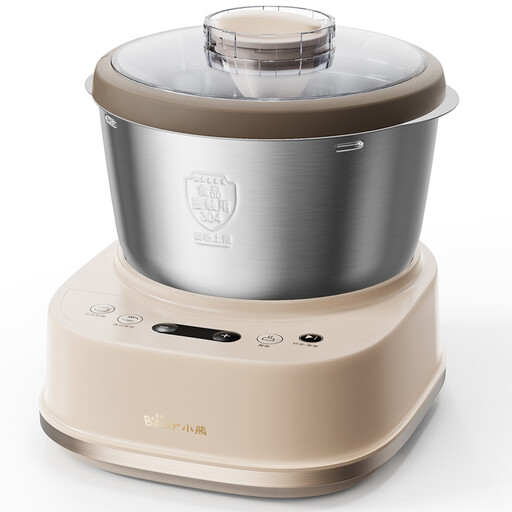
Why This Fits Their Persona: This user needs to save time while preparing food for a household. The generous 5L capacity is perfect for making large batches of dough for family meals, school lunches or weekend pizzas. The fully automated process means they can set it and attend to other tasks.
It features an integrated constant temperature fermentation function, avoiding the inconsistent results of proving dough in a cool kitchen (Trap 2). Its 200W DC motor is quiet and efficient, not an oversized, noisy motor (Trap 1).
The intelligent microcomputer controls both kneading and proving cycles automatically. The 304 stainless steel bowl is durable and easy to clean.
Once your dough is perfectly prepared, you need the right bakeware to turn it into a masterpiece.
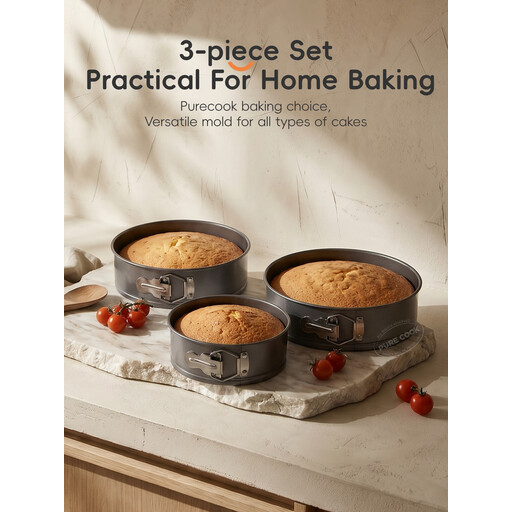
Why This Fits Their Persona: For those who bake a variety of cakes, from sponges to cheesecakes. This set provides three different sizes, and the springform design is essential for releasing delicate bakes without damage.
It avoids the common baking trap of damaged cakes. The quick-release buckle and non-stick surface ensure a clean release, preserving the cake’s shape and structure.
The tight-locking buckles prevent batter leakage, which is critical for water-bath baking methods. The carbon steel construction ensures even heat distribution.
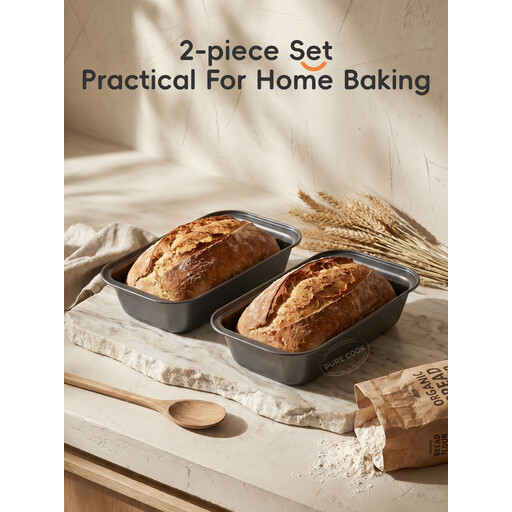
Why This Fits Their Persona: Ideal for those who regularly bake their own sandwich bread. This tin is specifically designed to produce a classic, well-shaped loaf that slices neatly. The two-piece set allows for efficient batch baking.
This avoids the trap of using flimsy, general-purpose tins that can lead to unevenly cooked or poorly shaped loaves. Its sturdy construction provides the support needed for a perfect rise.
The thickened carbon steel ensures superior, even heat conductivity for a uniform crust and a soft, tender crumb. The non-stick coating ensures the loaf releases easily every time.
We have compiled a complete, real-time list of products that fully satisfy these strict selection criteria and UK safety regulations.
It depends on your primary use. A stand mixer for dough is a versatile appliance with multiple attachments for various kitchen tasks. However, for dedicated dough making, an electric dough maker often has advantages. They are typically more compact, operate more quietly and most importantly, include an integrated dough proofer function for controlled fermentation—a feature most stand mixers lack. If your main goal is to simplify and perfect your bread, pizza or chapati making, a dedicated machine offers a more focused and streamlined solution.
A 5L dough maker can generally process between 400g and 1,600g of dry flour in a single batch. This capacity is sufficient for making two large loaves of bread, dough for four to five 12-inch pizzas or a large batch of rolls, making it a practical size for most UK families. Always refer to the manufacturer's guidelines for the recommended flour-to-water ratio to ensure optimal performance.
Yes, a quality automatic dough kneader is well-suited for making chapati and roti dough. The key is to choose a model with a robust motor that can handle the stiffer consistency of this type of dough. Using a machine can save considerable time and physical effort, making it a very practical chapati dough maker uk households can appreciate for daily meal preparation. You may need to experiment with the flour and water quantities to achieve your preferred texture.