
24/7 Customer Support

Free returns

Same-day & Next-day Delivery

Quality Guaranteed

Unlock Your Welcome Offers: FREE Delivery | Up to 80% OFF | Free 30-day JoyPlus trial
Download the APP
Choosing an electric food chopper can save time when preparing onions, herbs, vegetables, meat and sauces. However, product listings often focus on motor wattage or a long accessory list while leaving out details that affect everyday use.
A compact appliance may struggle with family-sized batches, while a large food processor can be inconvenient for someone who only needs to chop garlic and herbs. The right choice depends on capacity, preparation habits, cleaning requirements and the ingredients you plan to process.
A 750W food processor may offer more processing power than a 300W food chopper, but wattage alone does not determine texture or suitability. Blade design, bowl shape, speed control and operating limits also matter.
Some products advertise a maximum or peak wattage that differs from their rated operating power. For example, the Monsga G100 is listed with a 300W motor and up to 1200W maximum power. Buyers should check both figures and read the operating instructions before comparing models.
A 1.8L or 2L bowl is useful for family cooking, but ingredients should not be packed above the stated working limit. Overfilling can produce uneven chopping, spillage and additional strain on the motor.
A large-capacity food chopper is most useful when the bowl, blade position and recommended batch size suit your regular recipes. For one or two portions, a smaller mini food chopper may be faster to load and wash.
“Easy to clean” does not always mean every component is dishwasher-safe. Motor housings should generally be kept away from water, and sharp blades require careful handling.
Operating time is another commonly missed detail. The BEAR 2L chopper specifies a maximum continuous operation of 40 seconds, followed by a rest period. The Kenwood mini chopper specifies no more than 30 seconds continuously. These appliances are designed for short food-preparation cycles rather than uninterrupted commercial use.
For herbs, onions, garlic, soft vegetables and small sauces, a 300W food chopper can be suitable. Models with two speeds or pulse control give more control over coarse and fine textures.
If you regularly prepare larger batches, slice or grate vegetables, purée ingredients and process meat, a 750W food processor with dedicated discs may be more practical. A food processor and blender combination can reduce the need for separate appliances, although it usually takes up more cupboard space.
For raw meat, choose a purpose-built electric meat grinder or meat mincer if you want mince with different textures. Grinding plates such as fine, medium and coarse options are more appropriate for burgers, meatballs and sausages than a standard chopping blade.
Glass bowls make the contents visible during processing and do not retain food odours as readily as some plastics. Stainless steel bowls are durable and useful when handling raw meat, but the contents are less visible.
A stainless steel blade chopper should have securely fitted blades and a lid or safety lock that prevents operation when incorrectly assembled. Look for non-slip feet, overload protection and clear operating instructions.
If buying a meat grinder, check whether it includes the accessories you actually need. The Monsga G100 includes three cutting discs, a sausage stuffer, kibbeh attachment and cookie maker. It also has a reverse function, which can help clear a blockage when used only after the motor has fully stopped.
Check the supplied plug, voltage information and user instructions for UK use. Look for appropriate conformity markings and never operate an appliance with a damaged cable or loose blade assembly.

Why This Fits Their Persona: Its compact 350ml bowl suits students, small households and cooks preparing sauces, herbs, garlic or breadcrumbs rather than family-sized batches.
The clearly stated 350ml capacity makes it less likely that buyers will expect family-batch performance from a mini appliance.
300W motor, two speeds plus pulse control and a dishwasher-safe bowl and blade.

Why This Fits Their Persona: Two glass bowls, including 0.6L and 2L sizes, give organised home cooks a way to separate small preparation jobs and larger meals.
The separate bowls and blade sets help reduce flavour transfer between ingredients, while the capacity options clarify the intended batch size.
300W motor, two speeds, stainless steel blades and dishwasher-safe glass bowls.
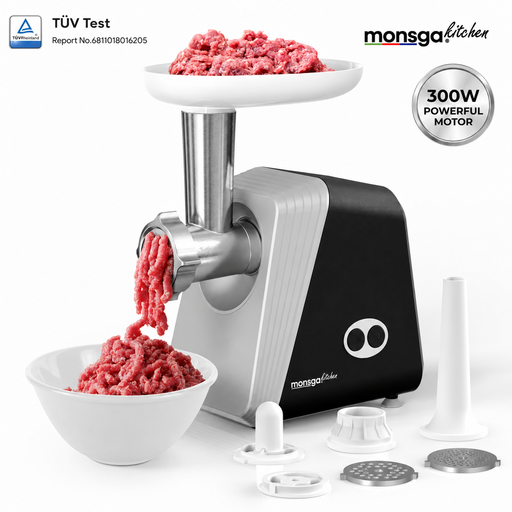
Why This Fits Their Persona: A suitable option for home cooks who regularly make mince, burgers, sausages or kibbeh and want more control over meat texture.
Three grinding plates and a reverse function offer more control than a standard vegetable chopper, provided the meat is cut into small pieces and the motor is rested between cycles.
Fine, medium and coarse discs plus sausage, kibbeh and cookie-making accessories.
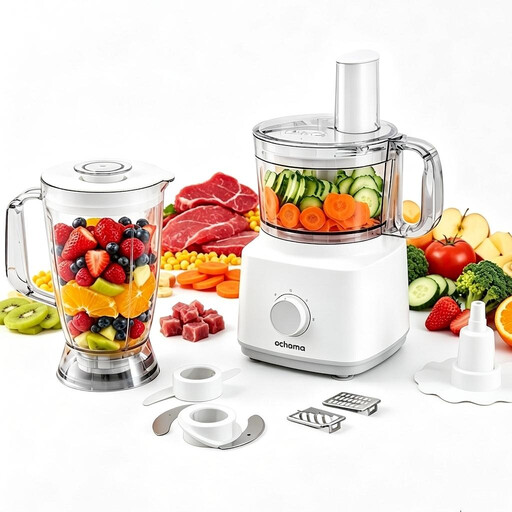
Why This Fits Their Persona: Its 1.8L bowl and several processing functions suit families and meal-prep users preparing vegetables, sauces and larger quantities.
The listed 1.8L limit and detachable design make capacity and cleaning expectations clearer than vague “family size” wording.
750W motor with chopping, slicing, grating and puréeing functions.
We have compiled a complete, real-time list of products that fully satisfy these strict selection criteria and UK safety regulations.
Electricity use is usually limited because these appliances operate for short periods. Running cost depends on the motor rating and local electricity tariff, but the brief operating time generally has a smaller effect on household bills than the purchase price. Avoid running the machine longer than necessary.
Some models can process meat, but a dedicated electric meat grinder is more suitable for regular mincing because it uses an auger and grinding plates. Standard choppers may handle small portions of boneless meat, subject to the manufacturer’s instructions. Do not process bones, ice or frozen food unless the product specifically permits it.
Lifespan depends on build quality, cleaning, storage and workload. Following the duty cycle, avoiding overfilling, keeping the motor dry and handling blades correctly can help reduce wear. For frequent heavy use, choose a model with the required capacity and attachments rather than relying on a small mini food chopper.