
24/7 Customer Support

Free returns

Same-day & Next-day Delivery

Quality Guaranteed

Unlock Your Welcome Offers: FREE Delivery | Up to 80% OFF | Free 30-day JoyPlus trial
Download the APP
Preparing meals at home can become inconvenient when chopping onions, making mince or processing vegetables requires several separate tools. An electric food chopper and meat grinder can combine some of these jobs, but choosing the wrong appliance may lead to uneven results, difficult cleaning or a motor that is unsuitable for your batch sizes.
The main buying mistakes are usually easy to miss:
A 300W food chopper is generally suited to small or medium preparation tasks such as herbs, onions, fruit, vegetables, sauces and modest portions of meat. It is practical for small households, baby-food preparation and everyday ingredient chopping, but it is not a replacement for a dedicated heavy-duty meat mincer.
A dedicated 1600W meat grinder, such as the Kenwood MG510, is designed for larger quantities of meat and offers grinding plates for different textures. However, advertised power should be read alongside the stated processing rate, maximum continuous operating time and overload protection.
For reliable results, cut meat into smaller pieces, remove bones and tough sinew and use the supplied pusher rather than forcing ingredients into the feed tube.
A food processor with glass bowl can be useful when you want a container that resists odours and visible staining. Glass is also helpful when checking the consistency of ingredients while processing. Stainless steel offers durability and is less vulnerable to breakage, although it prevents you from seeing the contents during operation.
Capacity should reflect how you normally cook:
Dual-bowl designs can also help separate raw meat from vegetables, reducing flavour transfer between tasks.
A vegetable chopper with two speeds gives more control over texture than a single-speed model. Short pulses can help avoid turning softer ingredients into an unintended purée. For meat, interchangeable fine, medium and coarse grinding plates provide more flexibility for burgers, meatballs and other recipes.
If you are interested in making sausages or filled dishes, check whether the appliance includes a sausage maker or kebbe maker attachment. These accessories can add useful functionality, but they also create more components to clean and store.
Always check the exact care instructions. A dishwasher-safe food chopper may allow the bowl and blades to go in the dishwasher, while a multifunctional meat grinder may require its metal head, auger and cutting plates to be washed by hand. The motor housing should not be immersed in water.
The following recommendations are organised by practical user profile rather than by a single overall ranking. Product suitability depends on your kitchen space, batch size and preferred preparation tasks.

Why This Fits Their Persona: Its 350ml bowl and compact footprint suit students, small households and cooks who mainly prepare herbs, onions, garlic, breadcrumbs, sauces or dips.
The defined small-batch capacity makes it less likely that you pay for a larger appliance you rarely fill. The stated 30-second continuous-use limit also sets a clear expectation.
300W motor, two speeds plus pulse function and dishwasher-safe bowl and stainless steel blade.
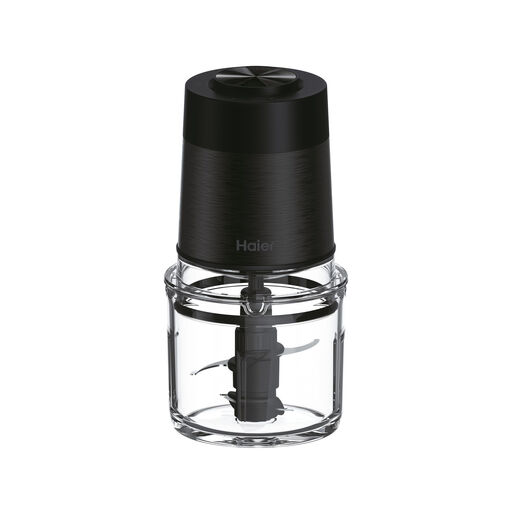
Why This Fits Their Persona: A glass bowl, double-stacked blade arrangement and two-speed top control suit cooks wanting a more substantial electric food processor for regular preparation.
The product information clearly identifies the bowl material, two speeds and dishwasher-safe bowl and blades, helping you verify features instead of relying on vague performance language.
550W motor, glass bowl, double-stacked blades and anti-slip base.
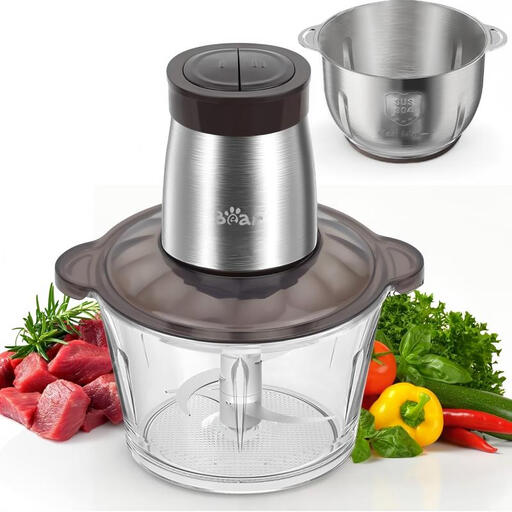
Why This Fits Their Persona: The two-bowl format works well for families preparing vegetables, meat, fruit or baby food, particularly where separate containers are useful.
The published 2L and 1.8L capacities make the intended batch size clear, while the stated 40-second operating cycle and two-minute rest period discourage prolonged use.
Includes a 2L glass bowl, 1.8L 304 stainless steel bowl, two speeds and dishwasher-safe bowls and blades.
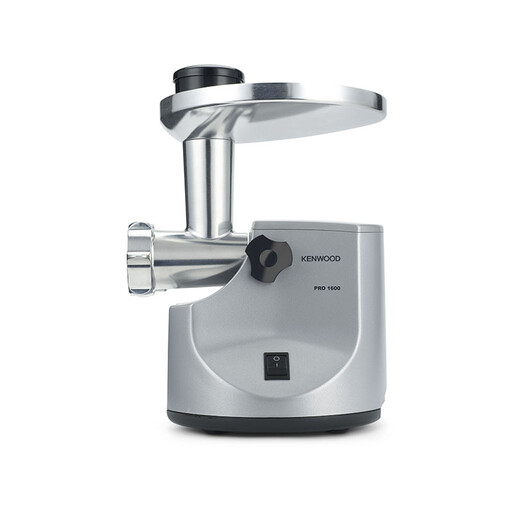
Why This Fits Their Persona: This dedicated food mincer is suited to families, batch cooks and anyone regularly preparing homemade mince, sausages or kebbe.
Rather than relying only on a wattage figure, it specifies three grinding screens, a processing rate of up to 2kg per minute, overload protection and a reverse function.
1600W maximum power, fine, medium and coarse plates, plus sausage and kebbe maker attachments.
We have compiled a complete, real-time list of products that fully satisfy these strict selection criteria and UK safety regulations.
Some larger choppers are designed to process small portions of meat, but they are not necessarily equivalent to a dedicated meat mincer. For frequent mince preparation, choose a model with grinding plates, a feed tube and a stated meat-processing capacity.
Not necessarily. Electricity use depends on the appliance’s actual power draw and how long it operates. A smaller 300W kitchen chopper may use less energy for short preparation tasks, while a higher-powered grinder may be more suitable for larger batches. Following the recommended operating cycles helps avoid unnecessary use.
Lifespan depends on construction, cleaning, storage and workload. Using the correct ingredients, respecting continuous-use limits and keeping blades and metal components clean and dry can help reduce avoidable wear. Always check the manufacturer’s warranty and care guidance before purchase.