
24/7 Customer Support

Free returns

Same-day & Next-day Delivery

Quality Guaranteed

Unlock Your Welcome Offers: FREE Delivery | Up to 80% OFF | Free 30-day JoyPlus trial
Download the APP
An electric food chopper can make everyday preparation quicker, particularly when chopping onions, herbs, vegetables, meat or fruit. However, many UK shoppers focus on wattage or bowl size alone and overlook the details that affect convenience, safety and long-term value.
Before choosing a kitchen chopper, watch for these common buying pitfalls:
A 300W food chopper is suitable for many routine tasks, including onions, garlic, herbs, fruit, vegetables and prepared meat portions. Higher-powered models may offer more capacity or greater flexibility, but the food still needs to be cut into manageable pieces and the bowl should not be overfilled.
Check the manufacturer’s operating instructions rather than relying on wattage alone. For example, the Bear dual-bowl model specifies short operating cycles followed by rest periods, with additional cooling after repeated cycles. This helps prevent buyers from treating a compact appliance like a continuous commercial machine.
Avoid using compact choppers for bones, ice, frozen food, coffee beans or grains unless the product instructions specifically allow it. Hard ingredients can damage blades or overload the motor.
A glass bowl food chopper is often useful for shoppers who want a container that resists odours, staining and flavour transfer. Glass is also easy to inspect while processing, although it is heavier than plastic and should be handled carefully.
A stainless steel food chopper bowl is lightweight, durable and suitable for raw meat preparation. A dual-bowl design can be particularly practical: one bowl can be reserved for meat, while the other is used for vegetables, fruit or herbs. This may reduce washing between different ingredients, although all parts still require thorough cleaning.
Consider capacity in relation to your household:
For baby food, choose a bowl size that matches the quantity you prepare and check that the texture can be monitored easily. A chopper may assist with soft ingredients, but it is not automatically a dedicated steam-cooking baby food maker.
A 2-speed food chopper provides more control than a single-speed button. Lower speed can help with softer foods and a coarser texture, while higher speed may be more suitable for tougher ingredients such as carrots, nuts or meat. Short pulses are useful when you want to avoid turning ingredients into a smooth purée.
Look for a lid or motor safety lock that prevents operation unless the parts are correctly assembled. Anti-slip feet can also help keep the appliance stable on a kitchen worktop.
For cleaning, confirm which components are dishwasher-safe. Bowls and blades may be suitable for the dishwasher, but the motor housing, cord and plug must never be immersed in water. Always unplug the appliance before removing blades, changing bowls or cleaning.

Why This Fits Their Persona: Its compact footprint suits flats, student kitchens and smaller households preparing modest quantities of herbs, onions, nuts, sauces or breadcrumbs.
The 350ml capacity makes its intended use clear, avoiding the expectation that a mini food processor should handle large family batches.
300W motor, two speeds plus pulse function and dishwasher-safe bowl and blade.
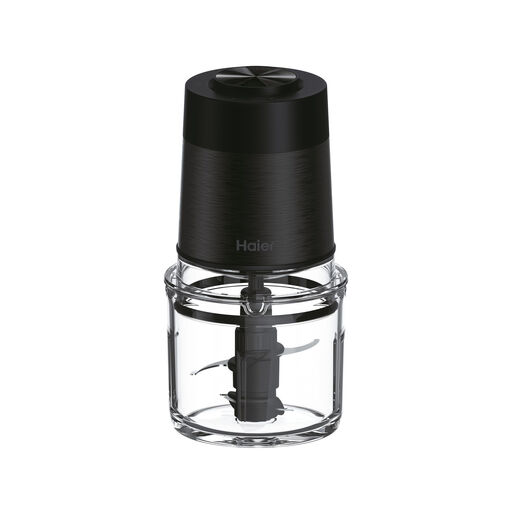
Why This Fits Their Persona: Suitable for shoppers who prefer a glass container, a higher-rated motor and a simple top-press control for chopping and puréeing.
Its listed bowl and blade cleaning instructions are specific, while the anti-slip base addresses stability during use.
550W motor, double-stacked four-blade system, two speeds and dishwasher-safe glass bowl and blades.
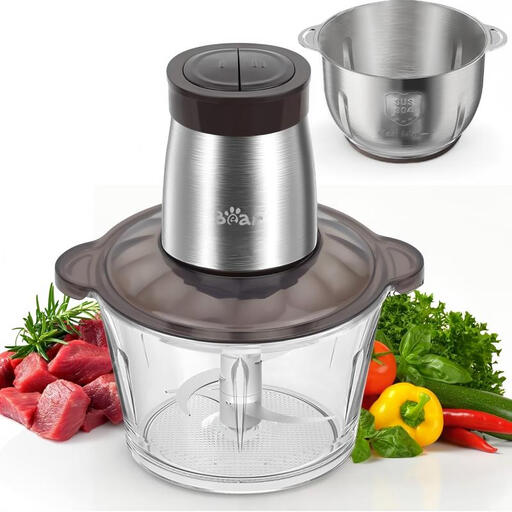
Why This Fits Their Persona: The two-bowl arrangement supports larger preparation sessions and separate handling of meat, vegetables, fruit or baby food ingredients.
The glass and 304 stainless steel bowls offer clearly different preparation options rather than one oversized container for every task.
2L and 1.8L bowls, two speed settings, four stainless steel blades and dishwasher-safe detachable parts.
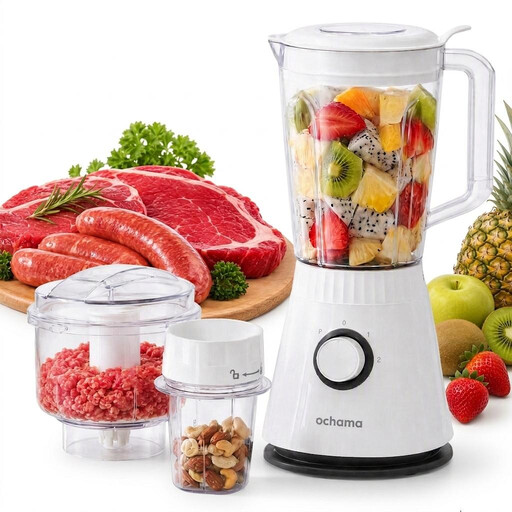
Why This Fits Their Persona: A practical option for households wanting one appliance for chopping, smoothies, purées, juices and other preparation tasks.
Its 1.5L capacity and three speed settings are stated clearly, making it easier to judge whether a multifunction blender suits your recipes.
600W motor, 1.5L pitcher, three speed settings and detachable components for cleaning.
We have compiled a complete, real-time list of products that fully satisfy these strict selection criteria and UK safety regulations.
It can be suitable for prepared, boneless meat and ordinary vegetables when used in small batches. Cut ingredients into pieces, avoid overfilling and follow the stated operating and cooling intervals. A dedicated meat grinder may be more appropriate for regularly processing large quantities of mince.
Only place components specifically described as dishwasher-safe in the dishwasher. Bowls and blades may qualify, but the motor unit, plug and cable should be kept away from water and wiped clean.
Lifespan depends on frequency of use, ingredient choice, cleaning and whether the motor is allowed to cool. Avoid hard or unsuitable foods, respect the operating limits and store blades safely. Check the product warranty and retain the instructions for future reference.