
24/7 Customer Support

Free returns

Same-day & Next-day Delivery

Quality Guaranteed

Unlock Your Welcome Offers: FREE Delivery | Up to 80% OFF | Free 30-day JoyPlus trial
Download the APP
An electric food chopper can save time on onions, vegetables, meat, sauces and purées, but choosing the wrong model may leave you with an appliance that overheats, is awkward to clean or cannot handle your usual portions.
Marketing often focuses on wattage and the number of functions. Those details matter, but they do not tell the whole story. Before buying, check the working capacity, blade material, operating limits and whether the attachments genuinely match your cooking routine.
A higher wattage does not automatically mean a more capable appliance. A 300W food chopper may be suitable for short batches of vegetables or meat, while a 750W food processor may be more appropriate for slicing, shredding and processing larger quantities.
Also check whether the advertised figure is rated power or maximum power. For example, the Monsga G100 is described as a 300W electric mincer with up to 1200W maximum power. These figures should not be compared directly with a model that lists only its continuous or rated output.
A stated 2L food chopper does not necessarily process 2L of ingredients effectively in one cycle. Ingredients need room to move around the blades, and some appliances have maximum fill lines or short operating periods.
For family meal preparation, look at both the bowl size and the permitted continuous working time. The BEAR QSJ-D03W5 has a 2L rated capacity but specifies operation for no more than 40 seconds, followed by a minimum two-minute interval.
A multifunctional blender or food processor may include several blades, discs and cups, but each extra component creates another part to wash and store. Sharp blades also require careful handling.
The motor housing should generally be wiped rather than immersed. Detachable parts should be checked for dishwasher suitability instead of assuming that all components can go in the dishwasher. This is particularly important with electric meat grinders, where metal plates and cutting parts may require hand washing and thorough drying.
Glass and stainless steel bowls can be useful for different reasons. A visible glass bowl allows you to monitor texture during chopping, while stainless steel bowls are less likely to retain food odours and can be convenient for meat preparation.
For one or two people, a compact 500ml chopper cup may be sufficient. Families and meal-preppers may prefer 1.5L to 2L capacity, provided the motor and operating cycle are suitable for larger batches. Always follow the manufacturer’s maximum fill guidance.
Look for clearly specified materials such as 304 stainless steel blades. This describes a commonly used stainless-steel grade, but it does not mean the appliance is suitable for every hard ingredient. Bones, ice, frozen food, coffee beans and grains may be excluded by the manufacturer.
Blade shape also affects how evenly ingredients move through the bowl. Multi-level or curved blades can help process ingredients at different heights, although portion size and preparation still influence the result.
Two-speed or pulse controls provide more control over texture. Lower speeds can suit softer ingredients such as fruit, garlic and onions, while higher speeds may be intended for firmer vegetables or prepared meat.
Operating limits are equally important. Some compact appliances are designed for short bursts rather than continuous use. Allowing the appliance to rest between cycles helps follow the instructions and reduces the risk of overheating.
Decide whether you need a vegetable chopper, meat mincer, smoothie maker or food mixer. A food processor with slicing and grating discs may be more useful for preparing family meals, while a hand blender with a small chopper cup can suit soups, sauces and small portions of baby food.
For frequent mince preparation, a dedicated electric meat grinder with different cutting plates may offer more control than a general-purpose chopper.

Why This Fits Their Persona: A practical option for smaller households and everyday chopping, including onions, garlic, vegetables and prepared meat portions.
The listing states the 2L capacity, two speeds and 40-second maximum continuous operation, making the usage limits clear before purchase.
2L glass bowl, two speed settings and 304 stainless steel three-dimensional blades.
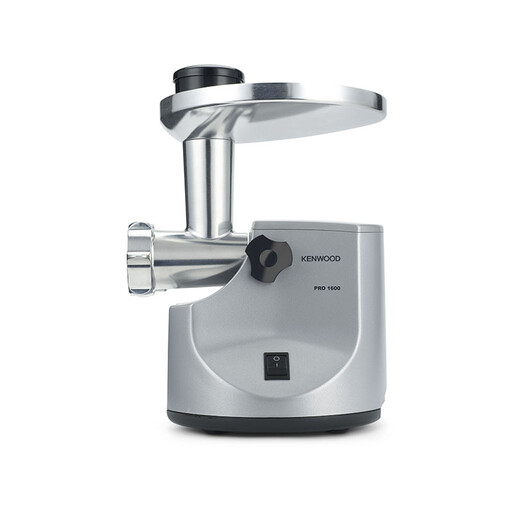
Why This Fits Their Persona: Suits cooks who regularly prepare mince, sausages or kebbe and want dedicated attachments rather than a general food preparation appliance.
It specifies three grinding screens, a reverse function, overload protection and a 15-minute maximum continuous use period.
Three mince textures, sausage and kebbe attachments, plus dishwasher-safe parts as specified.
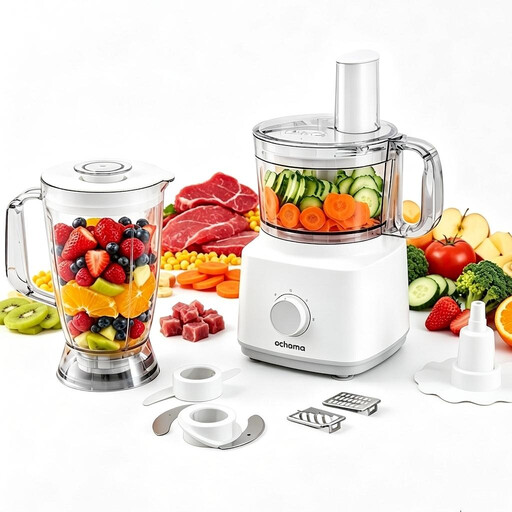
Why This Fits Their Persona: Designed for family cooking and meal preparation where chopping alone is not enough.
The product information identifies its 1.8L limit and explains that the motor must stop and the appliance be unplugged before cleaning or disassembly.
750W motor with chopping, slicing, shredding, grating and purée functions.
We have compiled a complete, real-time list of products that fully satisfy these strict selection criteria and UK safety regulations.
Some models are designed for prepared boneless meat, but capability varies. Check the instructions, blade type and operating time. If you mince meat frequently, a dedicated meat mincer with interchangeable plates may provide more consistent control.
A capacity between 1.5L and 2L can suit many family tasks, but do not fill the bowl beyond its stated limit. For sauces, baby food or small portions, a hand blender with a 500ml chopper cup may be easier to manage.
Not necessarily. Electricity use depends on wattage, operating time and frequency of use. A higher-powered food processor may complete a task more quickly, while a lower-powered chopper may use less electricity per short cycle. Compare the appliance’s actual functions and usage limits rather than wattage alone.