
24/7 Customer Support

Free returns

Same-day & Next-day Delivery

Quality Guaranteed

Unlock Your Welcome Offers: FREE Delivery | Up to 80% OFF | Free 30-day JoyPlus trial
Download the APP
A long shift on your feet, hours at a desk or a journey across the UK can leave your feet feeling tense and tired. An electric foot massager can make relaxation more convenient, but product pages often focus on impressive-sounding features rather than how a device will fit into everyday life.
Before choosing a Shiatsu foot massager or heated foot massager, look beyond the number of massage modes. The most important questions are whether the pressure suits you, whether the heat is controllable and whether the machine is easy to clean and store.
Deep tissue massage, acupressure nodes and compression can sound appealing, but strong pressure is not suitable for everyone. A device with only one fixed intensity may feel uncomfortable, particularly if you are new to powered massage.
Look for adjustable intensity, speed or massage zones. Independent heel and instep controls are useful because different parts of the foot may prefer different levels of pressure.
A heated foot massager can feel soothing, but a high fixed temperature is not automatically practical. Heat perception varies between users, and prolonged warmth may be uncomfortable. Check the temperature range, whether heat can be switched off independently and whether the unit has an automatic timer.
For electrical safety, follow the manufacturer’s instructions, keep mains-powered appliances away from water unless specifically designed for immersion and avoid using heat while asleep.
A compact dry foot massager may be easy to put away, while a foot spa bath massager requires filling, draining and drying after every session. Water circulation systems can also need more maintenance than a simple roller unit.
Check for removable washable covers, drainage outlets, detachable massage plates and cable storage. Wheels or a carry handle can make a surprisingly large difference when moving a water-filled appliance.
A basic roller may focus on the soles, while a full-foot Shiatsu foot massager can include the heel, arch and instep. Common mechanisms include:
No mechanism suits every person. If you prefer a gentler massage, prioritise adjustable settings rather than choosing by feature count alone.
A useful heated foot massager should make its heat function easy to manage. Look for a stated temperature range or setting, a visible display where applicable and a timer or automatic shut-off. The KASJ Z201, for example, specifies adjustable heating from 35°C to 48°C, while the RENPHO WMF07 lists a constant 55°C heat setting. These are materially different approaches, so compare them with your personal heat preference.
Always use the recommended session duration. Do not use a foot massager on broken, inflamed or irritated skin. People with diabetes, reduced sensation, circulation concerns or an existing foot condition should seek appropriate medical advice before use.
Measure your available storage space and check the supported foot size. Large enclosed models may offer more coverage but take up more room. For office use or travel, a portable body massager with USB charging may be more convenient than a heavier mains-powered unit.
Also consider:
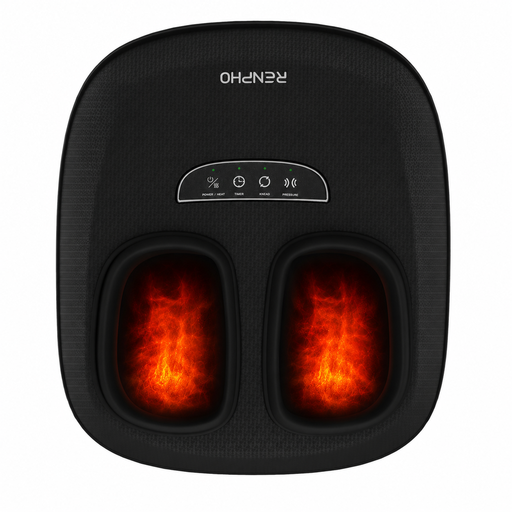
Why This Fits Their Persona: A straightforward option for people wanting everyday foot massage at home without managing a water-filled tub.
It offers three pressure intensities, adjustable kneading and a timer rather than relying on one fixed massage strength.
Full-foot coverage, independent instep and heel control, optional heat and a removable washable cover.
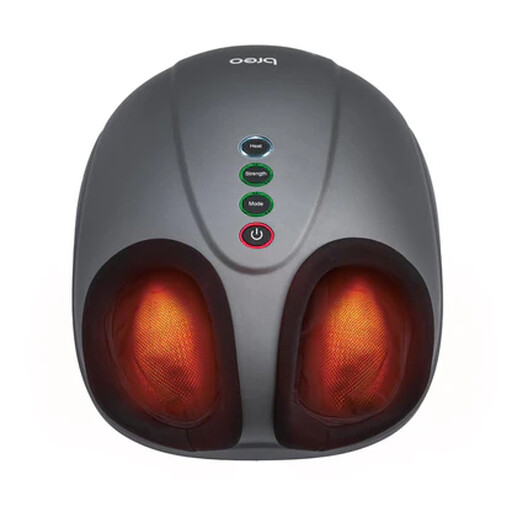
Why This Fits Their Persona: Suits shoppers seeking several massage techniques and a more configurable relaxation routine after work or standing for long periods.
The heat is optional and specified at 40–45°C, while compression has three adjustable options for more control.
Combines kneading, compression, scraping, rolling, tapping and removable washable foot sleeves.
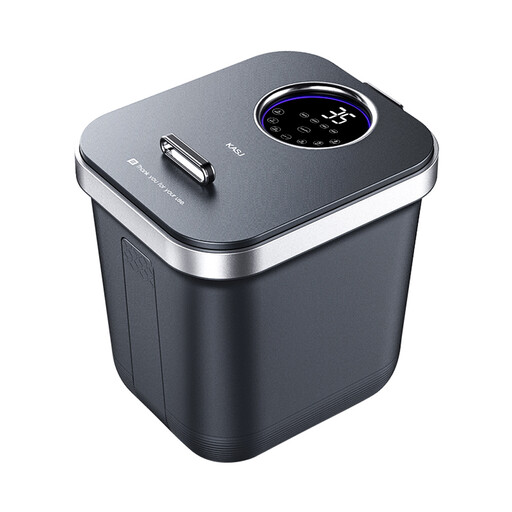
Why This Fits Their Persona: Designed for users who want a deeper water soak reaching towards the calves, with rollers and forefoot pressure points in one appliance.
It addresses the cleaning and storage drawback of foot spas with a drainage outlet, removable massage plates, cable storage and four wheels.
Six rotating roller sets, two up-and-down acupressure node sets, adjustable 35–48°C heating and a 10–60-minute timer.
We have compiled a complete, real-time list of products that fully satisfy these strict selection criteria and UK safety regulations.
If your discomfort is not limited to your feet, a multi-purpose device may offer better value. A neck and shoulder massager with adjustable intensity can be used while seated, whereas the SKG H7 Ultra uses a hands-free design, heat and a rechargeable battery. For frequent travellers, the Breo iNeck Air 2 has an inflatable U-shaped design, USB charging and a storage bag.
A portable body massager is easier to pack than a foot spa, but it may provide less full-foot coverage. Consider where you will use it most often: a quiet office, the sofa, a bedroom or while travelling. Choosing around your routine is more useful than paying for functions that will rarely be selected.
Running cost depends on the appliance’s power rating, session length and electricity tariff. Short sessions with automatic shut-off generally use less electricity than leaving a device running continuously. Check the wattage on the product information and use the timer rather than relying on memory.
Follow the individual manual. Many products are designed around short sessions, and the KASJ Z201 specifies a maximum continuous usage time of 30 minutes. Start with a shorter session and lower intensity. Stop immediately if you experience pain, unusual redness, dizziness or discomfort.
Product descriptions may use terms such as “plantar fasciitis foot massager”, but an electric massager is not a substitute for medical assessment or treatment. If you have persistent foot pain, reduced sensation, diabetes, wounds or circulation concerns, ask a suitable healthcare professional before using massage or heat.