
24/7 Customer Support

Free returns

Same-day & Next-day Delivery

Quality Guaranteed

Unlock Your Welcome Offers: FREE Delivery | Up to 80% OFF | Free 30-day JoyPlus trial
Download the APP
Buying electric hair clippers can seem straightforward until you compare battery claims, guide combs, blade designs and cleaning instructions. A low-priced clipper may appear appealing, but the wrong choice can lead to uneven cutting, frequent charging or difficult maintenance.
This guide from the Joybuy Product Recommendation Officer focuses on practical specifications rather than promotional language, helping UK households choose between cordless hair clippers, corded kits and multi-purpose trimmers.
A product may advertise 60, 100 or 120 minutes of battery use, but runtime does not tell you how consistently the motor cuts through thick or dense hair. Battery performance can also vary depending on hair length, attachment use and operating speed.
Check whether the clipper can also operate while connected to mains power. A cord-and-cordless design can be useful for family haircuts when several people need grooming in one session.
“Washable” may refer only to the blade or detachable head. Some rechargeable hair clippers must not be immersed, and charging ports and cables should never be exposed to water.
Read the cleaning instructions carefully. A fully washable hair trimmer should still be dried before charging, while a rinseable-blade model may require the main body to remain dry.
A hair clipper kit may include numerous combs, but the useful range depends on the measurements supplied. For fades, short back-and-sides styles or children’s haircuts, look for clearly stated millimetre settings and a secure comb attachment system.
Accessories such as scissors, a barber comb, cleaning brush and blade oil can be useful, but they should not replace checking the clipper’s core cutting specifications.
Corded clippers provide continuous power but require access to a UK mains socket and can restrict movement around the head. They may suit regular home haircutting where predictable operation is more important than portability.
Cordless hair clippers offer easier positioning, particularly when cutting children’s hair or working around mirrors. Check:
A lithium-ion model can be convenient for repeated grooming, but “up to” runtime figures should be treated as a guide rather than a guaranteed result.
Stainless steel and carbon steel blades are common in men’s hair clippers, barber clippers and home haircut clippers. Ceramic or titanium-coated components may also appear in product descriptions. The key practical questions are whether the blade is detachable, washable, replaceable or intended to be oiled regularly.
Blades are sharp and should be handled carefully during cleaning. Switch off and disconnect the appliance before removing attachments. Do not use a clipper if the blade is damaged, loose or pulling hair.
An adjustable hair trimmer may use a taper lever, rotating dial or fixed guide combs. A taper lever allows smaller adjustments for blending, while numbered combs are easier for beginners to repeat consistently.
For family hair clippers, a broad range such as approximately 0.7–25 mm can cover short cuts and longer trims. For beard and hair trimmer use, also check whether the kit includes a dedicated detail head, because a standard clipper blade may not be designed for every grooming area.
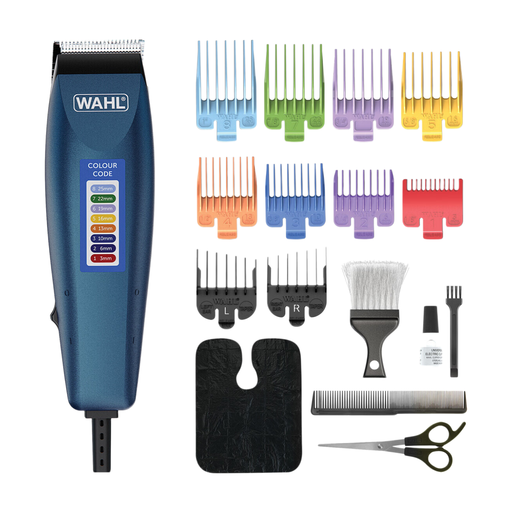
Why This Fits Their Persona: A straightforward option for beginners who want a home haircut kit without managing battery charging. It uses a UK mains connection and includes colour-coded combs for simpler length selection.
Its corded design avoids uncertain battery runtime, while the supplied combs make the cutting range more visible before use.
Colour-coded guide combs, adjustable taper lever, scissors, comb, blade oil and storage case are included.
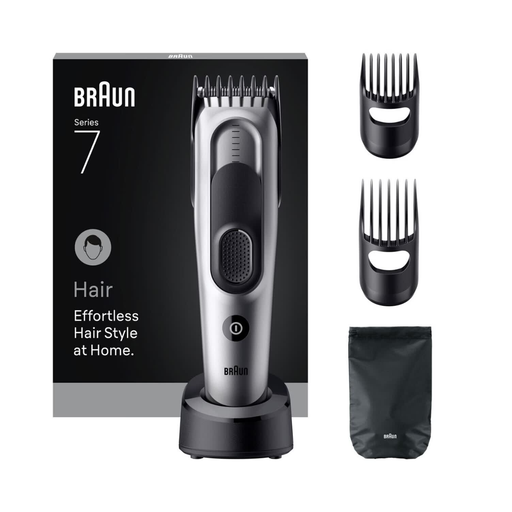
Why This Fits Their Persona: Suitable for shoppers prioritising multiple length settings, cordless convenience and easier rinsing after use.
The stated 17 settings cover 3–24 mm, giving clearer control than a kit that only lists a number of combs. Its washable design still requires the charging equipment to remain dry.
Up to 100 minutes cordless use, 17 length settings, a memory locking feature and a supplied travel pouch. The listing specifies a UK 2-pin plug, so an appropriate adapter may be needed for a three-pin socket.
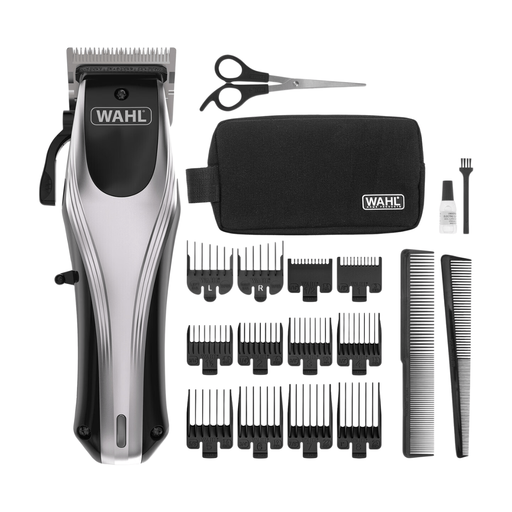
Why This Fits Their Persona: Its cord-and-cordless format is practical for repeated household haircuts, while the lithium-ion battery supports mobile use between charges.
Corded operation provides a fallback if the battery is low, reducing disruption during longer cutting sessions.
The listing states up to 120 minutes cordless runtime, a three-hour charge, precision-ground stainless-steel blades and an adjustable taper lever.
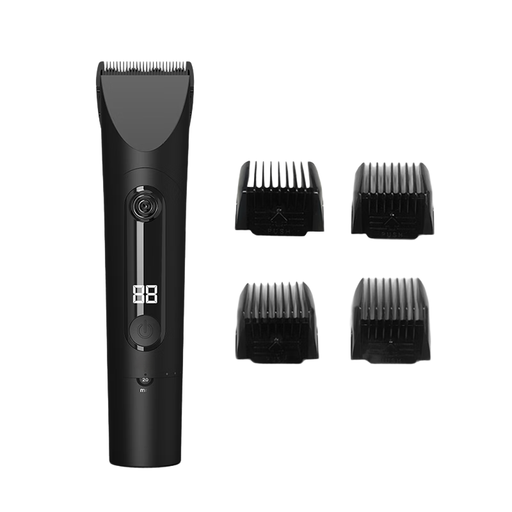
Why This Fits Their Persona: Designed for households seeking one grooming device for adults, children and pets, with a low-noise motor and lightweight body.
The listing identifies the unit as washable and intended for several grooming uses, helping avoid buying separate devices for different household needs. Follow the supplied instructions for cleaning and use.
Low-noise operation, washable construction, ergonomic non-slip grip and a safety-sharp head are listed features.
We have compiled a complete, real-time list of products that fully satisfy these strict selection criteria and UK safety regulations.
They can be convenient because there is no trailing cable, but suitability depends on the child’s comfort, the clipper’s noise level and the adult’s handling. Use an appropriate guide comb, keep movements steady and stop if the child becomes distressed.
Lifespan depends on usage frequency, blade care, battery condition and storage. Regular brushing, appropriate oiling and avoiding moisture around electrical components can help maintain operation. A corded model avoids rechargeable battery ageing, while a cordless model offers greater flexibility.
They may reduce the need for specialist cleaning products, but they do not remove maintenance requirements. Blades may still need oiling or replacement, and washable does not mean the clipper can be used while charging or submerged without checking the instructions.