
24/7 Customer Support

Free returns

Same-day & Next-day Delivery

Quality Guaranteed

Unlock Your Welcome Offers: FREE Delivery | Up to 80% OFF | Free 30-day JoyPlus trial
Download the APP
A heated throw can make a cold UK evening more comfortable without warming the entire house. However, product listings often focus on soft fabrics and attractive colours while leaving important practical details buried in the specifications. The right electric heated throw should suit your seating position, washing routine, preferred heat level and safety requirements.
Before buying, watch for three common pitfalls: confusing a throw with an underblanket, assuming a higher wattage always means better performance and overlooking how the controller affects cleaning and everyday use.
An overblanket or heated throw is designed to sit on top of the user, whether on a sofa, bed or chair. An underblanket is designed to lie flat beneath a bottom sheet. These products are not interchangeable.
For example, the RUIANBAO 160 × 140 cm product is an underlay double electric blanket. It should be placed beneath the sheet and must not be used as an over-wrapper or sofa throw. Using the wrong format can create avoidable heat and wiring risks.
A 160 W large heated throw uses more power than a 120 W small heated throw, but it also covers a larger area. Wattage should therefore be considered alongside dimensions, heat settings and intended coverage.
A 120 W throw uses approximately 0.12 kWh per hour at full power, while a 160 W model uses approximately 0.16 kWh per hour. Your actual consumption depends on the selected setting and how long the throw is switched on. A lower setting may provide sufficient personal warmth without heating unused fabric.
A washable heated throw is easier to maintain, but only when the controller and power connection can be completely detached. Never wash an electric throw with its controller attached. The fabric must also be fully dry before reconnecting it to the mains.
A detachable controller is useful for storage as well as cleaning, particularly if the throw is used frequently on a sofa or at a desk.
Choose dimensions according to how you will use the throw:
Check the measurements rather than relying on terms such as “large” or “generous”. A larger throw may also be heavier and use more electricity.
Three settings may be adequate for simple personal warming. Six settings offer more gradual adjustment, which can be useful when room temperature changes throughout the day.
Look for a clearly marked controller with a secure detachable connection. Fast heat-up functions can provide warmth quickly, but they do not remove the need to use the throw unfolded and flat.
Prioritise an electric heated throw with auto shut-off and overheat protection. These are safety back-up features, not replacements for correct use. Always follow the product instructions.
Important checks include:
For electrical products sold in the UK, check the product information for appropriate UKCA or CE marking and a suitable UK mains plug. Markings support conformity requirements, but safe handling and maintenance remain essential.
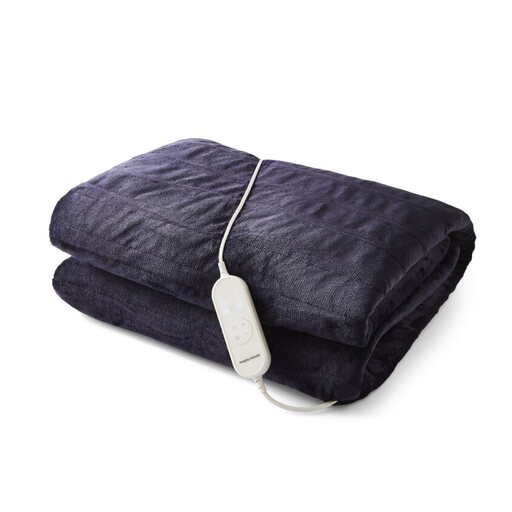
Why This Fits Their Persona: Its compact 120 × 70 cm format suits one person using a throw at a desk, on a chair or on a sofa without heating a larger unused area.
The 120 W power rating is clearly stated, helping shoppers compare likely consumption rather than judging warmth by marketing language alone.
Three heat settings, fast heat-up, detachable controller, machine-washable throw, overheat protection and automatic shut-off.
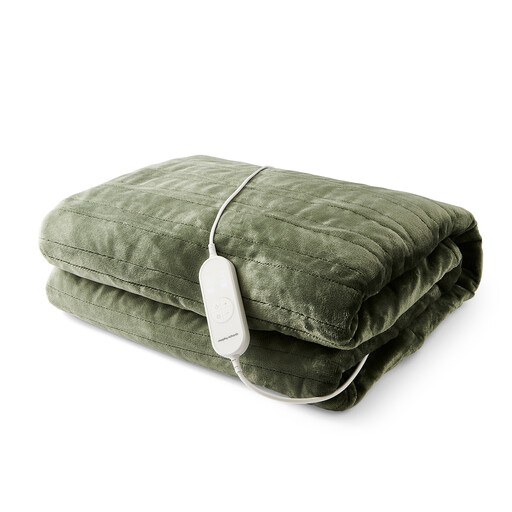
Why This Fits Their Persona: The 160 × 120 cm striped fleece design is suited to relaxed evenings on a sofa or extra coverage on top of a bed.
The product type, dimensions and detachable controller are specified, reducing the risk of buying a smaller throw or a non-washable electrical unit by mistake.
Six heat settings, 160 W power, fast heat-up, machine washability with the controller removed, overheat protection and auto shut-off.
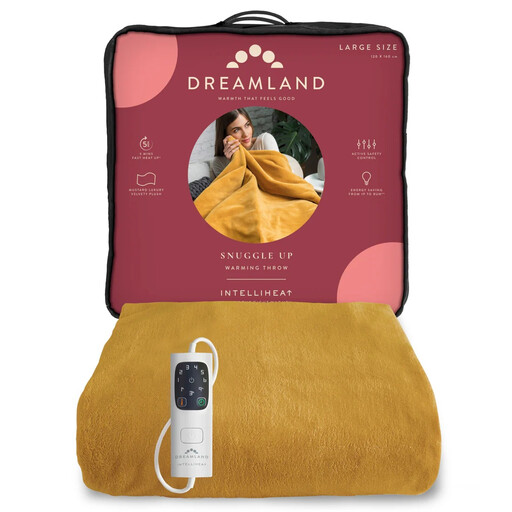
Why This Fits Their Persona: Frequent sofa users who want broad coverage and several warmth options may value its 120 × 160 cm size and six heat settings.
Its machine-washable construction requires the control unit to be detached, making the cleaning process clear rather than implied.
Plush fleece, rapid heat-up, six heat settings, automatic safety shut-off and a 120 × 160 cm format.
We have compiled a complete, real-time list of products that fully satisfy these strict selection criteria and UK safety regulations.
Spread the throw evenly over your lap or body while sitting or reclining. Do not fold, bunch, tuck in or place heavy cushions over it. Connect the detachable controller before plugging the unit into a suitable mains socket, then select the lowest comfortable setting.
Switch off and unplug the throw before getting up, cleaning or storing it. Allow it to cool, roll or fold it loosely and keep it in a dry place without placing heavy items on top. Check the care label for washing temperature and drying instructions.
Running cost depends on wattage, heat setting, usage time and your electricity tariff. A 120 W model consumes about 0.12 kWh per hour at its rated maximum, while a 160 W model consumes about 0.16 kWh. Multiply this figure by your tariff and usage duration for an estimate. Automatic shut-off and lower heat settings can help limit unnecessary operation.
Most heated throws are designed for personal warming while awake and should not be slept on top of. They are also different from underblankets. Follow the specific manufacturer’s instructions and switch off and unplug the throw when you are no longer using it.
There is no single lifespan for every product. Regularly inspect the fabric, internal wiring, plug, controller and connector. Stop using the throw if you notice fraying, scorching, exposed wiring, unusual heating or a malfunctioning controller. Correct storage, careful washing and avoiding sharp folds can help protect the internal wiring.