For several hours of quieter supplementary heat, consider an oil-filled radiator; a convector suits occasional room heating, while a ceramic fan heater provides quicker warmth when you first sit down, with fan noise as a trade-off. None is assured of keeping a large living room comfortable if its cold walls and draughts are causing substantial heat loss, so check the room and its existing heating before choosing an output.
Who is this for?
People spending long evenings in the living room
If you occupy the room for hours, steady supplementary warmth without fan noise may matter more than the fastest warm-up. An oil-filled radiator is worth considering if you can allow time for it to heat up.
People who want warmth soon after entering
If the room feels cold when you first sit down, a fan heater offers rapid heat. Electrical Safety First notes that fan heaters can be noisy, so consider where you can position one safely.
People concerned about cold walls and draughts
If the room stays uncomfortable despite heating, the building may need attention as well as a supplementary heater. Energy Saving Trust identifies walls as a significant heat-loss route in uninsulated homes and advises preserving necessary ventilation when draught proofing.
What matters when choosing?
Decide whether you need sustained heat, a quick warm-up or clear floor space, then check whether the room’s heat loss and a safe heater position allow that choice to work in practice.
Oil-filled radiator
Consider it when: You want quieter supplementary heating over several hours.
Allow for: A slower initial warm-up and surfaces that can remain hot after switch-off, as Electrical Safety First notes.
Convector heater
Consider it when: You want a portable heater that warms the room’s air for supplementary or occasional use.
Check the limit: Dimplex says its ML2T convector is suitable only for well-insulated spaces or occasional use; that qualification matters in a cold-walled room.
Ceramic fan heater
Consider it when: Rapid warmth while the room is occupied matters most.
Allow for: Fan noise and a clear, safe position for the air inlet and outlet.
Mounted infrared panel
Consider it when: Preserving floor space is important and a fixed installation suits the room.
Check before choosing: Mounting, controls and electrical-installation requirements for the exact panel; mounting does not resolve heat loss through cold walls.
| Concern |
What to check |
Who this matters to |
| Comfort despite cold walls |
Measure the room and note insulation, draughts and how well the existing heating copes. Do not obstruct required ventilation. |
If warmth keeps escaping through cold walls, I need to know whether a portable heater will only supplement the heating already there; around 36% of consumers would put this heat-loss question first. |
| Warmth on arrival |
Check adjustable output and where a fan heater could stand without obstructed vents or a risk of being knocked over. |
Coming into a cold room for a short sitting period makes a quick warm-up my priority, even if I can hear the fan; around 29% of consumers would prioritise immediate warmth. |
| Quiet, longer use |
Look at thermostat controls and whether an oil-filled radiator has a safe place to stand while its surfaces are hot. |
When I spend hours reading or watching television, I would accept a slower start to avoid fan noise; roughly 21% of consumers would make quiet, sustained heat their main concern. |
| Floor space and fitting |
Check whether a portable heater can stand clear of furniture and walkways, or whether a panel can be mounted and connected appropriately. |
With little clear floor space, I need a heater that does not obstruct the route through the room; around 14% of consumers would put positioning or installation first. |
Mistakes to avoid
-
Assuming a 2 kW label settles room suitability
Output alone cannot establish whether a heater will keep a large, cold-walled room comfortable. Room volume, insulation and draughts also affect the result; Dimplex limits its ML2T model to well-insulated spaces or occasional use.
Measure the room, investigate the cold walls and assess how the existing heating performs before relying on a portable heater for sustained warmth.
-
Choosing solely by heater type
Oil-filled, convector and fan-heater models can share the same stated maximum power. Their warm-up behaviour, noise and controls may matter more to your use than the type name alone.
Compare the exact models’ controls and think about how long the room will be occupied, rather than assuming that one type uses less electricity at the same power draw.
-
Squeezing a portable heater beside furniture
Curtains, furniture and a busy route through the room can make a heater position unsafe, regardless of its stated protective features.
Follow the exact model’s clearance instructions, keep the route clear and plug the heater directly into a wall socket, as Merseyside Fire & Rescue Service advises. Follow Home Office fire-safety advice to unplug electric heaters when going out or going to bed.
-
Blocking ventilation to stop draughts
Unwanted gaps and ventilation needed for safety are not the same thing. Energy Saving Trust cautions against blocking vents, chimneys or essential airflow.
Address draughts around suitable doors, windows and floors while leaving required ventilation unobstructed.
Relevant brands to consider
Dimplex
Its ML2T convector illustrates the portable convector route for supplementary room heating.
- Dimplex specifies a 2 kW output and adjustable thermostat for the ML2T.
- Dimplex says this model is suitable only for well-insulated spaces or occasional use, a substantial qualification for a cold-walled living room.
De’Longhi
Its Radia S TRRS0920 oil-filled radiator and HFX65V20 ceramic fan heater illustrate different choices for longer sessions and rapid warm-up.
- De’Longhi specifies a 2 kW maximum output and a 60 m³ working capacity for the TRRS0920; the capacity is manufacturer guidance, not a guarantee for a room with cold walls.
- For the HFX65V20 fan heater, weigh quicker warmth against fan noise and the need for safe placement.
Herschel Infrared
Its infrared panels are relevant if you are considering a wall- or ceiling-mounted option instead of a portable floor-standing heater.
- Herschel describes panels that can be mounted on walls or ceilings, leaving floor space clear.
- Suitability depends on the exact panel’s mounting, controls and electrical installation; a mounted heater does not remove heat loss through the walls.
Joybuy product choices
These portable convector and oil-filled models are options for supplementary living-room heating. Compare each model’s room guidance with your measured space and its insulation before deciding whether it fits a large room with cold walls.
 No image available
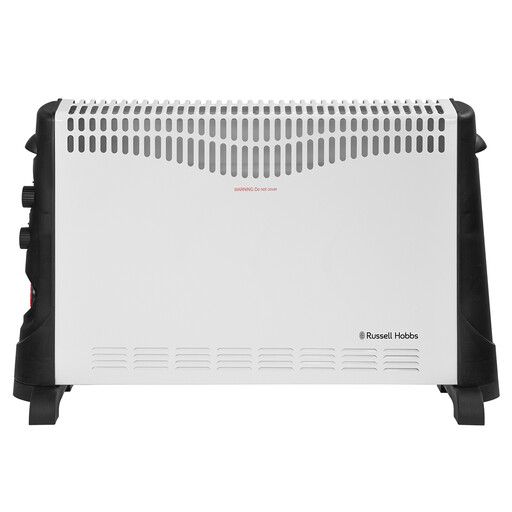
Russell Hobbs RHCVH4002 (EU) 2 kW Convection Heater, White
Consider this portable convector for supplementary warmth where its placement and room guidance fit your space.
The stated suitability of up to about 20 m² does not establish that it can keep a larger, cold-walled room comfortable. Check the model’s clearance instructions before choosing a position.
View on Joybuy
 No image available
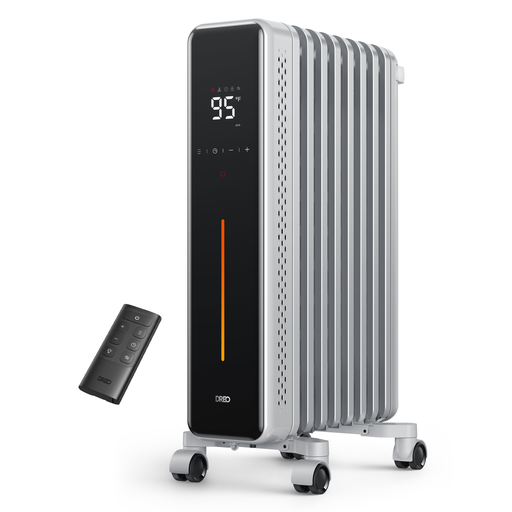
DREO OH621 2 kW Oil-Filled Radiator
Consider this oil-filled model if quieter supplementary heating during longer living-room sessions is the priority.
Its stated suitability is for well-insulated rooms of roughly 15 m². Check that limit against your room before relying on it in a larger space with cold walls.
View on Joybuy
 No image available
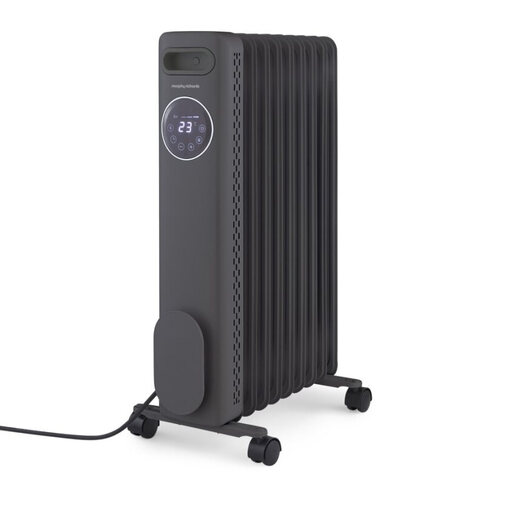
Morphy Richards HeatFlux 827752 2 kW Digital Oil-Filled Radiator, Grey
Consider this oil-filled model for quieter supplementary warmth over longer periods.
Check its room-suitability guidance against the size and heat loss of your living room. Allow at least one metre between the heater and furniture or curtains, and use a wall socket, as the product instructions specify.
View on Joybuy
 No image available
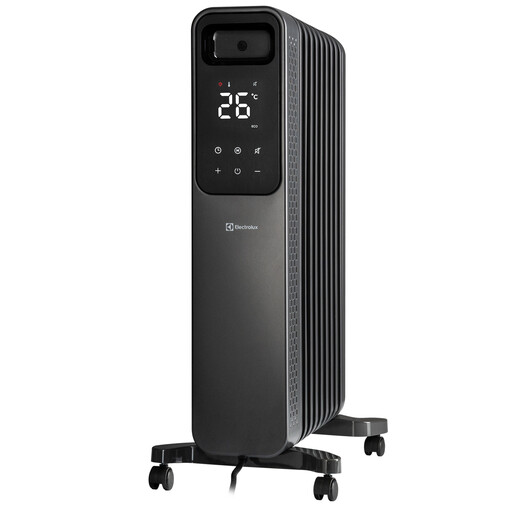
Electrolux HEA2013ELGRY 2000 W Oil-Filled Radiator, Grey
Consider this portable oil-filled model when fan noise would be unwelcome during longer use.
Check the room-size guidance and safe-clearance instructions for this exact model against your living room; general room descriptions cannot establish whether it will offset cold-wall heat loss.
View on Joybuy
 No image available
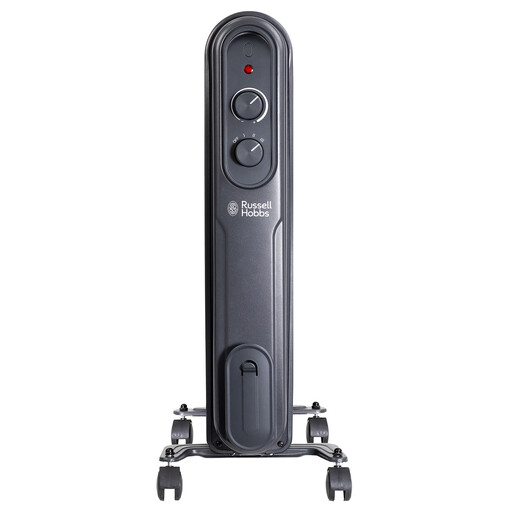
Russell Hobbs RHOFR9004A Nine-Fin 2 kW Oil-Filled Radiator, Matt Anthracite
Consider this portable oil-filled radiator where quieter supplementary heating is useful and its stated room limit fits.
The stated suitability of up to about 20 m² does not establish adequate heating for a larger living room with cold walls. Check your room dimensions and draughts before choosing it.
View on Joybuy
Frequently asked questions
Will an electric heater solve the cold-wall problem?
An electric heater can add warmth, but it does not reduce heat escaping through cold walls. Energy Saving Trust identifies walls as a significant heat-loss route in uninsulated homes. Check the wall construction and draughts alongside the room’s existing heating, while preserving necessary ventilation.
Can I use a portable heater with an extension lead or leave it on overnight?
Use a wall socket rather than an extension lead, and do not leave a portable heater running when you go to bed. Merseyside Fire & Rescue Service advises direct wall-socket use, while Home Office fire-safety guidance says to unplug electric heaters when going out or going to bed.
Which safety features should I check on a freestanding heater?
Check the exact model’s overheat protection and, where relevant, tip-over shut-off, but do not treat either feature as a substitute for safe placement. Keep the heater clear of furniture and curtains, follow its clearance instructions and check for product safety notices.


