What matters when choosing?
For a small, occupied home office, start with the need that matters most during your work session, then check whether the heater can be used safely in the available space.
Compact fan or ceramic heater
Consider when: you want warm air soon after arriving at a cold desk.
Trade-off: Electrical Safety First says fan heaters can be noisy, which matters during calls or concentrated work.
Small oil-free radiator
Consider when: slower supplementary heat fits a longer session in a suitable room.
Trade-off: do not expect instant warm airflow; Dimplex states that its Eco Chico model is suitable only for well-insulated spaces or occasional use.
Convector heater
Consider when: you want to assess background room heating rather than direct warm airflow.
Trade-off: Morphy Richards distinguishes natural convection from the quicker airflow of a fan heater; check that the proposed position leaves the clearance the exact model requires.
| Concern |
What to check |
Who this matters to |
| Warmth on arrival |
Compare fan or ceramic airflow, available heat settings and the exact model’s thermostat. |
When I sit down in a cold office, I want warmth promptly rather than waiting for background heat; around 28% of consumers would put rapid warmth first. |
| Long-session comfort |
Check whether the model has a fan and whether its stated room and insulation conditions fit your office. |
During extended desk work, I would accept slower warm-up to avoid relying on constant warm airflow; around 22% of consumers would make longer-session comfort their priority. |
| Electricity use |
Check rated watts at each setting, thermostat control and whether the stated room suitability matches the space. |
If the heater will run regularly, I want output that fits the room without selecting a higher rating solely for its size; around 22% of consumers would prioritise controlling electricity use. |
| Safe placement |
Check the footprint, cable route, required clearance, UK plug and protection features of the exact model. |
With papers and furniture close to my desk, I need a stable position clear of combustible items before I can use a heater; around 28% of consumers would put safe placement first. |
Joybuy heaters for this setting
These heaters offer fan-driven personal warmth or convection-style supplementary heat to compare for a small home office. Match the model’s output and placement requirements to your room rather than treating every option as a whole-room solution.
 No image available
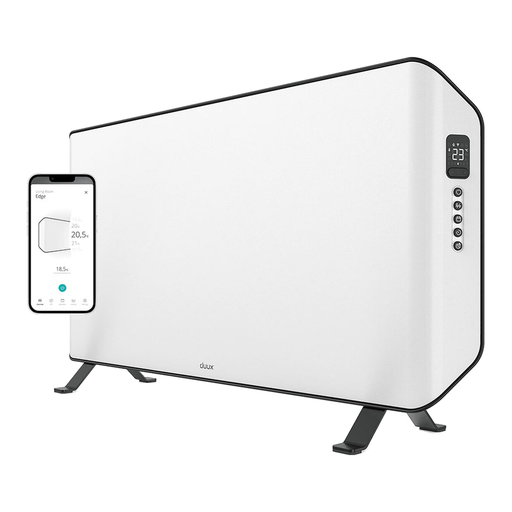
Duux Edge 1000 Smart Convection Heater, white, DXCH21UK
Consider this convection model if background heat suits a longer session and you have a position that meets its clearance requirements.
The product name specifies 1,000 W, Wi-Fi control and a wall-mounted option. Check the room guidance and installation requirements before choosing where to put it.
View on Joybuy
 No image available
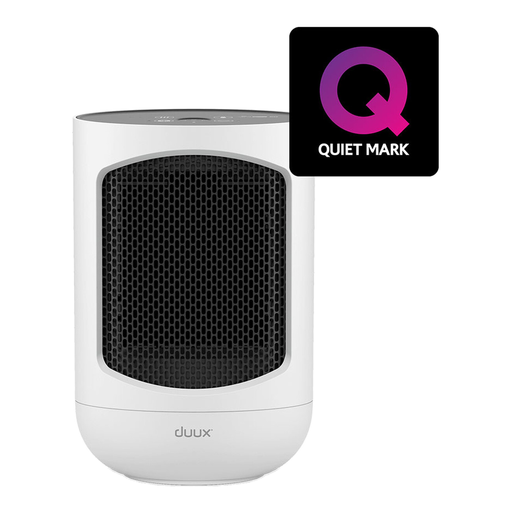
Duux Zone Personal Fan Heater, white, DXCH43UK
Consider this ceramic fan heater for prompt, personal-area warmth near a desk, provided its position leaves safe clearance.
The product name specifies 1,500 W, three heat settings and 60° oscillation. If noise matters during calls, check whether its operating sound suits your workspace.
View on Joybuy
 No image available
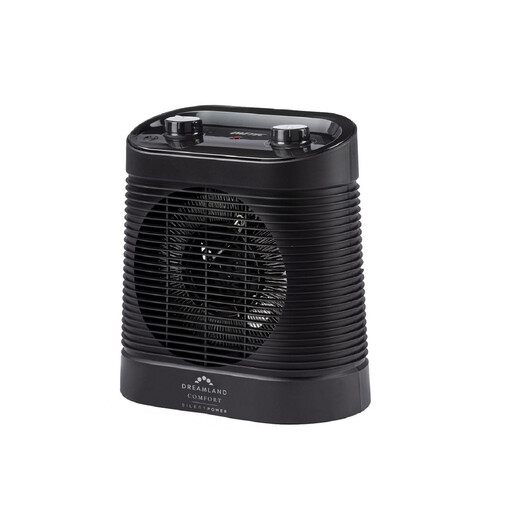
Dreamland Silent Power Comfort ceramic fan heater, 2,000 W
This is a fan-heater option to assess if you want prompt heat and have checked that its rated output fits the room.
The product name specifies 2,000 W and digital controls. Treat “Silent Power” as part of the model name, not a measured noise level; check operating sound if you take calls nearby.
View on Joybuy
 No image available
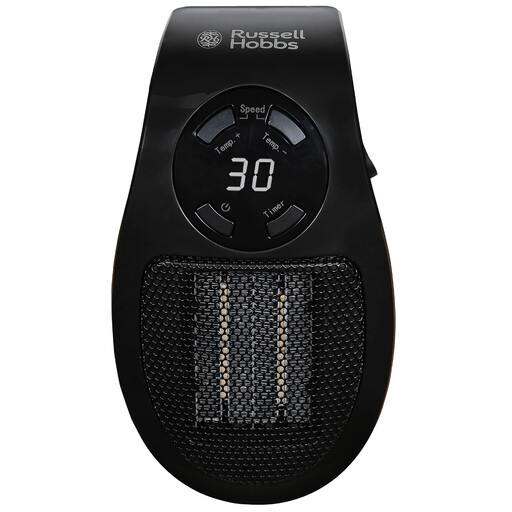
Russell Hobbs RHPH2001B plug-in ceramic fan heater, 500 W
Consider its compact plug-in format for personal warmth only where the wall outlet gives the heater a stable, unobstructed position.
The product name specifies 500 W. Do not assume that this output will warm the whole office; check the model’s placement instructions and room guidance.
View on Joybuy
 No image available
Totopia KPT-150 0596YL PTC ceramic heater
Consider this portable fan-heater format for supplementary office heat if you can give it a clear, stable position.
The product name includes a 12-hour timer and tip-over and overheat protection. Confirm the exact model’s rated power and heat settings before deciding whether its output suits the room; a timer does not replace switching the heater off when it is unattended.
View on Joybuy
Questions about home-office heaters
Which heater type should I consider for a small home office?
Consider a compact fan or ceramic heater if you need warmth promptly at your desk; Electrical Safety First says fan heaters heat quickly but can be noisy. For a longer session where immediate warm airflow matters less, compare a suitable small radiator or convector against the room guidance and clearance requirements of the exact model.
Can I put a portable heater under my desk?
Only if that position meets the exact heater’s instructions for stable placement, airflow and clearance. Hertfordshire County Council advises keeping portable heaters at least one metre from anything that can burn; consider papers, cables, furniture and where your chair moves before using a desk-adjacent position.
Does a portable heater always need a UKCA mark?
No: for Great Britain, the Office for Product Safety and Standards’ March 2025 guidance on the Electrical Equipment (Safety) Regulations 2016 says recognition of certain goods meeting EU requirements, including CE marking, has been extended indefinitely. Northern Ireland has different provisions, so check the applicable marking and safety documentation for the exact heater and where it is supplied.
Should I register a new portable heater?
Register it if the manufacturer offers product registration. Electrical Safety First says registration can help the manufacturer contact you about a safety recall; keep the model details and follow any recall instructions that apply to your heater.


