Choose a fan or ceramic heater for rapid warmth while you are present, an oil-filled radiator when quieter, more gradual warmth matters, or a convector to warm the air in an enclosed, reasonably insulated room. In a small flat, the choice also depends on whether you can give the heater enough clearance, use a suitable socket and accommodate its footprint; check the exact model’s room guidance and controls before buying.
Who each heating approach suits
People wanting quick warmth at their seat
If you sit at a desk or in one corner of the room and want warmth soon after switching on, a fan or ceramic heater is worth considering. Electrical Safety First notes that fan heaters provide instant heat but can be noisy. Keep vents clear and the heater away from soft furnishings.
People spending longer in a quiet room
An oil-filled radiator suits a longer period of occupancy when a slower warm-up is acceptable. De'Longhi describes its Radia S radiator as continuing to release heat after switch-off; allow for hot surfaces when deciding where it can stand.
People managing electricity use
Compare the heater’s rated input, the settings you expect to use, running time and thermostat controls against your own electricity tariff. A lower setting changes electrical input, but an ECO label alone does not establish what the heater will use in your room.
What matters when choosing
Fan or ceramic heater
Choose when: You need warmth quickly near your occupied seat and can supervise the heater.
Trade-off: Electrical Safety First notes that fan heat can be noisy; vents and nearby furnishings need particular attention.
Oil-filled radiator
Choose when: You expect to remain in the room longer and value quieter, more gradual warmth.
Trade-off: Warm-up takes longer, and surfaces can remain hot after switch-off.
Convector heater
Choose when: You want to warm the air in an enclosed, reasonably insulated room without a fan.
Trade-off: It does not give the immediate, directed warmth of a fan heater and needs unobstructed space around it.
Once you have chosen a heating approach, check whether the exact model fits your room, placement and likely hours of use.
| Concern | What to check | Who this matters to |
|---|
| Fast warmth |
Look for a fan-assisted model, then compare its heat settings and thermostat. |
If I have just sat down to work, I want warmth at my position without waiting for the room to heat through; around 28% of consumers put rapid spot warmth first. |
| Quiet, sustained warmth |
Compare an oil-filled model’s heat settings, thermostat, footprint and provision for moving it. |
For several hours of reading or relaxing, I can accept a slower warm-up if the heater does not rely on a fan; roughly 22% of consumers prioritise this quieter, longer-use pattern. |
| Electricity use |
Compare rated input in watts, available lower settings and thermostat controls against your expected running time. |
When heating one room regularly, I need to understand how long the heater will draw power at my chosen setting; about 22% of consumers make control of electricity use their primary concern. |
| Safe placement |
Check the manual’s clearance requirements, the heater’s stability and protective features, and whether it has a suitable UK plug. |
With furniture and soft furnishings close together, I need a position where the heater can stand clear and be plugged in safely; around 28% of consumers put space and safety fit first. |
Mistakes to avoid
-
Judging running use by wattage or an ECO label alone
Rated power describes electrical input at a particular setting, not how long the heater will run at that setting in your room. At full output, a 2 kW heater uses 2 kWh in one hour; thermostat cycling and a lower setting change consumption.
Multiply the setting’s input in kilowatts by expected hours and your own electricity unit rate to assess use, then check the exact model’s controls.
-
Choosing a compact heater before finding a safe place for it
A small footprint does not remove the need to keep curtains, bedding, furniture and clothing away from a hot appliance or its vents.
Check the model’s clearance instructions and place it on a stable surface. Electrical Safety First advises keeping portable heaters uncovered and away from flammable materials.
-
Expecting every heating format to feel the same
A fan heater provides rapid warmth but may add noise; an oil-filled radiator warms more gradually and can continue releasing heat after switch-off.
Choose the format around how soon you need warmth and how long you will occupy the room, then compare controls and dimensions within that format.
-
Assuming similar product names mean identical variants
Different model numbers can have different controls and safety features, even within one radiator range.
Match the complete model number to the manufacturer’s specifications and check the plug, manual and placement requirements for the variant you intend to buy.
Brands to consider for portable heating
Dimplex
Dimplex offers fan and ceramic heaters, convectors and electric radiators, making its range relevant when comparing quick top-up heat with room-air warming.
- Dimplex describes its fan and ceramic formats as portable sources of rapid top-up heat.
- Its DEUF2N fan-heater manual limits that model to well-insulated spaces or occasional use; check guidance for the particular model rather than applying it to the whole range.
De'Longhi
The Radia S oil-filled range is relevant when quieter, gradual warmth matters more than immediate fan heat.
- De'Longhi lists thermostats and different control options across its Radia S models.
- Power settings, timers and tip-over protection vary by variant; oil-filled models also take longer to warm.
Pro Breeze
Pro Breeze ceramic fan heaters offer a route to attended, fan-assisted warmth where compact placement and temperature control matter.
- The ThermaCube 2 kW model lists a 15–35°C thermostat, 55° oscillation, overheat protection and a tip-over switch.
- Check the exact model’s room guidance and placement instructions; its maximum 2 kW input does not imply lower electricity use.
Morphy Richards
Morphy Richards lists ceramic fan heaters, convectors and oil-filled radiators, allowing a comparison of heating formats within its range.
- Its listed options include 1.5 kW ceramic and 2 kW fan, ceramic and oil-filled models.
- Use the exact model’s specifications and your room conditions rather than relying on a general room-sizing rule.
Joybuy heaters for this room
These models cover fan-assisted warmth and oil-filled heating for an occupied room. The oil-filled choices suit a more gradual warm-up; for any model, check its footprint, room guidance and manual against the space available in your flat.
 No image available
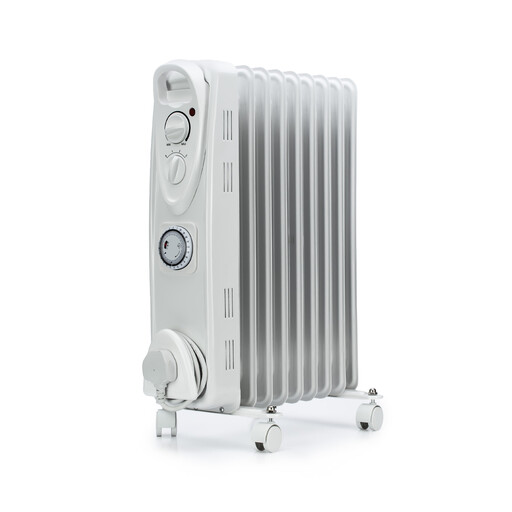
Status 9-Fin Oil-Filled Radiator, 2000 W, White
Consider this oil-filled model if you can allow for gradual warmth during a longer period in the room.
Its title specifies three heat settings, an adjustable thermostat and a timer. Check its dimensions, room guidance and plug against your intended position.
View on Joybuy
 No image available
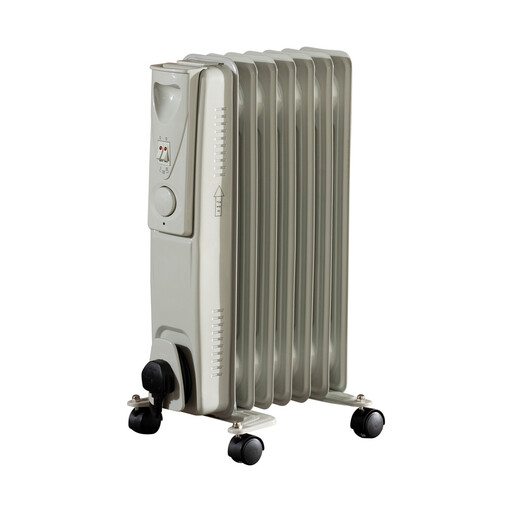
DAEWOO 1500 W 7-Fin Portable Oil-Filled Radiator, White
This is an oil-filled option for longer occupancy when slower warm-up is acceptable.
The title specifies an adjustable thermostat, tip-over shut-off, wheels and a carry handle. Check its footprint and the exact room guidance before deciding where it will stand.
View on Joybuy
 No image available
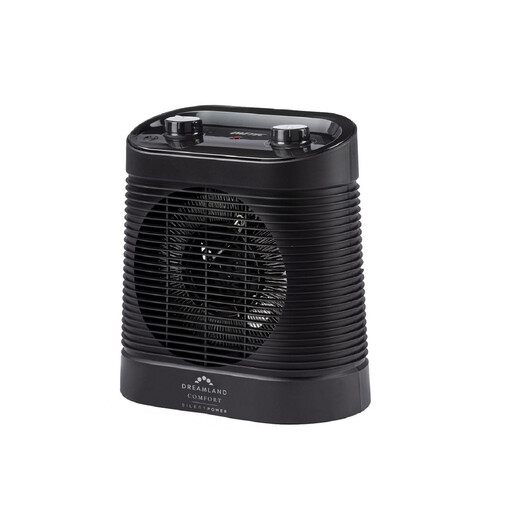
Dreamland Silent Power Comfort 2000 W Ceramic Fan Heater, Grey
Consider this fan heater for rapid warmth while you are present at a desk or seating area; its name is not independent evidence that it runs silently.
The title specifies digital control. Check the exact manual for clearance and safety features, including whether tip-over protection is fitted.
View on Joybuy
 No image available
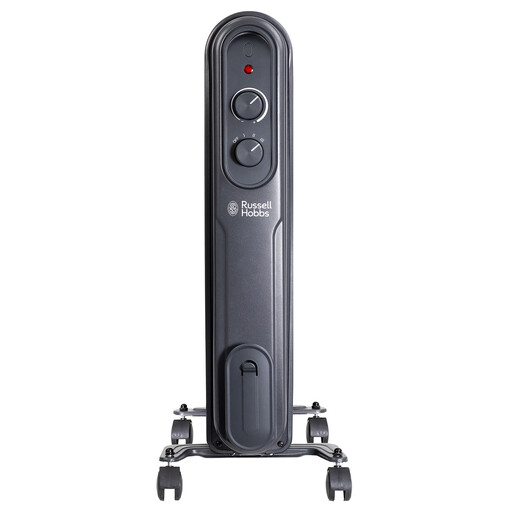
Russell Hobbs RHOFR9004A 9-Fin Oil-Filled Radiator, 2 kW
This oil-filled model is relevant if you prefer gradual warmth over a longer seated period.
Its title identifies the 9-fin, 2 kW variant in matt anthracite. Check the dimensions, available settings and manufacturer’s room guidance for your space.
View on Joybuy
 No image available
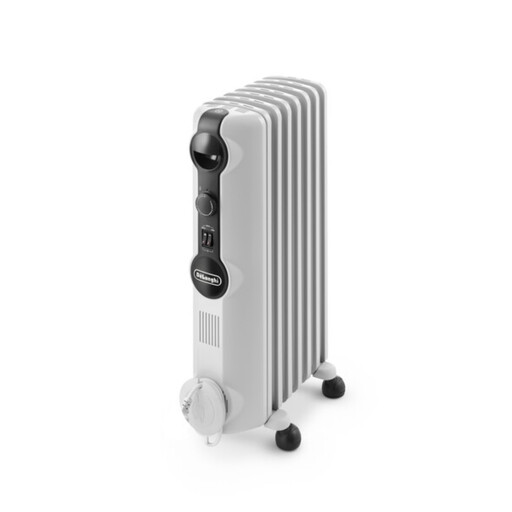
De'Longhi Radia S TRRS0715 7-Fin Oil-Filled Radiator, 1500 W
Consider this variant for quieter, gradual warmth when immediate fan heat is not the priority.
The title identifies mechanical control and a white finish. Check that you can meet the model’s stated 50 cm clearance around the unit, and confirm its room guidance and safety features before buying.
View on Joybuy
Questions about choosing and using a heater
Which heater type should I choose for an occupied small room?
Choose a fan or ceramic heater for rapid attended warmth, an oil-filled radiator for quieter and more gradual warmth, or a convector to warm the air of an enclosed, reasonably insulated room. Electrical Safety First and Dimplex distinguish these uses, but your room’s insulation, available clearance and tolerance for fan noise still affect the choice.
How can I work out a heater’s electricity use?
Multiply its input in kilowatts by the hours it runs at that input to estimate kilowatt-hours: a 2 kW heater running at full output for one hour uses 2 kWh. For your own cost calculation, apply your electricity unit rate and account for lower settings or thermostat cycling; rated maximum power does not mean the heater draws that power throughout every session.
Can I leave a portable heater on overnight or use an extension lead?
Do not plan to run a portable heater overnight: Electrical Safety First advises against it. Check the exact model’s connection instructions and use a suitable wall socket; Dimplex’s DEUF2N fan-heater manual warns against extension leads for that model.
Can a portable heater go in the bathroom?
Do not assume a portable heater is suitable for bathroom use. Dimplex’s instructions prohibit bathroom use for its OFXE oil-filled radiator and restrict placement near baths and showers for the DEUF2N fan heater; follow the exact model’s installation and ingress-protection instructions.


