Check your accommodation rules before choosing a heater: the University of Nottingham bans electric heaters in halls, while UCL requires authorisation for portable heaters. If one is permitted, consider an oil-filled radiator when quiet warmth matters, a fan heater for a short attended warm-up, or a larger heater only where its room guidance and your available floor space make it suitable. Whichever type you choose, keep it clear of bedding, clothes and furniture, and account for electricity use while it runs.
Who needs to make which decision?
Students in halls with appliance restrictions
Confirm whether you may use a personal heater before comparing models. Rules vary: the University of Nottingham lists electric heaters as banned items in halls, while UCL requires Estates authorisation for portable heaters.
Students who need quiet warmth
If fan noise would disrupt revision or rest, an oil-filled radiator may suit a permitted room, provided you can allow for slower warm-up and safe floor placement. Check the exact model’s room guidance rather than assuming a compact unit will warm the whole room.
Students seeking a short top-up
For an attended warm-up at a desk or after returning to a cold room, a fan heater offers a different use pattern from gradual oil-filled warmth. Electrical Safety First notes that fan heaters give quick heat but can be noisy; safe clearance and electricity use still matter.
What should you check before buying?
Settle permission first, then choose between quick heat and quieter, more gradual warmth. Match the heater’s stated use to your room and check how its power settings affect electricity use.
| Concern |
What to check |
Who this matters to |
| Permission and placement |
Check your accommodation rules, any required approval and the model’s clearance instructions. |
If I live in halls, I need to know whether I can use a heater at all and where it can stand safely. Around 31% of consumers put permission and placement first. |
| Immediate warmth |
Check heater type, power settings and whether its instructions suit short, attended use. |
Coming back to a cold room, I want warmth promptly rather than waiting for gradual heat. For around 25% of consumers, immediate warmth is the primary concern. |
| Quiet, sustained warmth |
Check the exact model’s room guidance, controls and space needed around it. |
During revision or rest, I would rather allow time for an oil-filled radiator to warm up than have a fan running nearby. Quiet warmth comes first for around 25% of consumers. |
| Electricity use and room fit |
Compare wattage and settings with the intended room, its insulation and your electricity tariff. |
I do not want to run a larger heater for desk-side warmth or expect a small one to heat an entire chilly room. Around 19% of consumers prioritise electricity use and room fit. |
Mistakes to avoid
-
Ordering before checking your accommodation rules
A suitable heater may still be prohibited in your building. The University of Nottingham lists electric heaters among banned items in halls; UCL requires Estates authorisation for portable heaters.
Ask your accommodation team or landlord which heater types, if any, are allowed and whether approval is needed before ordering.
A heater you cannot use may have to be removed or left unused.
-
Choosing by maximum wattage alone
A higher setting draws more electricity while it is running, but a larger output is not automatically the right match for personal warmth. A poorly insulated room also calls for attention to the room itself, not just a larger portable heater.
Compare the model’s room guidance and power settings with your intended use; check for a thermostat where temperature control matters.
-
Placing a heater near bedding or using it to dry clothes
London Fire Brigade warns that bedding, blankets and clothes close to heaters can catch fire. A heater’s controls do not make obstructed airflow or covered surfaces safe.
Keep fabrics and furniture clear, never cover the heater or dry clothes on it, and follow the exact model’s placement instructions.
-
Overloading an extension lead or socket
Electrical Safety First warns that overloaded extension leads and adaptors can overheat and cause fire.
Use a suitable wall socket where possible. Do not daisy-chain extensions, and follow both the heater instructions and your accommodation’s electrical rules.
Relevant brands to consider
A brand can help narrow the heater types to examine, but controls, room guidance and restrictions must be checked for the particular model.
Dimplex
Dimplex offers portable convectors and oil-filled radiators relevant to different room-heating needs.
- Dimplex specifies a thermostat and overheat protection for its ML2T 2 kW convector and describes its operation as near-silent.
- Dimplex states that the ML2T is suitable only for well-insulated spaces or occasional use; its specifications should not be assumed to apply to other models.
De'Longhi
De'Longhi has oil-filled radiators ranging from the compact TRNS0505M to the larger Dragon 4 TRD40820T EX:2.
- De'Longhi specifies 500 W and a 15 m³ working capacity for the TRNS0505M; its Dragon 4 listing specifies settings from 900 W to 2 kW and a 60 m³ working capacity.
- The Dragon 4 is listed at 14.145 kg, compared with 5.52 kg for the TRNS0505M. De'Longhi says both models are for well-insulated spaces or occasional use.
Meaco
Meaco’s heater range is worth assessing by exact model rather than by collection-wide descriptions.
- Meaco describes motion-sensing features in its heater collection; check whether the particular model you are considering has the feature you need.
- Confirm the model’s specifications, safety instructions and applicable warranty terms before making a choice.
Joybuy heater choices
These Joybuy choices cover oil-filled heaters for more gradual warmth and a fan heater for a short, attended warm-up. Choose only among heater types your accommodation permits, then check each model against your room and placement needs.
 No image available
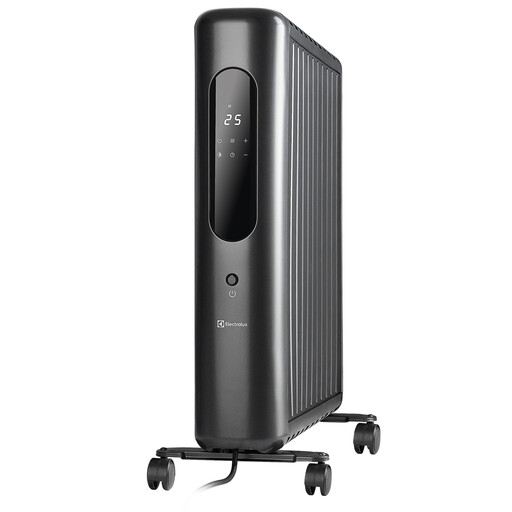
Electrolux HEA1988ELGRY 2000 W Oil-Filled Heater
Consider this oil-filled model if you want adjustable warmth in a permitted room rather than a brief fan-heater burst. Its product name specifies an LED display and timer function; check its room guidance and the space required for safe placement.
View on Joybuy
 No image available
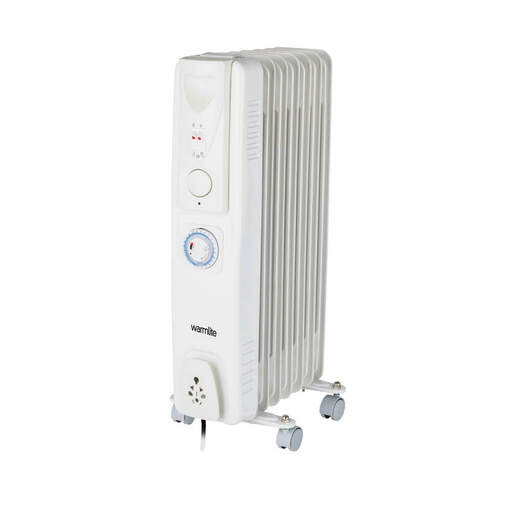
Warmlite WL43003YTW 1500 W 7-Fin Oil-Filled Radiator
This is an option to examine for a permitted small or medium, well-insulated room when adjustable oil-filled warmth matters. The product name specifies three heat settings, an adjustable thermostat, a 24-hour timer, overheat and tip-over protection, and castors; follow its clearance instructions.
View on Joybuy
 No image available
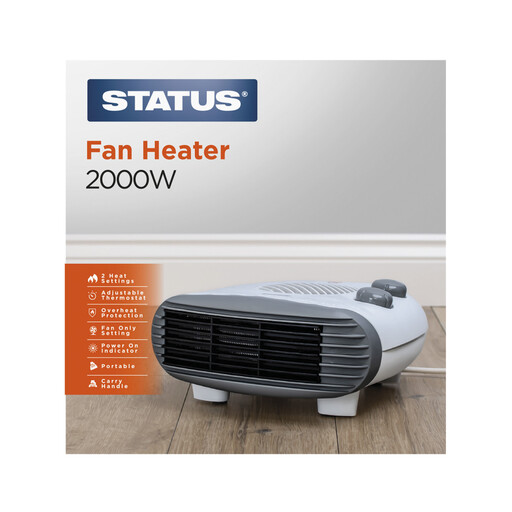
Status 2000 W Flat Fan Heater
Consider a fan heater for short, attended top-up warmth if fan noise will not disrupt your use. This model’s name specifies two heat settings and an adjustable thermostat; keep its air inlets and outlets clear, and do not leave it running unattended.
View on Joybuy
 No image available
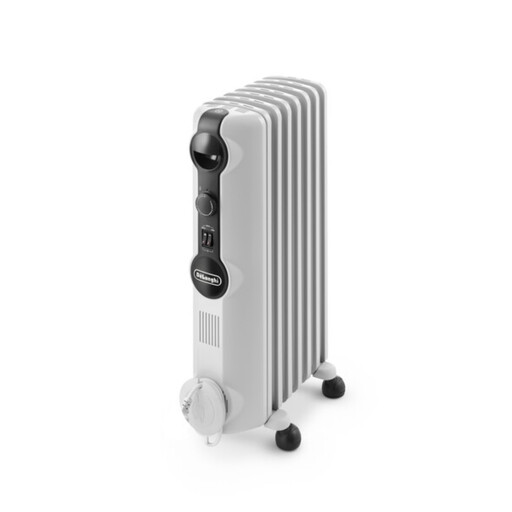
De'Longhi Radia S TRRS0715 1500 W Oil-Filled Radiator
This oil-filled model is relevant when you favour gradual warmth over a fan heater’s quick burst. Its product name specifies seven fins and mechanical control. If timed operation matters, confirm whether the exact TRRS0715 model includes a timer; allow the clearance required by its instructions.
View on Joybuy
 No image available
Electrolux HEA1989ELGRY 2500 W Oil-Filled Heater
Examine this higher-wattage oil-filled option only if its room guidance and your electricity-use expectations fit the intended space. Its product name specifies an LED display and timer function; confirm any power settings or protective features you require for the exact model.
View on Joybuy
Frequently asked questions
Can I use an electric heater in university halls?
Only if your accommodation rules permit it and you have any required approval. The University of Nottingham lists electric heaters as banned items in halls, while UCL requires Estates authorisation for portable heaters and restricts the type allowed under that authorisation. Check your own building’s current rules before buying.
Which heater suits quiet studying?
An oil-filled radiator is worth considering if it is permitted and you can accept slower warm-up. Electrical Safety First notes that oil-filled radiators continue giving out heat for a while after switch-off; check the chosen model’s room guidance and placement instructions.
Should I leave a portable heater on overnight?
Do not use a portable heater overnight: Electrical Safety First advises against it. Follow the model’s instructions, switch it off when it is not in use, and keep it away from bedding and other combustible materials.
Can I plug a heater into an extension lead?
Use a suitable wall socket where possible, and follow the heater manufacturer’s instructions and your accommodation rules. Electrical Safety First warns against overloading or daisy-chaining extension devices; if an extension is permitted, its marked rating must cover the complete load.
How does wattage affect a heater’s electricity use?
A heater’s electricity use while running depends on its power setting and running time: multiply the setting in kilowatts by the hours used to calculate kilowatt-hours. Your tariff determines the resulting charge, while thermostat cycling can change how long the heater draws power.


