Who each approach suits

Occasional conservatory users

If you use the room for short reading, dining or visiting sessions, you may want warmth where people sit without waiting for the whole room to heat up. Herschel recommends its fast-warm-up heater lines for occasional conservatory use; positioning still matters for directed heat.

Regular conservatory workers

If the conservatory is a frequent workspace or living area, steadier temperature control may matter more than a brief burst of warmth. Dimplex describes thermostat and scheduling options in its panel-heater range; check the controls on the exact model.

Portable-heater buyers

If you need to move a heater between rooms, an oil-filled radiator offers a portable way to provide background warmth. Electrical Safety First notes that these radiators take longer to warm up but continue releasing heat after switch-off; allow for hot surfaces and safe placement.

What to check before choosing

Portable oil-filled radiator

Choose when: You want movable background warmth for longer sessions and can allow time for the radiator to warm up.

Trade-off: Electrical Safety First notes the slower warm-up and continued heat release after switch-off; surfaces can remain hot.

Fixed infrared heater

Choose when: Occasional use makes directed warmth around a defined seating or work area more useful than heating all the room air first.

Trade-off: Position and coverage of the occupied area matter, and wall or ceiling mounting needs installation planning. Herschel recommends fast-warm-up models for occasional conservatory use.

Fixed electric panel heater

Choose when: You use the conservatory regularly and want thermostatic room heating with suitable scheduling controls.

Trade-off: Persistent heat loss can increase the heating needed, while mounting and the electrical connection need planning. Dimplex describes convection and combined radiant-convection models in its panel-heater range.

Concern What to check Who this matters to
Rapid warmth where people sit Check the intended mounting position, occupied area and exact model's coverage guidance. If I only spend short periods in the conservatory, I want warmth at my seat without waiting for the whole room to heat up. Around 36% of consumers put occupied-zone warmth first.
Steady heat for longer sessions Compare the exact model's output, thermostat, timer and room-size guidance against the space. When I work or spend an evening there, I need controllable warmth for the full session rather than a quick burst. For around 29% of consumers, steady room warmth is the main concern.
Fixed installation and controls Confirm mounting, clearances, controls and the proposed electrical connection before purchase. If furniture leaves little floor space, I want a permanently positioned heater I can control for regular use. Fixed installation and controls come first for around 21% of consumers.
Safe portable use Check the socket arrangement, the model's placement instructions and clearance from combustible materials. If I move a heater between rooms, I need somewhere safe to plug it in and place it each time. Around 14% of consumers make safe portable use their primary concern.

Buying pitfalls

  • Choosing by wattage alone

    Cold walls, glazing, the roof and draughts affect heat loss, so a heater's stated output or coverage cannot establish how comfortable this particular conservatory will be.

    Measure the space and identify cold surfaces and draughts before comparing guidance for exact models. Energy Saving Trust advises reducing heat loss while keeping ventilation needed for safety and air quality clear.

  • Overloading an extension setup

    A high-power heater can exceed an extension device's current rating. Electrical Safety First warns against overloading extension leads, cable reels and block adaptors.

    Prefer a suitable wall socket. If an extension is unavoidable, check its marked rating, fully unwind a cable reel and do not connect extension leads in a chain.

  • Planning to leave a portable heater on overnight

    Portable heaters need safe placement away from combustible materials, and an oil-filled radiator can remain hot after use.

    Do not use a portable heater overnight. Keep it away from curtains, furniture and clothing, and follow the model's placement and cooling instructions. Electrical Safety First highlights the fire risk around flammable materials.

  • Treating a fixed heater like a plug-in appliance

    Wall or ceiling mounting, controls and the proposed electrical supply can make installation more involved than placing a portable heater. The work required determines which rules apply.

    Confirm fixing, connection and control requirements with a competent installer before buying. GOV.UK's Approved Document P concerns electrical safety in dwellings in England; check the applicable process for the property's location and the work proposed.

Brands to consider

De'Longhi

Portable oil-filled radiators are relevant if you want movable, thermostatically controlled background heating.

  • De'Longhi lists the Dragon 4 TRDX40820E at 2,000 W with a thermostat and timer, and describes continued heat release after switch-off.
  • That model's stated room-volume guidance is not a comfort guarantee for a cold or draughty conservatory. Oil-filled radiators warm up more slowly, and surfaces can remain hot.

Dimplex

Its fixed panel-heater range is relevant to regularly used spaces where temperature control and scheduling matter.

  • Dimplex describes direct-acting convection and combined radiant-convection panel heaters; it lists electronic time and temperature controls for the PLXE line.
  • Check the exact model's output, control requirements, mounting and electrical connection rather than assuming every heater in the range has the same configuration.

Herschel

Its infrared heaters are an option when directed warmth and keeping floor space clear are priorities.

  • Herschel recommends fast-warm-up lines for occasional conservatory use and describes the Aspect XL as wall- or ceiling-mountable.
  • Herschel limits its guidance for slim panels in constant-use conservatories to spaces with good glazing and building specifications. Check coverage and installation for the exact heater and layout.

Tansun

Its infrared conservatory heaters focus on directing radiant heat towards people and objects.

  • Tansun describes immediate, people-focused warmth from its conservatory heater range.
  • That brand description does not establish even whole-room heating or lower running costs in a particular conservatory. Check the exact emitter, position and area it is intended to cover.

Joybuy product choices

These choices cover portable oil-filled radiators for gradual background warmth and a panel heater with stated wall-mounted and free-standing options. Compare each exact model with the conservatory's heat loss, available space and electrical arrangements before choosing.
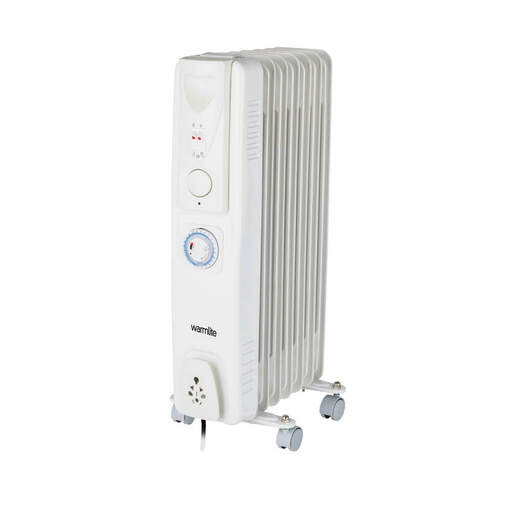
Warmlite WL43003YTW oil-filled radiator

Warmlite WL43003YTW 1500 W 7-fin oil-filled radiator

Consider this portable radiator when gradual background warmth and planned heating periods suit your use of the conservatory.

Its product listing names three heat settings, an adjustable thermostat, a 24-hour timer, castors, overheat protection and a tip-over switch.

Check the exact model's room guidance against the conservatory's size and heat loss, and let the radiator cool before moving it.

View on Joybuy
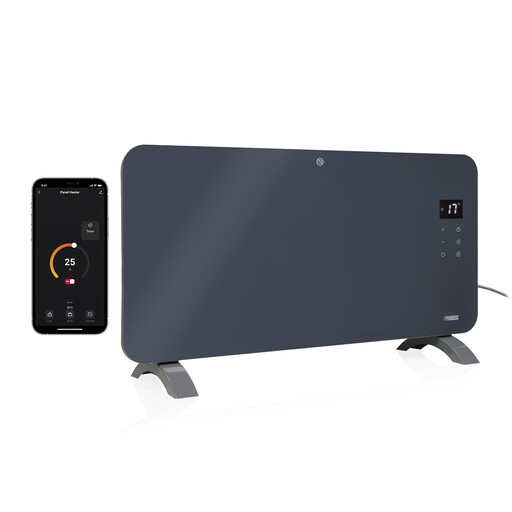
Princess Smart Glass 1500 W panel heater

Princess Smart Glass 1500 W panel heater

Consider this panel heater for regular sessions if timed control or a wall-mounted arrangement would suit the space.

The product name specifies Wi-Fi and app connectivity, a 24-hour timer, anti-tilt protection, and both wall-mounted and free-standing use.

Confirm the included mounting parts, supply connection and suitable installation arrangement before buying; its output alone cannot establish conservatory coverage.

View on Joybuy
DAEWOO HEA1976GE oil-filled radiator

DAEWOO HEA1976GE 1500 W 7-fin oil-filled radiator

This movable radiator suits longer sessions when a gradual warm-up is acceptable.

Its product name specifies an adjustable thermostat, a 24-hour timer, tip-over and overheat protection.

Check its room guidance against the conservatory's heat loss. The listing says not to use it in damp environments and calls for a stable, level surface.

View on Joybuy
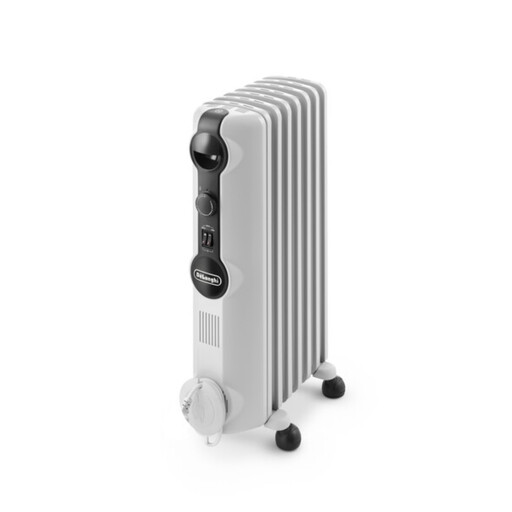
De'Longhi Radia S TRRS0715 oil-filled radiator

De'Longhi Radia S TRRS0715 1500 W 7-fin oil-filled radiator

Consider this portable radiator if you prefer gradual background warmth to immediate, directed heat.

The product name identifies mechanical controls and a 1500 W rating. Electrical Safety First notes that oil-filled radiators continue releasing heat after switch-off.

Check the model's sizing guidance for the conservatory and leave clear space around it; allow it to cool before moving or cleaning it.

View on Joybuy
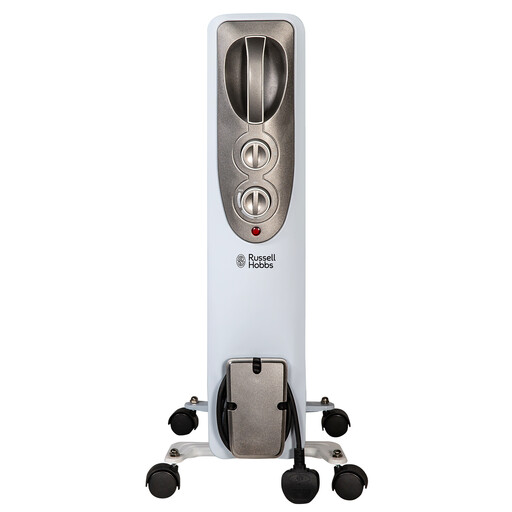
Russell Hobbs RHOFR5002 oil-filled radiator

Russell Hobbs RHOFR5002 2 kW 9-fin oil-filled radiator

This portable oil-filled model is an option for background heating when you can accommodate its gradual warm-up and safe clearances.

The product name states a 2 kW rating and nine fins. Its listing gives room guidance of up to approximately 20 m², which is a starting point rather than a conservatory sizing conclusion.

Check that guidance against the room's glazing and heat loss, and follow the model's instructions on placement and attendance.

View on Joybuy

Frequently asked questions

Will a higher-wattage heater solve cold walls in a conservatory?

Not necessarily: more stated output does not address the room's heat loss through cold surfaces, glazing and draughts. Compare exact-model room guidance with the space, and consider reducing uncontrolled draughts without blocking ventilation needed for safety or air quality, as Energy Saving Trust advises.

Is infrared or an oil-filled radiator more suitable for occasional use?

Infrared heating is worth considering when occasional users mainly want directed warmth where they sit; Herschel recommends fast-warm-up lines for that use. An oil-filled radiator is the portable alternative if you can accept a slower warm-up in exchange for background heat that continues for a while after switch-off, as Electrical Safety First describes.

Can I use an extension lead with a conservatory heater?

Use one only if the connected appliances remain within its marked current rating. Electrical Safety First warns against overloaded extensions; fully unwind a cable reel, do not chain extension leads together and consider a suitably installed socket if an extension would be a regular necessity.

Can I leave a portable heater running overnight?

Do not use a portable heater overnight. Electrical Safety First advises keeping portable heaters away from combustible materials; follow the exact model's placement instructions and account for surfaces that remain hot after switch-off.

What should I check before fitting a wall- or ceiling-mounted heater?

Confirm the mounting surface, clearances, controls and electrical connection with a competent installer before purchase. In England, GOV.UK's Approved Document P addresses electrical safety in dwellings; the process for a particular installation depends on the work and the property's location.