Choose a directional radiant heater if you mainly want a short burst of warmth at the desk, rather than an evenly heated conservatory. For longer sessions, consider a portable oil-filled radiator with the controls you need; if the space is a regular workspace, a fixed panel or infrared heater may suit it, provided its position, installation and controls work for your room. Whichever route you take, check safe clearance, the electrical setup and the exact model’s instructions.
Who each heater suits
Desk-focused, short-session users
If you mainly want warmth directed towards your seated position for a short period, you may not need to heat the whole conservatory. The Centre for Sustainable Energy identifies radiant heaters as an option for quick, directional warmth.
Long-session conservatory workers
If you work at the desk for extended periods, background warmth and temperature controls may matter more than an immediate local boost. Check the controls on the particular heater you are considering.
Regular-use workspace households
If the conservatory is used routinely as a workspace, a wall- or ceiling-mounted heater may be worth considering where a suitable position and the required controls can be accommodated.
What matters when choosing
Decide whether you need warmth at the seated position or background warmth over a longer session, then check whether the heater can be positioned and powered safely.
Directional radiant heater
Consider it when: you sit within the heater’s directed warmth and mainly want a short boost at the desk.
Trade-off: as the Centre for Sustainable Energy explains, directional warmth is different from heating the room evenly.
Portable oil-filled radiator
Consider it when: longer desk sessions make movable background warmth and temperature control useful.
Trade-off: it needs floor space and safe clearance; check the exact model for timer controls rather than assuming they are included.
Fixed panel or infrared heater
Consider it when: the conservatory is a regular workspace and a suitable wall or ceiling position is available.
Trade-off: mounting, cable routing and any required controller need planning, and the heater cannot be moved as readily as a portable unit.
| Concern |
What to check |
Who this matters to |
| Immediate desk warmth |
Whether heat reaches the seated position without furniture blocking its path; the placement clearance. |
If I only work at the desk briefly, I want warmth where I sit rather than throughout the room. Around 46% of consumers put immediate desk warmth first. |
| Steady warmth and running time |
The input power, thermostat and timer functions on the exact model. |
For several hours of work, I would rather manage the temperature and time the heater runs than rely on a short burst of heat. Sustained, controllable warmth comes first for around 27% of consumers. |
| A dedicated workspace heater |
A suitable mounting position, model-specific output guidance and any required controller. |
When the conservatory is my regular workspace, keeping the floor beside the desk clear is important enough to consider a fixed installation. Around 18% of consumers make that their primary concern. |
| Safe placement and power |
A stable position away from combustible items and a suitable socket and cable arrangement. |
With a cramped desk area or limited socket options, I need a safe place to put and power the heater before choosing its format. That is the first concern for around 9% of consumers. |
Mistakes to avoid
-
Assuming a high-power electric heater will be inexpensive to run
Electricity use depends on the power drawn and how long the heater draws it. A headline efficiency claim does not tell you what your desk sessions will use.
Compare input power in kW, controls and likely hours of use. If you only need local warmth, consider whether heating the occupied desk position meets your need.
-
Putting a portable heater wherever it fits under the desk
Paper, curtains and furniture can obstruct a heater, while a unit in a walkway may be knocked over. Electrical Safety First advises keeping portable heaters away from flammable materials.
Choose a flat, stable position. Warwickshire Fire and Rescue advises keeping portable heaters at least three feet from flammable materials; follow any additional or greater clearance in the model’s instructions.
-
Using an overloaded or coiled extension setup
An overloaded extension device or a wound cable reel can overheat, according to Electrical Safety First.
Use a suitable wall socket where practical. If an extension device is necessary and the heater’s instructions permit it, check its marked rating and the combined load, fully unwind a cable reel and never daisy-chain extension leads.
-
Treating room-size guidance as a conservatory guarantee
Manufacturer coverage figures apply to particular models and may not reflect the glazing, roof, draughts or insulation of your conservatory.
Use the exact model’s guidance as a starting point, then consider the room and whether you want local desk warmth or broader heating before choosing an output.
Relevant heater brands
Dimplex
Its PLXE Classic range is relevant if you are considering a fixed panel heater for a regularly used conservatory workspace.
- Dimplex lists quiet operation and electronic time and temperature control for the PLXE Classic range.
- Remote control for that range requires an RF module and Dimplex Control Hub; check the exact model and components needed.
De’Longhi
Its portable oil-filled radiators are relevant to buyers seeking movable background warmth for longer desk sessions.
- De’Longhi lists a thermostat, timer and multiple power settings for its Dragon 4 TRDX40820E model.
- That model’s 14.36 kg weight and floor footprint deserve consideration beside a compact desk; its features do not apply to every De’Longhi radiator.
Herschel Infrared
Its Comfort range is relevant where a fixed infrared panel could be mounted on a suitable wall or ceiling.
- Herschel offers Comfort panels in several wall- or ceiling-mountable sizes.
- Select the output and controller arrangement for the exact room and model; manufacturer area guidance does not guarantee a particular result in a glazed conservatory.
Joybuy oil-filled radiators for desk-area warmth
These portable oil-filled radiators are options for background warmth during longer desk sessions. Compare the controls stated for each model, then make sure its placement and clearance work in your conservatory.
 No image available
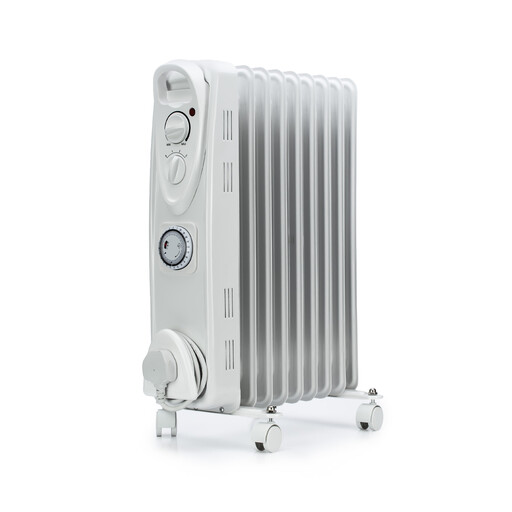
Status 9 Fin Oil Filled Radiator, 2000 W, white
Consider this portable radiator for longer desk sessions if an adjustable thermostat and timer are priorities.
The product name lists three heat settings and a 2000 W rating. Check the model’s instructions and whether you have a stable position with adequate clearance beside the desk.
Joybuy
 No image available
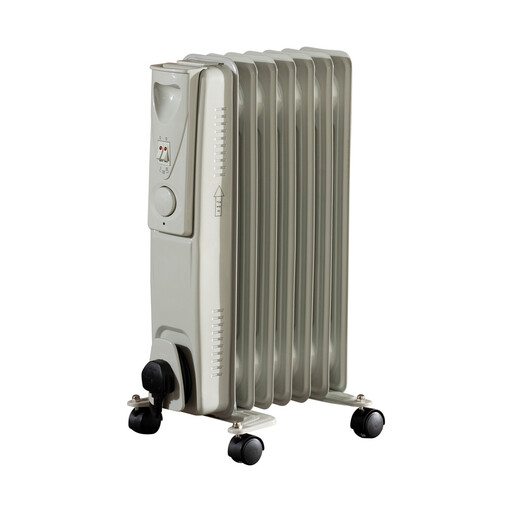
DAEWOO 7 Fin Portable Oil-Filled Radiator, 1500 W, white
Consider this model if you want an adjustable thermostat and a wheeled base for repositioning a portable heater.
The product name lists a 1500 W rating, a carry handle and tip-over shut-off. Its listing says not to use an extension lead, so check for a suitable wall socket and safe floor position near the desk.
Joybuy
 No image available
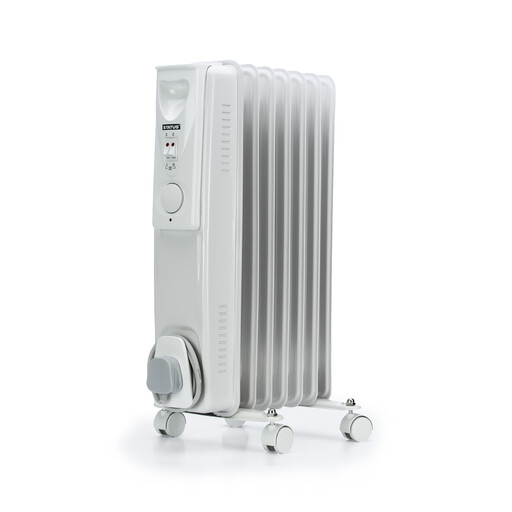
Status 7 Fin Oil Filled Radiator, 1500 W, white
Consider this portable radiator when adjustable temperature matters during longer sessions at the desk.
The product name lists three heat settings and a 1500 W rating. If timed operation is important, check the exact model’s controls before choosing it; allow for stable placement and clearance from flammable items.
Joybuy
 No image available
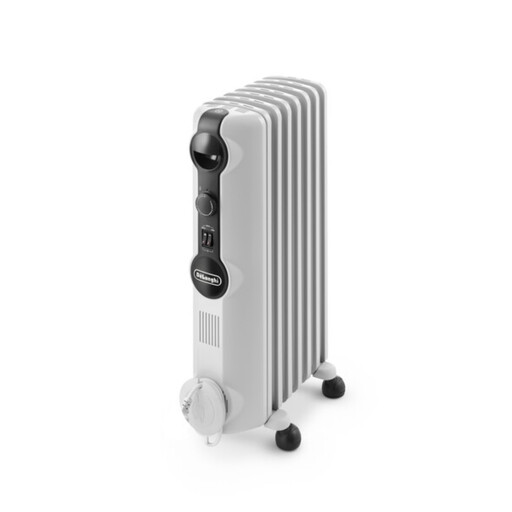
De’Longhi Radia S TRRS0715 Oil Filled Radiator, 1500 W, white
Consider this seven-fin, mechanically controlled model if a portable oil-filled radiator suits your longer desk sessions.
Its listing advises at least 50 cm of clear space around the unit. Check whether that is practical beside your desk, and confirm the exact model’s timer function if you need one.
Joybuy
Questions about conservatory desk heating
Which heater suits me if I only want warmth near my desk?
A directional radiant heater is worth considering for a quick boost aimed at the seated position; the Centre for Sustainable Energy recommends radiant heaters for quick or directional warmth. If you work there for long periods and want broader background heat, compare radiators and panels with the controls you need instead.
How can I estimate an electric heater’s electricity use?
Multiply the heater’s input power in kW by the hours it draws that power to calculate use in kWh, then apply your own electricity unit rate. A thermostat-controlled heater may cycle rather than draw its maximum rated power throughout a session.
Can I use an extension lead for a conservatory heater?
Use one only if the heater’s instructions permit it and the extension equipment is suitable for the combined connected load. Electrical Safety First advises against overloading or daisy-chaining extension leads and says cable reels should be fully unwound; a model that instructs you not to use an extension lead needs a suitable wall socket.
How far should a portable heater be from my desk and curtains?
Allow the clearance required by the exact heater’s instructions, including space around furniture and anything flammable. Warwickshire Fire and Rescue advises placing portable heaters on a flat, stable surface at least three feet from flammable materials; follow a greater distance or further restrictions where the model requires them.


