Short-session desk warmers
Students who want warmth soon after sitting down, without waiting for the whole room to heat up. Electrical Safety First notes that portable fan heaters can provide immediate heat, although they can be noisy.


For a short study session, a compact fan or ceramic heater suits a quick warm-up near the desk, but its noise may be distracting. If quiet warmth matters more than speed, consider a small oil-filled radiator; if the whole room needs warmth for several hours, compare a convector or a radiator with suitable controls instead. Before choosing any portable heater, check your accommodation rules and whether you can position and power it safely.
Students who want warmth soon after sitting down, without waiting for the whole room to heat up. Electrical Safety First notes that portable fan heaters can provide immediate heat, although they can be noisy.
Students reading or revising for longer stretches who would rather avoid fan noise and can wait for an oil-filled radiator to warm up.
Students who need supplementary warmth beyond the desk area for several hours. The Centre for Sustainable Energy points to convectors for longer periods of room heating; thermostat and timer controls are worth comparing for this use.
Choose according to whether you need a quick warm-up at your seat or warmth across the room for longer, then check that the heater can be used under your accommodation rules and placed with adequate clearance.
Choose it when: A short desk session calls for warmth soon after switching on.
Accept that: Fan noise may interrupt quiet work, and the hot-air outlet needs clear space.
Choose it when: Avoiding fan noise matters more than immediate warmth during a longer session.
Accept that: Warm-up is slower, and the radiator can remain hot after switch-off.
Choose it when: You need supplementary warmth across the room for several hours, rather than just at the desk.
Accept that: Floor space, room suitability and electricity use while operating at a selected power setting matter more than they do for a brief personal warm-up.
| Concern | What to check | Who this matters to |
|---|---|---|
| Fast desk warmth | Compare heater type and available heat settings; check where its outlet can safely face. | If I study in short blocks, I want to feel warmer soon after sitting down rather than heat the entire room. Around 25% of consumers put rapid desk-side warmth first. |
| Quiet study | Check whether the model has a fan and allow for an oil-filled radiator’s slower warm-up. | For revision or calls, I would accept a slower start to avoid fan noise beside me. Quiet warmth is the primary need for around 25% of consumers. |
| Whole-room warmth | Check the stated room-size or volume guidance, thermostat and any timer against your room and hours of use. | When the room stays cold for hours, warming only my desk area would leave the rest uncomfortable. Around 19% of consumers chiefly need room-level warmth. |
| Output control | Compare wattage, selectable settings and thermostat control for the time you expect to use the heater. | If I only need supplementary warmth, I want a setting that fits that need rather than running at maximum output throughout. Matching output and controls comes first for around 19% of consumers. |
| Permission and placement | Read your accommodation rules and check plug compatibility, socket use and the manufacturer’s clearance instructions. | Before I bring a heater into a crowded room, I need to know it is permitted and that I have a safe place to use it. Around 12% of consumers make permission and safe placement their primary concern. |
A hall can set its own appliance rules. The Ministry of Housing, Communities & Local Government’s guidance excludes student halls of residence from the cited rented-sector electrical-safety regulations in England; that exclusion is not permission to use a heater.
Read your accommodation agreement and ask the accommodation provider or landlord before ordering, including about any appliance or placement conditions.
A fan heater or oil-filled radiator is not inherently the lower-use choice. The power drawn at a given setting and the time spent running both matter, as does whether you need to warm yourself or the wider room.
Match the heater to the length and area of use, then compare its wattage, settings, thermostat and any timer.
Paper, curtains, clothes and furniture can be too close in a small room, even when the heater itself has a compact footprint.
Follow the manufacturer’s clearances. London Fire Brigade advises sitting at least one metre from a heater, never drying clothes on it and switching it off before moving it.
A heater and other connected appliances can exceed an extension’s rating, while chained extensions add another electrical hazard.
Use a suitable wall socket where practical. Electrical Safety First advises against daisy-chaining extensions; check the specific lead’s rating and combined load, and fully unwind cable reels before use.
Dimplex’s portable-heating range includes fan and ceramic heaters, radiators and convectors.
De’Longhi offers compact oil-filled radiators as well as larger models with additional controls.
Its RHFH1006B is a compact ceramic fan-heater option for a quick warm-up.
These heaters cover a quick desk-side warm-up and several oil-filled or convector options for longer supplementary warmth. Compare their controls and the space each needs before choosing for a student room.
 No image available
Consider this fan heater for shorter desk sessions when a quick warm-up matters more than avoiding fan noise. Russell Hobbs specifies 750W and 1,500W settings, an adjustable thermostat, and tip-over and overheat protection for the RHFH1006B. Check plug compatibility and leave the required clear space around its hot outlet.
 No image available
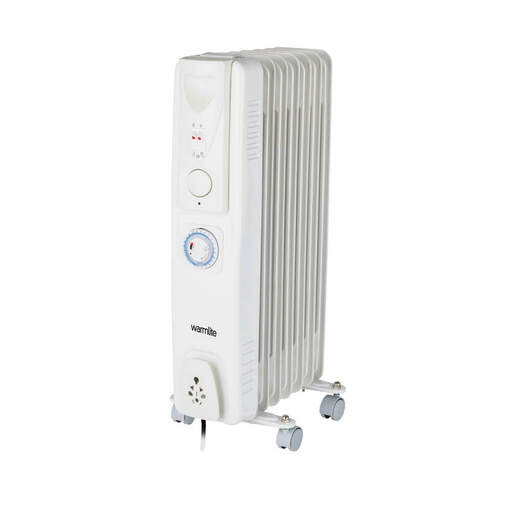
Consider this radiator when longer, quieter supplementary warmth matters more than an immediate warm-up. Its title specifies three heat settings, an adjustable thermostat, a 24-hour timer, castors, and tip-over and overheat protection. Check floor space, room suitability and plug compatibility before ordering.
 No image available
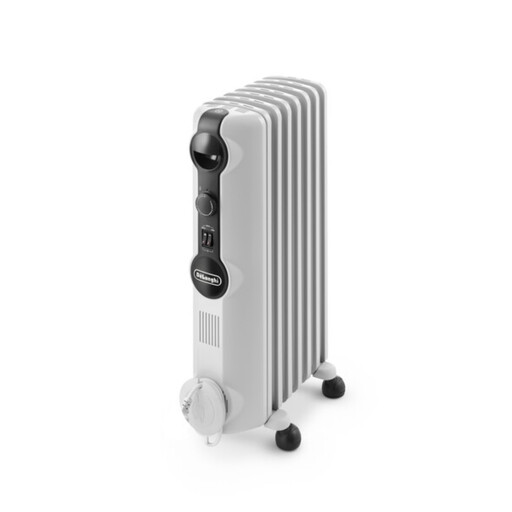
This oil-filled model suits a longer desk session if you can accept gradual warm-up. The product name specifies mechanical controls and seven fins; check the available heat settings, whether the particular unit has a timer, its plug and the clearance it requires before choosing it.
 No image available
Consider this oil heater if the aim is longer room-level warmth rather than a brief directed warm-up. Its title specifies an LED display and timer function. Check that its size and required clearance fit the room, and confirm plug compatibility before ordering.
 No image available
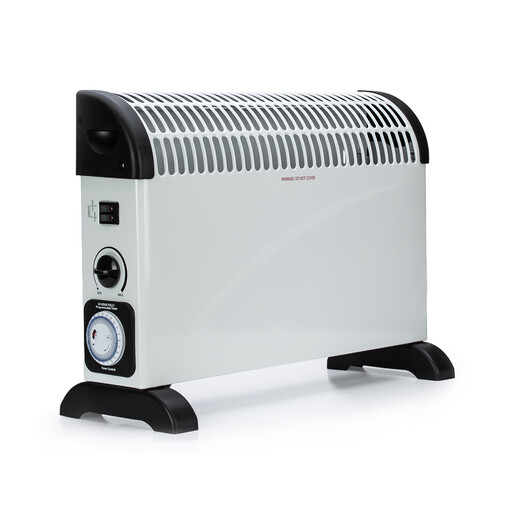
A convector is worth considering when you want supplementary warmth across the room rather than a directed desk-side blast. This model’s title specifies an adjustable thermostat; confirm its timer function if you need one, along with room suitability, plug compatibility and placement clearances.
Check your hall’s accommodation agreement and fire-safety rules before buying or using one. The Ministry of Housing, Communities & Local Government’s guidance excludes student halls of residence from the cited rented-sector electrical-safety regulations in England; that exclusion does not itself permit personal heaters.
Use a suitable wall socket where practical, and never assume an extension can carry the heater alongside everything else connected to it. Electrical Safety First advises against overloading or daisy-chaining extensions; check the lead’s rating and combined load, and fully unwind a cable reel before use.
No: heater type alone does not determine electricity use. Compare the power drawn at the setting you will use and how long the heater runs, while accounting for whether you need warmth at the desk or across the room.
Put it on a stable surface where you can meet the manufacturer’s clearance instructions, away from bedding, curtains, clothes and desk papers. London Fire Brigade advises sitting at least one metre from a heater and never drying clothes on it; Electrical Safety First advises against leaving a portable heater on overnight.
Keep its vents clear and stop using it if the plug or socket becomes hot, you see scorch marks, or you notice a burning smell or other signs of an electrical fault. London Fire Brigade highlights hot plugs, sockets and scorch marks as warning signs; ask your landlord or a qualified electrician to investigate concerns about the property’s electrics rather than attempting a repair yourself.