Hosts blanching several batches
You need to bring water back to the boil between batches and adjust the heat promptly while preparing other parts of the meal.


For several batches of green vegetables, consider a four-zone induction hob with a boost setting if your blanching pot has a suitable magnetic base and the kitchen can accommodate the model’s electrical connection. A plug-in model and a higher-load hardwired model require different installation checks; choose ceramic electric instead if keeping non-magnetic cookware is the deciding factor, while allowing for its hot surface after switch-off.
You need to bring water back to the boil between batches and adjust the heat promptly while preparing other parts of the meal.
Your blanching pot must fit alongside pans for other dishes. The number of zones matters, but so do their sizes and how the hob manages power when several are in use.
You want to check the electrical connection, worktop opening and suitability of your existing pans before committing to a built-in hob.
Start with the pot and the kitchen: check cookware compatibility and installation fit before comparing boost controls or zone layouts for dinner-party blanching.
| Concern | What to check | Who this matters to |
|---|---|---|
| Boiling and heat control | Check the exact model’s boost controls and instructions for using them across zones. | If I am blanching one batch after another, I want to regain a boil and adjust the heat without interrupting preparation. Around 33% of consumers would put boiling and heat control first. |
| Usable pan space | Compare your pan bases with the zone-size guidance; check whether the model offers a bridge or extendable zone. | When my blanching pot shares the hob with pans for other dishes, I need a layout that accommodates them together. For around 25% of consumers, usable pan space is the primary concern. |
| Electrical and worktop fit | Confirm the connection type, connected load and required cut-out against your kitchen before ordering. | If I am replacing a built-in hob, I do not want to discover that the opening or electrical supply needs changing. Installation fit comes first for around 25% of consumers. |
| Existing cookware | Test an essential pot’s base with a magnet and check its size against the induction zones; consider ceramic if you intend to keep non-magnetic pans. | I would rather keep my current blanching pot than change pans to use a new hob. Around 17% of consumers would make cookware continuity their first priority. |
Models with a similar width can have very different electrical requirements. Bosch specifies a 13A plug and 3.0 kW maximum connected load for the PUG61RAA5B, while AEG specifies hardwired installation and a 7,350 W total electrical load for the TO64IA00FB.
Read the exact model’s installation instructions, measure the worktop opening and ask an electrician to assess household loading capacity where needed.
Induction requires a suitable magnetic pan base. A familiar stockpot may not work on the new hob even if its overall size looks right.
Test the base with a magnet, then compare its diameter with the model’s zone guidance. If an essential pot is incompatible and you plan to keep it, consider ceramic electric.
A four-zone layout does not, by itself, establish how boost or power sharing works when the blanching pot and other pans are heating together.
Check the exact model’s instructions for simultaneous-zone use and match your largest pot to a suitable zone.
Ceramic glass can remain hot after the controls are switched off, when serving dishes and pan handles are competing for space.
Use residual-heat indicators as a warning, keep serving equipment clear of the hob and do not assume that an inactive zone is cool.
Bosch offers induction and ceramic electric ranges. Its PUG61RAA5B is a specific four-zone, plug-in induction option to examine when installation disruption matters.
AEG offers induction layouts ranging from compact two-zone models to larger four- and five-zone models for cooks considering several pans.
NEFF’s induction range includes flex-zone formats worth examining if you regularly use pans of different shapes or sizes.
Beko’s built-in ceramic models offer an alternative for cooks who want to retain non-magnetic pans.
These four-zone induction models are choices to examine if your blanching pot is induction-compatible. Compare their stated controls with your pan sizes and installation requirements; the ceramic option discussed above remains relevant if keeping non-magnetic cookware takes priority.
 No image available
Consider this model when you need room for several pans and want to assess whether a flexible bridge suits your blanching pot. Its stated features include four cooking zones, a flexible bridge, touch controls and boost mode.
Check your pot’s base and the worktop opening, and confirm the electrical connection and simultaneous-boost behaviour before ordering.
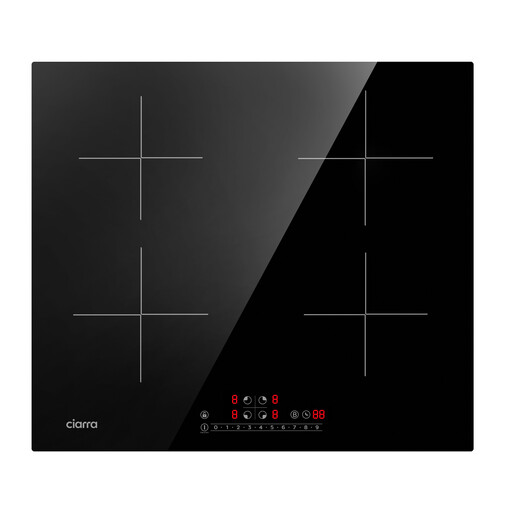 No image available
Consider this built-in model if you want four zones and a booster while preparing vegetables alongside other dishes. Its stated controls include touch operation and nine power levels.
Check the blanching pot against the zone-size guidance, and confirm the electrical connection and simultaneous-boost behaviour for your kitchen.
 No image available
This four-zone model is worth considering if you need space for a blanching pot and other pans on a 60 cm hob. Check that your pot has a suitable magnetic base and fits the relevant zone.
Confirm the worktop fit, electrical installation requirements and how the zones behave when used together.
 No image available
Consider this four-zone model if a hardwired installation is planned and your blanching pot is induction-compatible. The product name specifies a hardwired connection.
Have the kitchen’s electrical capacity assessed, and check the required cut-out, zone sizes and simultaneous-zone behaviour before purchase.
 No image available
Consider this model if four induction zones and modular power control fit your multi-pan plans. Check that the blanching pot has a magnetic base and matches the model’s pan-size guidance.
If boost is important to your blanching routine, check the exact controls rather than assuming it is included. Confirm the connection requirements and simultaneous-zone behaviour as well.
Choose induction if your pot is compatible and direct pan heating and responsive controls are priorities. Choose ceramic electric if retaining non-magnetic cookware matters more, and remember that its glass can remain hot after switch-off.
It will need a suitable magnetic base. Test it with a magnet, then check that its base is flat and within the exact hob’s zone-size guidance.
The connection depends on the model. Bosch specifies a 13A plug and 3.0 kW maximum connected load for the PUG61RAA5B, whereas AEG specifies hardwired installation and a 7,350 W total electrical load for the TO64IA00FB; check the model’s instructions and the kitchen’s electrical capacity before ordering.
Look for controls that suit your cooking routine, such as zone timers or a model-specific boiling-assistance feature. Check which features the exact hob offers and how it manages several active zones; do not assume a feature described for one model applies across a brand’s range.