Start with induction if your onion pan has a magnetic base and the hob suits your kitchen installation: it heats the pan directly, making heat adjustments useful during a long cooking session. A standard four-zone model may suit a conventional pan, while a bridge or flexible zone is worth considering for a large or long pan. If keeping non-magnetic cookware matters more, consider a ceramic electric hob and check the exact model’s gentle-cooking performance.
Who these choices suit
Family cooks using a wide onion pan
If a family-sized batch occupies a large, long or oval pan, check whether the cooking area fits its base and leaves room for another dish. AEG and Hotpoint list bridge or flexible cooking areas on the models discussed below.
Cooks focused on heat control
When onions need prolonged, gentle cooking, controllable heat matters more than a boost setting alone. Which? identifies gentle simmering as a useful hob-performance consideration; check results for the exact model you are considering.
Kitchen upgraders keeping existing pans
If you want to keep your current frying pan, check its base before choosing induction. NEFF states that induction cookware needs a magnetic base. The hob’s dimensions and electrical requirements also need to suit your kitchen.
What to check before choosing
Choose the cooking method around your existing pans, then check pan space, low-heat control and installation requirements for the exact hob.
Standard four-zone induction
Consider it when: Your magnetic-based onion pan fits a conventional zone and you need other zones for the meal.
Trade-off: Four separate zones do not necessarily give a long or oversized pan one continuous cooking area.
Induction with bridge or flexible zones
Consider it when: You regularly use a large or long pan whose base fits the model’s linked cooking area.
Trade-off: Check the linked-zone layout, pan guidance, worktop cut-out and electrical requirements for the particular model.
Ceramic electric
Consider it when: Keeping non-magnetic cookware is a priority.
Trade-off: Unlike induction, a ceramic hob heats through elements beneath the glass; check independent heat-up and gentle-simmering results for the exact model.
| Concern | What to check | Who this matters to |
|---|
| Gentle heat control |
Look for an assessment of the exact model’s simmering performance, usable controls and timer behaviour. |
When onions cook for a long time, I need to adjust the heat without relying on a boost setting. Around 36% of consumers would put controllable heat first. |
| Space for pans |
Measure the onion pan’s base and compare it with the zone layout; check linked-zone dimensions for a large or oval pan. |
A family-sized batch needs pan space, and I may have another dish cooking beside it. For around 29% of consumers, usable cooking area would be the primary concern. |
| Pan and kitchen fit |
Check magnetic cookware compatibility, worktop cut-out and the exact model’s electrical connection requirements. |
I want to keep using my pans and know the replacement hob will suit my kitchen. Compatibility would come first for around 21% of consumers. |
| Everyday handling |
Consider the model’s lock, residual-heat indication and controls, along with its glass-surface cleaning instructions. |
While managing several parts of a meal, I want controls that are straightforward to use and a surface I can clean after spills. Around 14% of consumers would make everyday handling their first priority. |
Buying pitfalls
-
Choosing induction before checking the onion pan
Induction needs cookware with a magnetic base, as NEFF explains. A pan without one may not work on the new hob.
Check the induction marking or test the base of each pan you use regularly, especially your wide frying pan, before choosing a hob.
-
Using a boost feature as a slow-cooking test
Fast heating does not establish how well a hob holds a gentle cooking level. Onions still need stirring and visual checks during a long session.
Look for independent simmering results for the exact model and consider how easily you can adjust its controls while cooking.
-
Buying a bridge-zone hob without measuring
A linked cooking area helps only if it accommodates your pan. The appliance must also fit the worktop opening.
Compare the pan base, linked-zone guidance, hob dimensions and required cut-out before ordering.
A different cut-out may require worktop alterations.
-
Assuming the existing electrical connection will do
Connection requirements differ by model: AEG specifies its SO64IB00FB as hardwired with a 7,200 W total electrical loading, while Bosch lists Plug & Play for the PUE611BB5B. Neither description establishes that a particular kitchen is ready for it.
Check the chosen hob’s installation instructions and ask a suitably qualified electrician about the existing connection if you are unsure.
A change of connection may involve electrical installation work.
Relevant brands to consider
AEG
The SO64IB00FB is relevant if your regular onion pan is large or long.
- AEG lists four zones, a bridge function, a timer, child lock and automatic switch-off for this model.
- The SO64IB00FB is specified as hardwired only, with a 7,200 W total electrical loading. Check its installation requirements and your pan’s fit.
Hotpoint
The TB 7960C BF offers a flexible-area option for cooks balancing an onion pan with other family-meal preparation.
- Hotpoint lists Flexi Duo, a timer, residual-heat indicators and four automatic functions, including slow cooking, on this model.
- An automatic function does not remove the need to stir and check onions. Confirm that your cookware fits the flexible area.
Bosch
The PUE611BB5B is a standard four-zone induction option for a conventional-sized pan.
- Bosch lists Plug & Play, PowerBoost, QuickStart, Restart and ChildLock for this model.
- Check the zone dimensions against a wide pan and confirm that the stated connection arrangement suits your kitchen.
Joybuy induction hob options
These induction hobs offer different amounts of cooking space for preparing onions alongside a family meal. Before choosing one, check that your onion pan has a magnetic base, fits the intended zone and suits the hob’s installation requirements.
 No image available
Belling IHL773 BLK 77 cm induction hob
Consider this model if you use a larger onion pan and want zones available for other dishes. Its listed configuration has four cooking zones, a flexible bridge, touch controls and a boost mode. Check that your pan base fits the bridge area; boost mode alone does not tell you how the hob performs at gentle heat.
Joybuy
 No image available
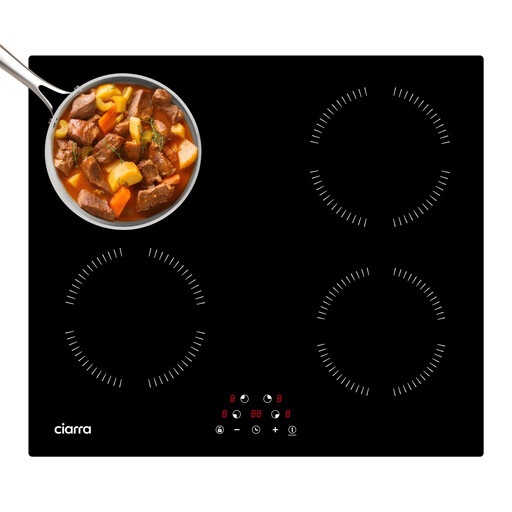
Ciarra 60 cm built-in four-zone induction hob
Its four-zone layout is relevant if your onion pan fits a standard cooking zone and you need space for other pans. Check the zone dimensions against your pan base, as well as the worktop opening and electrical instructions before choosing it.
Joybuy
 No image available
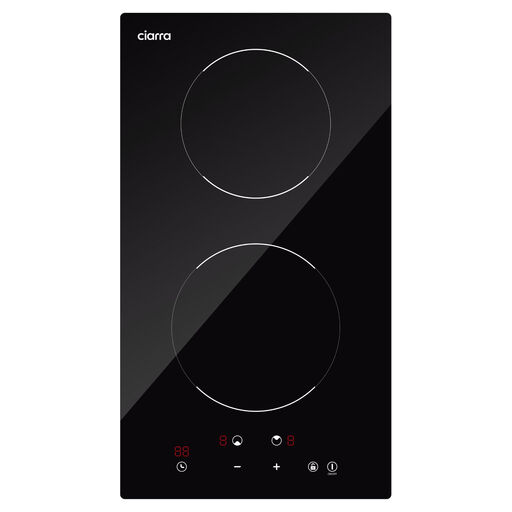
CIARRA CBBIH292T 29 cm two-zone induction hob
Consider the two-zone layout if you usually cook onions alongside just one other dish, rather than needing several pans at once. The listing names 2900 W, nine power levels, a timer, touch controls and a child lock. Check your pan’s fit and the installation instructions; the stated power is not a measure of gentle-cooking performance.
Joybuy
Common questions
Is induction suitable for caramelising onions?
Induction is worth considering if your pan has a magnetic base and the exact hob gives you the gentle heat control you need. It heats the cookware directly, but a boost setting is no substitute for checking and stirring onions as they cook.
Will my current frying pan work on an induction hob?
It needs a magnetic base. NEFF advises checking cookware for induction suitability; look for the pan’s induction marking or test its base with a magnet before choosing the hob.
Do I need a bridge zone for a family-sized onion pan?
Not necessarily: a conventional frying-pan base may fit a standard zone. A bridge or flexible zone becomes more relevant for a large, long or oval pan, provided its base fits the model’s stated cooking area.
Can I install an electric hob myself?
Do not assume the work is suitable for DIY installation. Electrical Safety First explains that electrical-installation requirements differ across the UK nations; check the rules applicable to your home and the exact hob’s instructions, and seek advice from a suitably qualified electrician before work begins.


