Occasional chocolate makers in small kitchens
If you melt chocolate for sauces, coatings or occasional baking, a removable heat source may suit you better than a permanent worktop cut-out.


Choose portable induction if you need one removable cooking zone, built-in induction if the hob will also serve as your main cooker, or ceramic if keeping non-magnetic saucepans matters most. Induction needs magnetic cookware, while a ceramic surface retains heat after switch-off. For temperature-sensitive chocolate work, check the hob’s lowest usable setting and measure the chocolate with a thermometer rather than relying on its headline wattage or a frying programme.
If you melt chocolate for sauces, coatings or occasional baking, a removable heat source may suit you better than a permanent worktop cut-out.
For decorations or tempered chocolate, you need to consider the lowest usable heat setting, your saucepan and a way to check the chocolate’s temperature.
If this will be your everyday built-in hob, check both installation space and cookware. Bosch UK states that induction needs magnetic cookware, whereas ceramic works with other pan materials.
Choose it when: You need one removable zone and do not want a worktop cut-out.
Bear in mind: It needs a magnetic pan and does not add permanent cooking capacity.
Choose it when: You want a permanent hob for chocolate work and other cooking.
Bear in mind: The worktop opening, ventilation and electrical connection must suit the exact model; your pans must also be magnetic.
Choose it when: Keeping non-magnetic saucepans is more important than induction’s prompt response to switching off.
Bear in mind: The surface retains heat, so move the chocolate pan away when you need heating to stop.
| Concern | What to check | Who this matters to |
|---|---|---|
| Gentle heat control | Check the lowest usable setting and use a food thermometer when tempering. Callebaut gives working temperatures of about 29°C for milk or white chocolate and 31°C for dark chocolate. | If I temper chocolate, I need to adjust the heat without mistaking a hob setting for the chocolate’s temperature. Roughly 36% of consumers put gentle heat control first. |
| Space and installation | For a built-in hob, compare the installation drawing with the worktop opening and required clearances. For a portable hob, check where it can be used and stored. | When preparation space is scarce, I want to avoid a permanent fitting that leaves too little room to work. Around 29% of consumers prioritise space and installation fit. |
| Existing saucepans | Check for an induction symbol or test whether a magnet sticks to the pan base; check that the base suits the zone. Bosch UK says ceramic accepts non-magnetic pans. | I want to keep using my small non-magnetic saucepan rather than change it to suit the hob. About 21% of consumers place cookware compatibility first. |
| Everyday cooking capacity | Choose zone count for the pans you use at the same time, then check the model’s dimensions and connection requirements. | If chocolate is only one part of meal preparation, I need enough zones for the other pans too. Approximately 14% of consumers give wider cooking capacity priority. |
Bosch UK states that induction requires a ferromagnetic base; an ordinary non-magnetic saucepan will not work on it.
Check the pan’s induction symbol or test its base with a magnet, then compare the base size with the cooking zone.
NEFF describes a frying-sensor range starting at 70°C. Callebaut’s working temperatures for tempered chocolate are about 29–31°C, so that sensor range does not establish suitable chocolate control.
Check the exact model’s low-setting behaviour and measure the chocolate itself when temperature matters.
The outer width does not tell you whether its required cut-out, ventilation space or electrical connection suits your kitchen.
Compare the installation drawing with the opening and surrounding clearances before ordering.
An incompatible opening may require worktop alteration.
Faster heating does not establish whether a hob can hold or adjust the gentle heat needed for chocolate.
Prioritise the lowest usable setting, a suitable pan and temperature checking over maximum wattage.
Bosch UK offers induction and ceramic hobs, including built-in formats relevant to different worktop sizes.
AEG describes induction choices ranging from compact two-zone to larger multi-zone formats.
NEFF offers built-in induction hobs with different control features.
These choices cover portable induction and built-in induction or ceramic hobs for a small kitchen. Choose the format around your available space and saucepans, then check the exact model’s low-heat behaviour before using it for temperature-sensitive chocolate.
 No image available
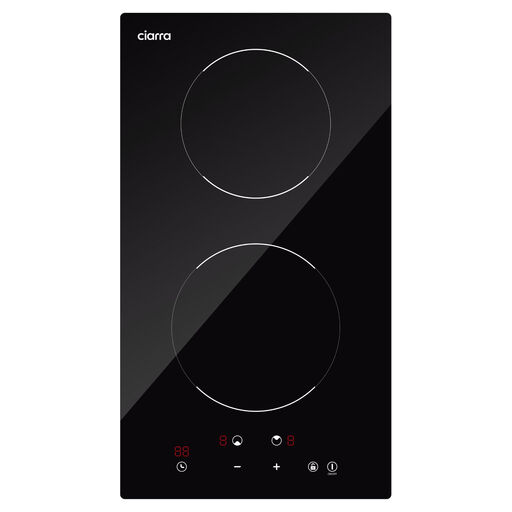
A compact built-in choice if you want a permanent hob and have induction-compatible saucepans.
2900W; nine power levels, touch control and timer. Check the installation instructions and lowest usable setting for chocolate work.
 No image available
A removable single-zone choice for occasional one-pan use without a worktop cut-out; it needs a magnetic saucepan.
Ten power settings, six functions and touch control. Check its dimensions, plug specification and lowest usable setting before buying.
 No image available
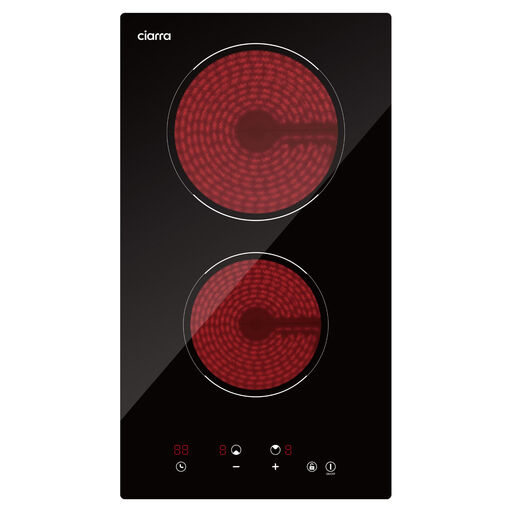
A compact built-in ceramic choice if keeping non-magnetic pans is important; move the pan off the zone when you need heating to stop.
2900W; nine power levels, touch control and timer. Check the opening and electrical requirements, along with the lowest usable setting.
 No image available
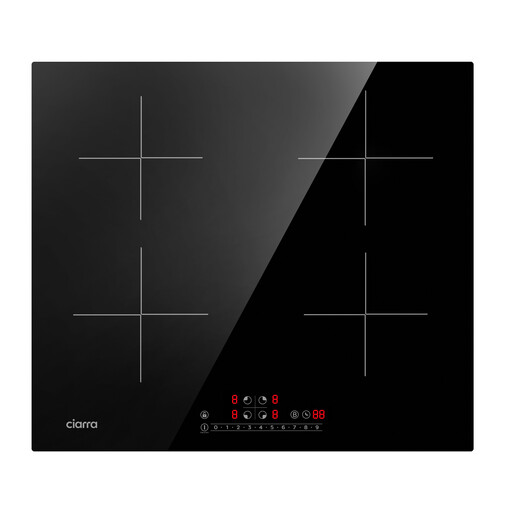
Consider this format if chocolate melting is one task on a permanent hob used for other cooking; all induction zones require compatible pans.
Nine power levels and a booster function. Check the worktop opening, electrical connection and low-setting behaviour rather than relying on the booster for chocolate work.
Induction suits a magnetic saucepan when you value prompt response to reducing or switching off heat; ceramic suits you if you need to keep using non-magnetic pans. Neither hob type guarantees the chocolate’s temperature, so use a low setting and a thermometer for temperature-sensitive work.
Do not assume it can: NEFF’s cited frying-sensor range starts at 70°C, while Callebaut gives working temperatures of about 29°C for milk or white chocolate and 31°C for dark chocolate. Check the selected model’s function and measure the chocolate itself.
It will work if its base is induction-compatible and suits the cooking zone. Bosch UK advises checking for a ferromagnetic base; a magnet or the pan’s induction symbol can help you check before choosing a hob.
Measure the worktop opening as well as the hob’s outer dimensions, then check the exact installation drawing for clearances and ventilation. Confirm the electrical connection too: Bosch describes its PUG61RAA5B as Plug & Play, whereas AEG specifies a hardwired-only connection for its NII64B10AB.
Do not apply an England-specific document across the whole UK. GOV.UK identifies Approved Document P as guidance on electrical safety in dwellings in England; before installation, check the rules applicable in your UK nation and follow the selected hob’s installation instructions.