Regular compote makers
If you cook plum compote often, managing the gentle simmer matters more than choosing a hob solely for its highest power setting. Leiths Online Cookery School’s plum-compote method calls for turning down the heat to simmer.


For plum compote, prioritise controls that let you manage a gentle simmer and the subsequent reduction, and check what the hob’s timer does when it ends. Induction is an option if your compote pan is compatible; compare a radiant ceramic hob if it is not. Consider a wider bridge-zone model for larger pans only after checking the available space and electrical connection.
If you cook plum compote often, managing the gentle simmer matters more than choosing a hob solely for its highest power setting. Leiths Online Cookery School’s plum-compote method calls for turning down the heat to simmer.
If you usually use one medium pan, compare compact and standard-width options against your available space, preferred controls and connection requirements.
If you regularly use larger pans during plum season, a wider cooking area or bridge zone may be useful, provided the pan, worktop opening and electrical setup suit the chosen model.
Choose between induction and radiant ceramic cooking with your existing pan in mind. Then compare controls, timer behaviour and installation requirements on the exact model; a bridge zone matters chiefly when your larger cookware needs the space.
Consider it: If your compote pan is induction-compatible and you want to compare models with selectable heat settings and timers.
Check first: Cookware compatibility and the exact model’s electrical connection; a plug-in arrangement cannot be assumed.
Consider it: If induction compatibility is uncertain and you want to compare a conventional glass electric hob instead.
Check first: The control layout, timer provision and instructions for dealing with residual surface heat.
| Concern | What to check | Who this matters to |
|---|---|---|
| Simmer and timing | Compare selectable heat settings and whether the timer alerts you or switches off a zone. | When I simmer fruit before reducing the liquid, I want to adjust the heat without relying on maximum power. Around 42% of consumers would put heat control and timing first. |
| Pan and installation fit | Check induction compatibility, the worktop cut-out and the exact model’s connection instructions. | If I want to keep using my compote pan, it needs to suit the hob, and the installation must suit my kitchen. Roughly 33% of consumers would make cookware and installation fit their primary concern. |
| Larger-batch capacity | Measure your larger pan and available worktop space before considering a wider hob or bridge zone. | For seasonal batches in a broad pan, I need enough cooking area without overlooking the space it takes up. About 25% of consumers would prioritise larger-batch capacity. |
Induction needs compatible cookware, so an existing pan may not work on the hob you choose.
Check the pan and hob manufacturers’ compatibility guidance before ordering; if compatibility remains uncertain, compare radiant ceramic models.
Keeping an incompatible pan would mean needing a suitable replacement for induction cooking.
Product arrangements differ: electriQ lists an attached plug for the compact eiQ30INDF, while AEG specifies a hardwired connection for the wider TO84IB00FB.
Read the chosen model’s installation instructions, including its connection and electrical-loading requirements. Electrical Safety First recommends using a registered electrician for installation or repair work.
The work involved may include changes to the kitchen’s electrical setup, depending on the property and model.
A bridge zone serves larger cookware, but a wider built-in hob also needs a suitable worktop opening. AEG lists a 780 mm width and a 750 × 490 mm built-in opening for the TO84IB00FB.
Measure your largest pan and existing cut-out before deciding whether a bridge-zone model serves your cooking better than a compact or standard-width hob.
Bosch offers the PUE611BB5B induction model and the PKE61RAA8B radiant ceramic model as two distinct standard-width options.
The TO84IB00FB is relevant if you regularly cook larger batches in cookware that benefits from a bridge zone.
The eiQ30INDF is a compact two-zone induction option to compare for smaller kitchens and one-pan compote cooking.
These choices include a portable induction cooker and built-in induction hobs for one-pan compote cooking or larger batches. Compare their stated features with your pan, available space and installation requirements before choosing.
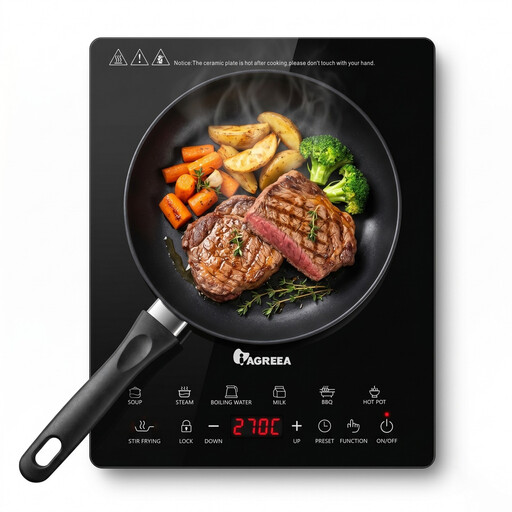 Image unavailable
Consider this portable option if you cook compote in one compatible pan and need a cooker you can put away. Its title specifies 2000 W, eight power levels, a three-hour timer and a 12–26 cm cookware range; check the supplied connection against your kitchen setup.
 Image unavailable
For larger preserving pans, consider whether its flexible bridge gives you the cooking area you need. The title specifies four zones, touch controls and boost mode; measure the worktop opening and check the electrical connection before choosing this 77 cm model.
 Image unavailable
Consider this built-in option for regular one-pan compote cooking if your pan works with induction. The title identifies a 60 cm, hardwired model; confirm the cut-out and electrical provision before installation.
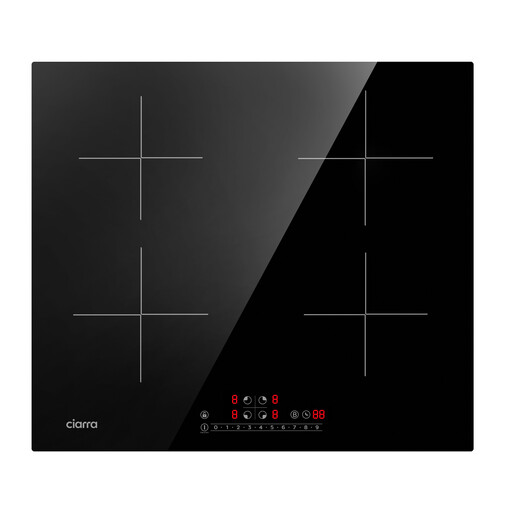 Image unavailable
For a built-in hob used alongside other cooking tasks, this four-zone model is worth comparing. Its title specifies touch controls, nine power levels and a booster function; check whether its timer has the end behaviour you want, as well as the required connection and fit.
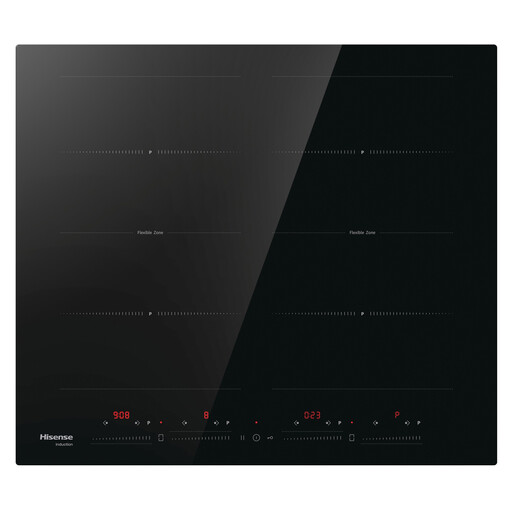 Image unavailable
Consider this model if you usually cook in one pan but also want to assess a flexible cooking area for occasional larger cookware. Its title specifies a 60 cm induction hob with Area Flex; check your pan’s suitability, the cut-out and the electrical connection.
No: controllable simmering should come before maximum power in this decision. Leiths Online Cookery School’s plum-compote method calls for reducing the heat to a simmer; compare the chosen hob’s heat settings and timer behaviour as well as any boost function.
Only if the saucepan is induction-compatible. General guidance notes that induction heats induction-friendly pans, so check your particular pan against the hob or cookware manufacturer’s guidance before buying.
No; the connection depends on the model. electriQ lists an attached plug for the eiQ30INDF, Bosch labels the PUE611BB5B Plug & Play, and AEG specifies a hardwired connection for the TO84IB00FB. Follow the installation instructions for the exact hob you choose.
Check the chosen hob’s connection instructions and the requirements that apply where the work will take place. In England, GOV.UK’s Approved Document P addresses electrical safety in dwellings, including when work needs notification; requirements and processes may differ elsewhere in the UK. Electrical Safety First recommends a registered electrician for installation or repair work.
Follow the exact hob’s instructions for spills, cleaning and residual heat. Check its recommended method and suitable tools before trying to remove compote that has dried onto the surface.