Solo cooks short on space
You make one-pot meals such as red lentil soup and want a cooking zone that can sit on the worktop during use and be stored afterwards.


For red lentil soup cooked in one saucepan, a portable single-zone induction hob is a practical choice if you need to store the hob after use and your pan is induction-compatible. Choose a built-in induction or radiant electric hob when you are replacing a permanent cooking surface or need more zones; check the pan requirements, worktop fit and installation instructions before deciding.
You make one-pot meals such as red lentil soup and want a cooking zone that can sit on the worktop during use and be stored afterwards.
You are considering induction but want to check whether your existing pan has a magnetic base and falls within the chosen hob’s supported diameter range.
You need a permanent cooking surface, so the available worktop space, number of zones and installation requirements matter more than portability.
Start with whether this is an occasional one-pan cooking space or a replacement for your main hob. Then check how you will control a simmer and whether your saucepan suits the technology you choose.
Choose it when: One saucepan is enough and you want to put the hob away after cooking.
Bear in mind: Induction needs a magnetic pan within the model’s supported size range, and one zone cannot heat another pan at the same time.
Choose it when: You are replacing a fitted hob and need more than one cooking zone.
Bear in mind: It takes a permanent worktop position and still requires induction-compatible cookware.
Choose it when: You need a fitted cooking surface but prefer radiant heating to induction.
Bear in mind: It cannot be stored away between one-pan meals; check the selected hob’s cookware and installation instructions.
| Concern | What to check | Who this matters to |
|---|---|---|
| Space for one pan | Check whether the hob is portable and where its stated dimensions will fit during use and storage. | If I only bring out a hob to make one-pot meals, I want to put it away afterwards. Around 36% of consumers put compact cooking space first. |
| Simmer control | Look for documented low-power settings and, if useful, a timer or soup, stew or slow-cook programme. | Once my soup boils, I need to lower the heat without leaving a small pan cooking unattended. Gentle simmer control is the main concern for around 29% of consumers. |
| Existing saucepan | For induction, check the pan’s magnetic base and compare its flat base diameter with the exact hob model’s range. | I would rather use the small saucepan I already own, so I need to know whether induction will recognise it. Around 21% of consumers prioritise keeping their existing pan. |
| Permanent replacement | Compare the worktop cut-out, number of zones and the exact model’s electrical installation instructions. | If my main fitted hob needs replacing, I also need room to cook with other pans. A permanent multi-zone replacement comes first for around 14% of consumers. |
Bosch UK explains that induction requires ferromagnetic cookware. Portable models also specify pan-size ranges: Tefal lists 12–26 cm for the IH210840, while CASO Design lists 12–22 cm for the ProSlim 2000.
Check the material and flat base diameter of your saucepan against the exact model before ordering.
Red lentil soup needs the heat turned down after it reaches a boil. A maximum-power figure does not tell you which lower settings are available.
Check the documented manual power levels and consider whether a timer or soup, stew or slow-cook setting would be useful.
Tefal UK notes that smaller quantities of liquid take less time to heat, while Electrical Safety First advises against leaving electrical appliances switched on unattended.
Stay nearby as the soup comes to the boil and check the pan after reducing the heat; treat a timer as a reminder, not supervision.
If the liquid boils dry, the pan may be damaged.
Electrical Safety First warns against overloading socket-outlets. A 2025 Office for Product Safety and Standards report also identified a serious fire risk involving one particular induction cooker with a suspected counterfeit plug; that report is not a finding about portable hobs generally.
Buy from a reputable retailer, inspect the plug and lead, follow the appliance instructions and avoid overloading the socket or extension lead used for cooking.
These examples illustrate portable and fitted hob formats; the features below apply to the named models, not to every hob from each brand.
Portable single-zone induction hobs for an extra cooking space or a kitchen with limited room.
The portable, single-zone ProSlim 2000 is an option to examine when storage space matters.
Built-in induction and radiant-electric examples for replacing a permanent cooking surface.
These choices span a portable induction hob for a one-pan setup and built-in induction or ceramic hobs for a permanent kitchen replacement. Match the format to your space before comparing controls and cookware requirements.
 No image available
A portable option if one saucepan is enough and you want to store the hob after cooking.
The product name lists 10 power settings, six functions, touch controls and a safety lock. Check that your saucepan is induction-compatible and confirm the supported pan size and lowest setting for simmering.
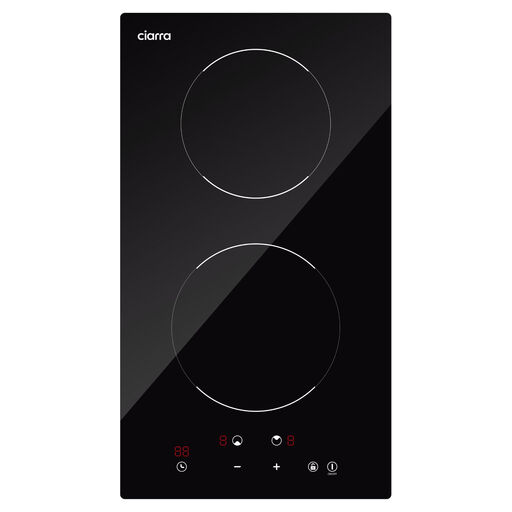 No image available
Consider this built-in format if you are replacing a fitted hob but want two zones rather than four.
The product name specifies 2900 W, nine power levels, a timer, touch controls and a child safety lock. Check your pan against the chosen zone’s size requirements, and confirm the worktop fit and electrical installation instructions.
 No image available
This four-zone format is relevant to replacing a main fitted hob, rather than adding a temporary zone for one pan.
The product name identifies modular power control. Check the worktop opening, your saucepan’s induction suitability and the installation instructions for your kitchen.
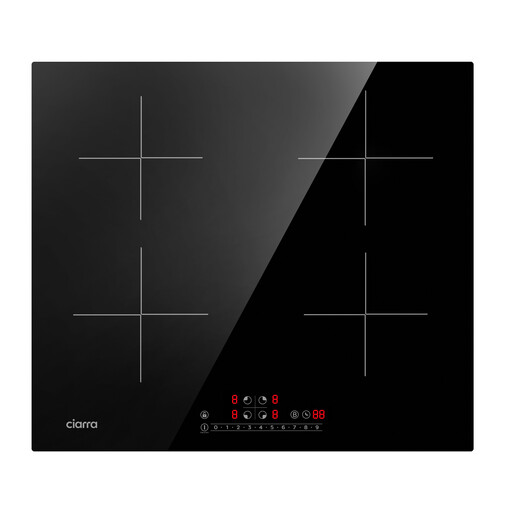 No image available
This is another fitted-hob choice if your kitchen needs several zones, not just a storable surface for soup.
The product name lists nine power levels, touch controls and a booster function. Confirm pan compatibility, worktop fit and the electrical connection requirements before installation.
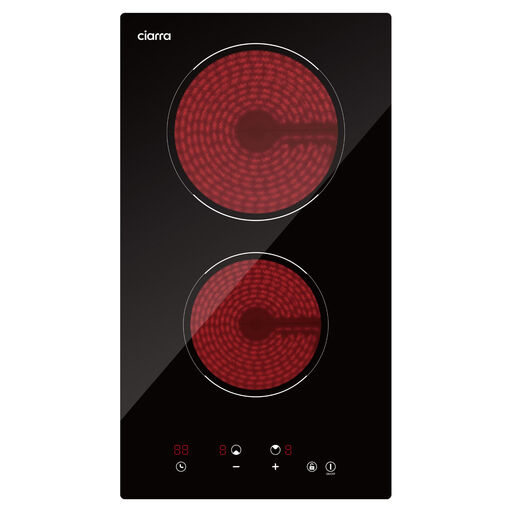 No image available
Consider this built-in ceramic option when replacing a fitted surface and comparing radiant electric cooking with induction.
The product name specifies 2900 W, nine power levels, a timer and a child lock. Confirm your saucepan’s compatibility with the manufacturer, as the product information gives conflicting cookware guidance; also check the installation instructions.
A portable single-zone induction hob suits the task when you use one saucepan, want to store the appliance afterwards and have a compatible pan. If you are replacing your main fitted cooking surface or regularly need other pans heating at the same time, compare built-in multi-zone hobs instead.
It will need a ferromagnetic base and a flat base diameter within the exact hob model’s supported range. Bosch UK identifies magnetic cookware as an induction requirement; Tefal specifies 12–26 cm pans for the IH210840, whereas CASO Design specifies 12–22 cm for the ProSlim 2000.
No: a programme or timer does not replace supervision while soup cooks. Tefal UK notes that smaller liquid quantities heat sooner, and Electrical Safety First advises against leaving electrical appliances switched on unattended.
Do not assume so; follow the installation instructions for the exact model and check that your kitchen has a suitable connection. Some built-in induction models require professional installation to a 13 A fused spur even when supplied with a 13 A plug, so check the requirements for the exact model.