Shared-kitchen sauce makers
Consumers who need one removable zone for sauce, soup or pasta without permanently occupying shared worktop space.


If you have an induction-compatible saucepan and need a removable cooking zone, start by comparing portable single-zone induction hobs with adjustable heat and a timer. A solid-plate hot plate is an option when your existing pans will not work on induction and you prefer a dial; a fitted multi-zone hob makes more sense for a permanent kitchen setup. Whichever route you take, check the worktop space, cooking surface and electrical load before buying.
Consumers who need one removable zone for sauce, soup or pasta without permanently occupying shared worktop space.
Consumers looking for selectable heat settings and, where useful, a timer or pause function while cooking tomato-, cream- or cheese-based sauces.
Consumers deciding whether the saucepans already in their shared kitchen can be used on an induction hob.
Choose between a removable and a permanent cooking zone first; then check whether your saucepan suits the heating method and whether the controls suit the way you make sauce.
Choose it when: You have an induction-compatible saucepan and want a removable zone with selectable heat for simmering.
Accept that: It needs compatible cookware, and a single zone cannot cook pasta and sauce separately at the same time without another hob.
Choose it when: Your existing saucepan is unsuitable for induction and a physical temperature dial appeals to you.
Accept that: The plate itself gets hot and remains a surface to keep clear after cooking; a dial alone does not establish how precisely a model will simmer.
Choose it when: The kitchen is being equipped permanently and needs several cooking zones at once.
Accept that: It takes permanent space and may need professional electrical installation; check the requirements of the exact model.
| Concern | What to check | Who this matters to |
|---|---|---|
| Controlled simmering | Compare the exact model’s selectable heat settings and timer; check for a pause function if interruptions are likely. | When my sauce reaches temperature, I want to turn the heat down deliberately rather than rely on a cooking preset. Around 33% of consumers put simmer control first. |
| Shared worktop safety | Measure the appliance’s full footprint and check its shut-off features, any residual-heat indicator and a suitable socket position. | If others use the worktop, I need room to cook and a way to clear the appliance safely afterwards. Shared-space safety comes first for around 27% of consumers. |
| Existing saucepans | For induction, check the pan’s induction marking or magnetic base and the model’s permitted pan sizes. | I want to keep using the saucepans already in the kitchen, so their compatibility could decide which hob I buy. Around 20% of consumers make cookware their primary concern. |
| Simple setup | Decide whether a physical dial suits you better than touch controls; check the exact model’s protection features and stable placement requirements. | When I only need one straightforward cooking zone, I would rather use a familiar control than manage additional functions. Simplicity is the leading need for around 20% of consumers. |
Which? explains that induction requires a compatible magnetic pan base. Plain copper, glass and aluminium pans will not work unless they have a suitable induction base.
Look for the induction symbol or test whether a magnet holds to the saucepan base before choosing a hob.
If your saucepan is unsuitable, you may need a compatible one.
A hob and other connected appliances can exceed a lead’s rating. Electrical Safety First warns that extension leads have differing current ratings and should not be daisy-chained.
Read the lead’s rating and check the combined load of everything connected before using it with a hob.
Induction heats the pan directly, but the hot pan can transfer heat back to the glass. A residual-heat indicator, where fitted, is a warning to heed rather than a substitute for care.
Keep the cooking area clear after use and move the appliance only when its instructions allow.
A fitted hob occupies permanent worktop space, while a portable single-zone appliance can be stored between uses. Installation requirements vary by fitted model.
If you only need an occasional additional zone, compare portable models before committing to a permanent installation.
The portable, single-zone IH210840 is an example to consider when an additional cooking area needs to be stored after use.
The portable LSIHOB26 offers a single zone with controls that may be useful when sauce cooking is interrupted.
The 35240 is a single solid-plate option for consumers who prefer a physical dial or need to use non-induction cookware.
These portable induction options suit a removable sauce-cooking zone if you have compatible cookware. Compare their controls and pan requirements against the space and socket you plan to use.
 No image available
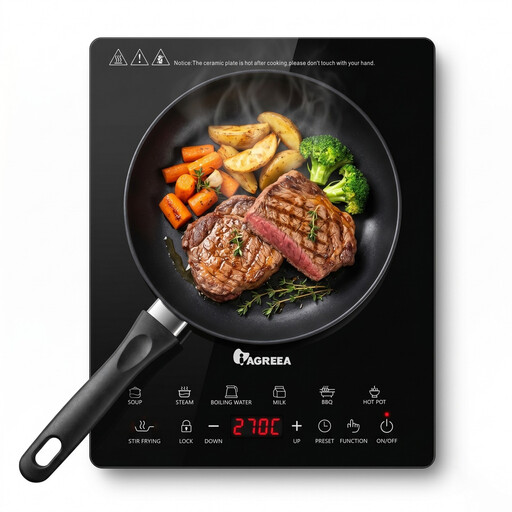
Consider this model if you want selectable heat and a timer while cooking sauce on a removable zone.
The listing specifies 2000 W, eight power levels, 60–270°C temperature settings, a 3-hour timer and automatic shut-off. It specifies magnetic cookware with a 12–26 cm diameter range.
Check that your saucepan fits, and confirm the appliance’s full footprint, electrical connection requirements and the load on the intended socket before buying.
 No image available
Consider this model if selectable heat is important and you can confirm that its controls suit interruptions during cooking.
The listing specifies 2000 W, 10 heat settings, touch controls, a child lock and boil-dry protection. It requires ferromagnetic cookware.
Check your saucepan’s fit and confirm the timer functions, full footprint, electrical connection requirements and intended socket load before buying.
You need a saucepan with an induction-compatible magnetic base, but an existing pan may already qualify. Which? notes that induction needs compatible cookware; check the pan’s marking or test its base with a magnet, then check the hob’s permitted pan sizes.
Only if the lead is suitable for the combined load of every appliance connected to it. Electrical Safety First says a single UK socket has a maximum load of 13 A, about 3 kW, and that some extension leads are rated below 13 A; read the lead’s rating and never daisy-chain leads.
Place it on a dry, stable worktop with room to use it without obstructing others, and follow the appliance instructions. Electrical Safety First advises keeping electrical equipment away from wet hands and, where possible, positioning sockets and switches at least 30 cm horizontally from the sink.
A portable single-zone hob adds one removable cooking area; it does not provide several simultaneous zones. If the household needs a permanent multi-zone setup, check the exact fitted model’s installation requirements. The product information specifies professional installation to a 13 A fused spur for the Zanussi ZEI6840FBA example.
Switch the hob off, let it cool and follow the cleaning instructions for its surface. The product information describes the Tefal IH210840 example as having a wipe-clean ceramic surface, but cleaning methods should be checked for the exact hob you choose.