Small-kitchen soup cooks
If you mainly boil broccoli and stock before simmering, check whether a built-in hob fits the existing opening and the space beneath the worktop. A nominal 60 cm width alone cannot settle that question.


For boiling broccoli soup and then reducing it to a simmer, consider induction if your soup pot has a magnetic base; a Plug & Play model may suit a compatible socket arrangement, while a hardwired model needs the appropriate electrical installation. Choose ceramic electric if keeping non-magnetic pans matters more, and allow for its surface to remain hot after cooking. Whichever route you choose, check the exact cut-out, clearances and connection requirements before ordering.
If you mainly boil broccoli and stock before simmering, check whether a built-in hob fits the existing opening and the space beneath the worktop. A nominal 60 cm width alone cannot settle that question.
If you want induction when replacing a hob, distinguish a model labelled Plug & Play from one specified as hardwired-only. The connection requirements still need to suit your kitchen.
If using your current soup pot is the priority, test its base before choosing induction. Bosch UK says induction needs magnetic cookware, whereas ceramic electric hobs accept a wider range of pots and pans.
Consider it when: You have a magnetic-base soup pot and want to consider a model that is not hardwired-only.
Check first: A Plug & Play label does not establish that your socket, cut-out or any worktop alterations are suitable.
Consider it when: A fixed electrical connection is practical and you want induction's responsive heat adjustment for boiling and simmering.
Allow for: The model's circuit and installation requirements, as well as magnetic-base cookware.
Consider it when: Keeping a non-magnetic soup pot matters more than choosing induction.
Allow for: Surface heat after switch-off; check the chosen model's residual-heat indication.
For a built-in hob in a small kitchen, establish fit and electrical connection before weighing cooking controls against cookware compatibility.
| Concern | What to check | Who this matters to |
|---|---|---|
| Worktop fit and installation | Measure the opening and space beneath the worktop; compare them with the exact installation instructions and connection type. | Replacing a hob in a tight worktop makes the opening and electrical arrangement more pressing than extra controls. Around 42% of consumers put fit and installation first. |
| Boiling and simmer control | Check the cooking controls and whether the soup pot's base suits the chosen zone; check for a boost function if that matters to you. | If I want to bring soup to the boil and then lower the heat, responsive adjustment matters more to me than keeping every old pan. Around 33% of consumers put boiling and simmer control first. |
| Cookware and residual heat | Test the pot's base with a magnet for induction; for ceramic, check the residual-heat indicator. | I want to keep using my soup pot and know when the glass is still hot in a confined workspace. For around 25% of consumers, cookware continuity and managing residual heat come first. |
AEG UK says induction works only with a magnetic-base pan. A pot without a suitable base may not work on the hob.
Hold a magnet against the pot's base, then check the chosen hob's instructions for suitable pan sizes.
An incompatible pot may need replacing if you choose induction.
Nominal width does not give you the worktop cut-out or the space required beneath it. AEG UK, for example, specifies a 560 × 490 mm built-in opening for the TO64IA00FB.
Measure your existing opening and compare it with the installation document for the exact model.
A different required opening may mean altering the worktop.
A ceramic zone can remain hot after cooking. Beko UK says the HIC64402T displays an H as a residual-heat warning.
Keep hands, utensils and packaging away from the zone while the warning is displayed, and follow the model's instructions before cleaning.
Bosch UK labels the PUE611BB5B Plug & Play, while AEG UK specifies a hardwired-only connection and a 7,350 W total electrical load for the TO64IA00FB. The same installation plan will not necessarily suit both.
Check the exact model's electrical requirements before purchase. Electrical Safety First recommends using a registered electrician for installation work.
A hardwired installation may require circuit work as well as fitting the hob.
Bosch UK's range includes induction and ceramic electric routes. Its PUE611BB5B is a particular Plug & Play induction example, not a specification for every Bosch hob.
The AEG UK TO64IA00FB illustrates a hardwired induction route for a planned installation.
Beko UK's HIC64402T illustrates the ceramic electric route for consumers who want to keep using non-magnetic cookware.
These built-in induction hobs are options to consider if your soup pot has a magnetic base. Check each model's fitting and electrical requirements; the list includes hardwired models and does not represent the ceramic route discussed above.
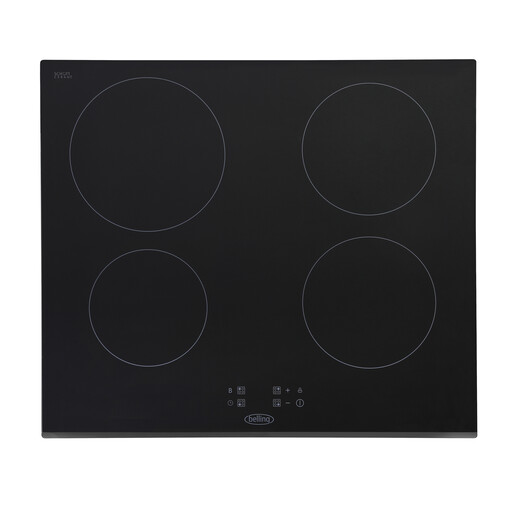 No image available
Consider this induction model for boiling and simmering soup if your pot has a magnetic base.
The title identifies a nominal 60 cm hob. Check the exact cut-out, clearances and connection requirements against your kitchen before ordering.
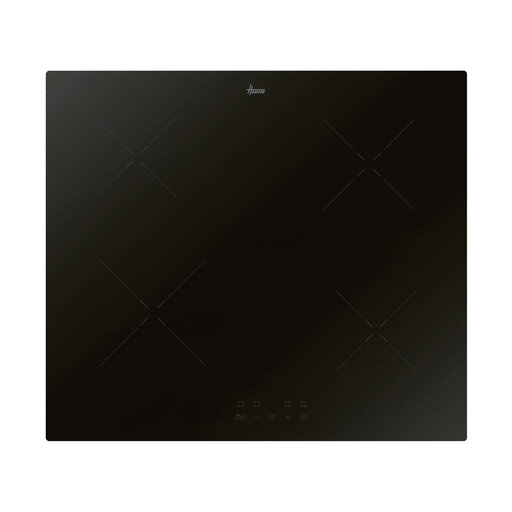 No image available
This is a route to consider for soup cooking if you have a magnetic-base pot and can accommodate a hardwired installation.
Check the cut-out, clearances and circuit requirements in the HI642BCB installation instructions before arranging fitting.
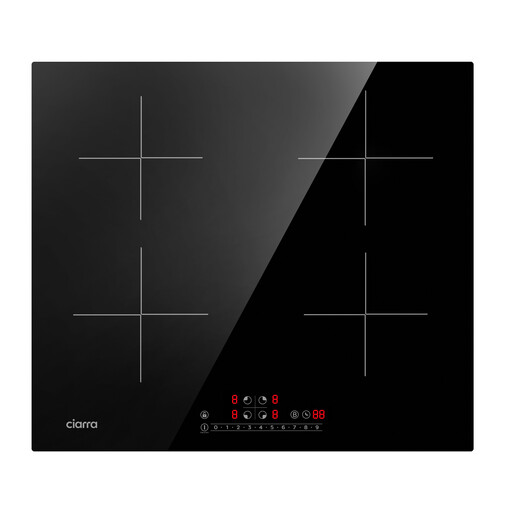 No image available
Consider this model if you want induction controls for bringing soup to the boil and then selecting a lower setting.
Its product title specifies touch controls, nine power levels and a booster. Check your pot's magnetic base and confirm the exact connection and fitting requirements.
 No image available
Consider this model if a hardwired installation suits your kitchen and your soup pot has a magnetic base.
This is the PIE631BB5E, not the Bosch PUE611BB5B Plug & Play example. Check the PIE631BB5E installation instructions for its cut-out, clearances and circuit requirements.
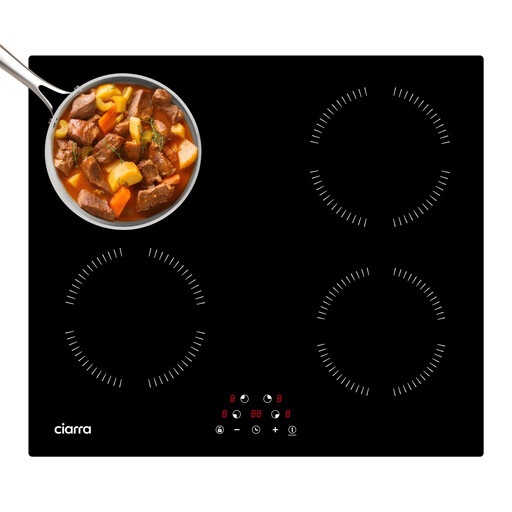 No image available
This is another built-in induction option for soup cooking when your pot has a magnetic base.
Its title distinguishes it by modular power control. Compare its own installation instructions with your worktop opening and electrical arrangement rather than applying the requirements of the other Ciarra hob above.
Consider induction if your soup pot has a magnetic base and you value responsive heat adjustment when moving from boiling to simmering. Ceramic electric is the alternative if keeping a non-magnetic pot takes priority; allow for the glass to remain hot after cooking.
Hold a magnet against the base: AEG UK says strong attraction indicates induction compatibility. Also check the chosen hob's instructions for suitable cookware and pan-base diameters.
Start by checking the exact model's connection requirements; a Plug & Play label does not make every kitchen alteration suitable for do-it-yourself installation. Electrical Safety First recommends a registered electrician for installation work. In England, GOV.UK's Approved Document P covers electrical safety in dwellings; check the applicable requirements if you live elsewhere in the UK.
No: nominal width and external dimensions do not establish the required cut-out. AEG UK lists the TO64IA00FB as 590 × 520 mm externally but specifies a 560 × 490 mm built-in opening. Measure your worktop and follow the instructions for the exact hob you choose.
Allow the hob to cool sufficiently and follow its cleaning instructions. On the Beko HIC64402T, an H warns that residual heat remains; do not treat the glass as cool while that warning is displayed.