What matters when choosing
Choose the format around how often you cook and whether you need a permanent hob; then check your pan against the exact cooking zone. Great British Chefs advises toasting whole spices in a dry frying pan over medium heat, so usable manual adjustment deserves attention whatever format you choose.
Portable induction
Choose it when: You need one zone for occasional cooking and want to store the hob between uses.
Allow for: A magnetic pan whose base suits the zone, plus a stable, heat-resistant place to use the appliance.
Built-in induction
Choose it when: You are fitting or replacing a kitchen hob for wider cooking and want a permanent induction setup.
Allow for: Compatible cookware, worktop space and electrical installation planning; spice toasting alone does not call for a fixed hob.
Built-in ceramic electric
Choose it when: You need a permanent hob and keeping non-magnetic cookware is important.
Allow for: A cooking surface that can stay hot after switch-off, as well as the requirements of a fixed installation.
| Concern |
What to check |
Who this matters to |
| Manual heat control |
Look for settings you can adjust during a short dry toast; do not treat a timer or Boost function as a substitute for watching the pan. |
I want to bring out the spices' aroma without letting a small batch scorch while I adjust the heat. Around 31% of consumers put manual heat control first. |
| Storage and one-zone use |
Compare the appliance dimensions with your storage space and check its instructions for a suitable work surface. |
When I cook with just one pan and need the worktop for other tasks afterwards, being able to put the hob away matters most. Roughly 25% of consumers prioritise compact storage. |
| Pan compatibility |
For induction, test the pan base with a magnet, measure that base rather than the rim, and compare it with the model's supported pan range. |
I would rather keep my small frying pan, but I need to know it will be detected before choosing induction. Around 25% of consumers make pan compatibility their primary concern. |
| Permanent kitchen fit |
Check the exact hob's dimensions, worktop cut-out and electrical instructions, then plan fitting for your location. |
If I am already replacing the kitchen hob, it needs to work for everyday meals as well as spices. Approximately 19% of consumers focus chiefly on permanent installation. |
Brands to consider
These brands illustrate different hob formats and cookware considerations; their inclusion does not mean that every model has the same controls or suits the same pan.
Tefal
Tefal offers portable single-zone induction models, including the Everyday Slim IH210840 and Everyday IH201840.
- Tefal specifies a 45 mm format, manual settings from 300 W to 2100 W and a 12 cm–26 cm induction-pan range for the Everyday Slim IH210840.
- Induction cookware is required. For the separate Everyday IH201840, check the current manual before relying on a particular pan range or power-level count.
Smeg
Smeg offers the portable single-zone PIC01BLMUK alongside compact built-in induction models such as the SI2321D.
- Smeg lists nine power levels and Boost for the PIC01BLMUK; its 30 cm SI2321D provides two built-in induction zones with pan detection.
- Choose between these models primarily on portable versus permanent use. The PIC01BLMUK's included food-temperature probe does not establish a benefit for dry-toasting spices.
Bosch
Bosch offers both induction and ceramic electric hob ranges, making cookware type a useful starting point when considering its models.
- Bosch distinguishes induction, which needs magnetic cookware, from ceramic electric hobs, which it describes as working with all kinds of pots and pans.
- Check the controls and pan requirements of the exact model; a category-wide cookware distinction does not establish how finely each hob adjusts at lower settings.
Joybuy product choices
These choices include a portable induction hob for single-pan use and built-in induction and ceramic hobs for a wider kitchen installation. For spice toasting, compare their controls and your frying pan before deciding which format fits.
 Image unavailable
ochama 2000W Portable Induction Hob
Consider this portable model if you want one cooking zone that can be stored after occasional spice toasting.
The product name specifies touch controls, 10 power settings and six functions. Check that your magnetic frying-pan base suits the cooking zone, and consult the manual if fine low-to-medium adjustment is important to you.
View on Joybuy
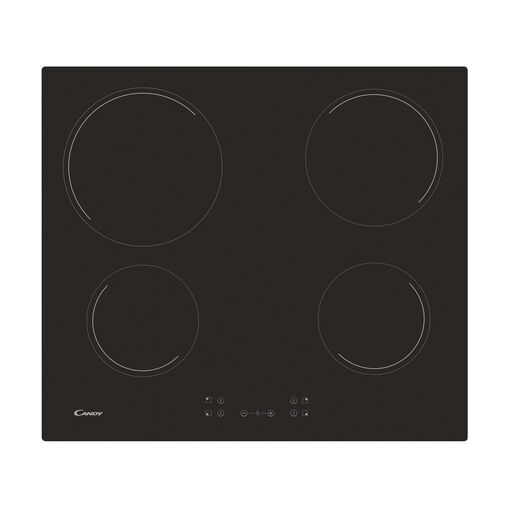 Image unavailable
CANDY CH64CCB 59 cm Ceramic Hob
Consider this ceramic model for a permanent kitchen replacement when keeping non-magnetic cookware matters.
It is a 59 cm hob. Check its exact cut-out, electrical instructions and low-heat controls before arranging installation; allow the ceramic surface to cool after use.
View on Joybuy
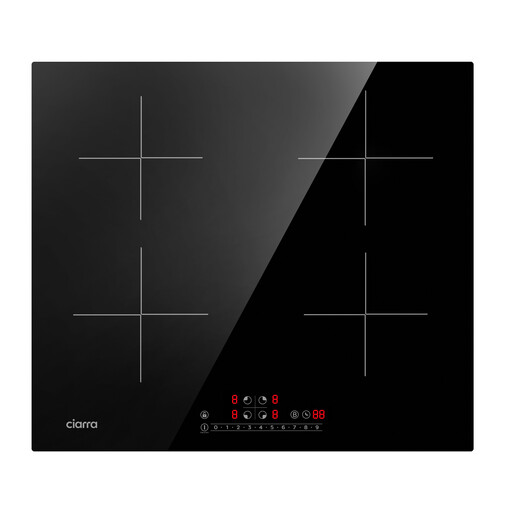 Image unavailable
Ciarra Four-Zone Built-in Induction Hob
Consider this built-in induction model if you are planning a permanent hob for everyday cooking as well as occasional spices.
The product name specifies four zones, touch controls, nine power levels and a Booster function. Check which zone suits your magnetic pan base, and confirm the cut-out, electrical requirements and usable lower settings in the exact manual.
View on Joybuy
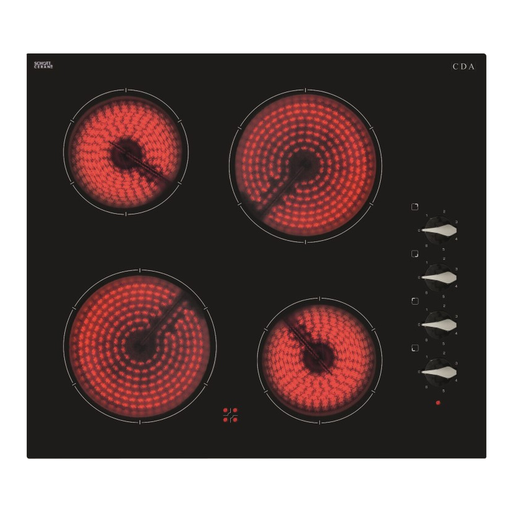 Image unavailable
CDA HC6212FR 60 cm Four-Zone Ceramic Hob
Consider this built-in ceramic model if you need a permanent four-zone hob and want to retain non-magnetic pans.
The product name specifies a frameless black-glass design. Check the exact installation instructions and manual heat settings before buying; keep clear of cooking zones while they remain hot after use.
View on Joybuy
Common questions
Do I need induction to toast whole spices?
No. Great British Chefs advises using a dry frying pan over medium heat; the cooking method does not require induction. Choose between induction and ceramic electric cooking according to your cookware, preferred hob format and willingness to accommodate a permanent installation.
Will my small frying pan work on a portable induction hob?
It will work only if its base is magnetic and suits the exact hob's supported pan size. For example, Tefal specifies 12 cm–26 cm induction pans for the Everyday Slim IH210840. Measure the pan's base, not just its rim, and check the manual for the model you intend to buy.
Should I use Boost to toast spices?
Do not make Boost the default for this short dry-pan task. Great British Chefs advises medium heat; use a controllable setting, shake the pan regularly and remove the spices when aromatic rather than relying on a programme to judge when they are ready.
Can I touch a ceramic hob as soon as it is switched off?
No. A ceramic cooking zone can retain heat after switch-off, and AEG says an H display indicates residual heat. Keep the area clear and wait for the zone to cool before touching or cleaning it.


