Frequent batch stir-fry cooks
If you cook several portions in succession, consider how readily you can adjust the heat and whether the hob leaves room for your main pan and any side pans.


For frequent batches of stir-fried vegetables, consider an induction hob with enough usable zones for your pans and a boost function if rapid heating matters to you. A bridge or flexible zone is worth considering for a wide, flat pan, but check cookware compatibility, the worktop cut-out and the electrical installation before choosing; a ceramic electric hob remains an option if you want to keep non-magnetic pans.
If you cook several portions in succession, consider how readily you can adjust the heat and whether the hob leaves room for your main pan and any side pans.
A wide, flat pan or several pans can make the usable zone layout more important than the number of marked zones alone. Compare the position and dimensions of the zones with the bases of the pans you use.
If you plan to keep your existing pans or fit a hob into an existing worktop, check pan compatibility, cut-out dimensions and electrical requirements before settling on a model.
Start with the pan you use for the vegetables, then check how the hob accommodates your other pans and whether it can be installed in your kitchen. Induction heats compatible cookware directly, while a conventional ceramic electric hob heats elements beneath the glass; neither the appearance of the surface nor its nominal width establishes how well your pans will fit.
| Concern | What to check | Who this matters to |
|---|---|---|
| Heat and control | Check whether the exact induction model has a boost function and controls you can adjust readily between batches. | When I cook vegetables in successive batches, I want to raise and reduce the heat as the pan is refilled; around 36% of consumers put heat and control first. |
| Usable pan space | Compare your widest flat pan base with the zone layout; check whether a bridge or flexible zone suits that pan. | If my vegetable pan shares the hob with another dish, I need both pans to sit on usable cooking areas. Around 29% of consumers make pan space their primary concern. |
| Cookware and installation | Check the main pan for an induction-compatible base, and compare the model’s cut-out and electrical instructions with your kitchen. | I would rather establish whether I can keep my pans and fit the hob before choosing its features; for around 21% of consumers, compatibility and installation come first. |
| Cleaning and surface heat | Check the model’s controls and care instructions, and allow for glass that may remain hot after a pan is removed. | After cooking several batches, I want to manage splashes and avoid touching a hot surface; around 14% of consumers prioritise cleaning and surface heat. |
Induction needs a suitable magnetic base. An aluminium, copper or glass pan will not work unless it has an induction-compatible base.
Check the pan maker’s marking or test the base with a magnet, particularly on the pan you use for stir-frying.
Keeping an unsuitable main pan would mean using a different pan for induction cooking.
Connection requirements vary by model. AEG specifies the SO64IB00FB as hardwired only, with a total electrical loading of 7,200 W.
Give a qualified installer the exact model number and installation instructions before ordering or arranging fitting.
The existing circuit may need assessment or installation work before the hob can be used.
Both can have a glass surface, but induction heats compatible cookware directly, whereas a conventional ceramic hob heats an element beneath the glass.
Choose between them using your cookware and preferred cooking behaviour, rather than the surface appearance alone.
A bridge or flexible area is useful only if its layout accommodates the cookware you intend to place on it. It does not, by itself, make a round-bottomed wok a straightforward fit for a flat hob.
Measure the base of your widest flat pan and check the zone layout and worktop cut-out against the named model’s dimensions.
Compare named models rather than assuming that a feature found on one hob applies across a brand’s range.
The AEG SO64IB00FB is a 59 cm, four-zone induction model to examine if a bridge layout matters for larger pans.
Bosch has named induction and conventional ceramic electric models relevant to this choice, but their features differ.
Neff induction models are worth examining if flexible cookware placement or model-specific controls are priorities.
These Joybuy induction hobs offer choices for cooking successive batches and using more than one pan. If you use a wide, flat pan, compare the models with a named flexible area against the size of that pan; if you intend to keep non-magnetic cookware, consider the ceramic electric route discussed above instead.
 No image available
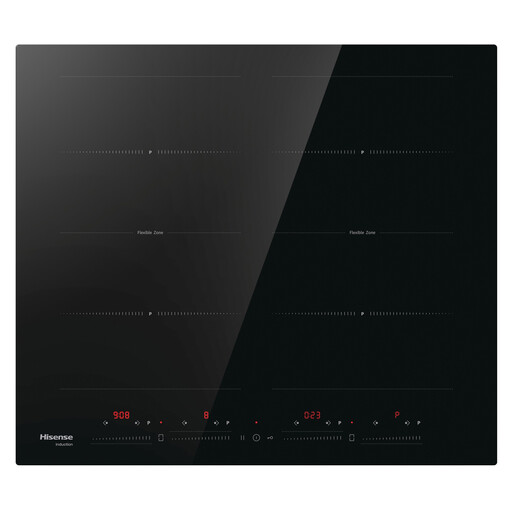
Consider this model if you need a wider hob with a flexible bridge area for a suitable flat pan or several pans.
The product name specifies four cooking zones, touch controls and boost mode. Check that your main pan has an induction-compatible base, and confirm the worktop and electrical requirements with the installation instructions.
 No image available
Consider this model if flexible cookware placement matters but you are looking at a 60 cm hob.
Check how its named Area Flex feature fits the base of your largest pan. Your cookware must be induction-compatible, and the cut-out and electrical requirements need checking against your kitchen.
 No image available
This model is a route to consider if a boost function matters for repeated batches and your pans are suitable for induction.
Bosch lists PowerBoost, QuickStart, Restart and ChildLock for the PIE631BB5E. The product name specifies hardwired installation; have a qualified installer check the electrical supply and worktop fit.
 No image available
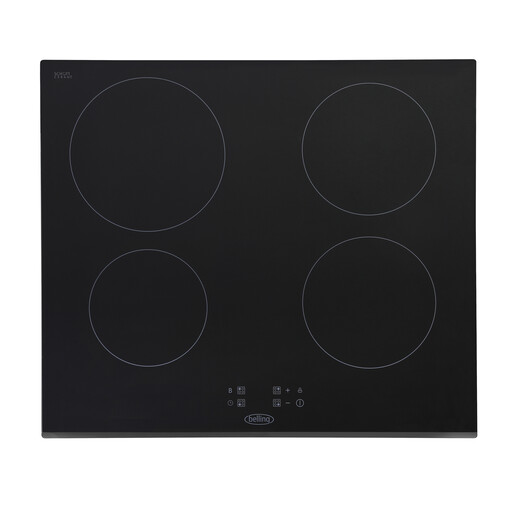
Consider this 60 cm induction model if you are choosing a hob for successive batches without making a flexible zone your deciding requirement.
Check your main pan for induction compatibility, then compare the hob’s zone layout, installation dimensions and electrical instructions with your kitchen.
 No image available
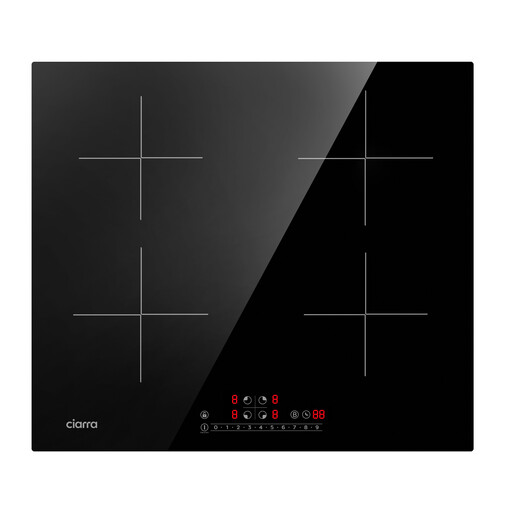
Consider this model if you want separate cooking zones for several pans and a booster function.
The product name specifies touch controls and nine power levels. Check that your pan bases suit induction, and confirm the connection method and worktop fit with a qualified installer.
They will work only if their bases are induction-compatible. Check for a suitable magnetic base or the pan maker’s marking; a flat-bottomed pan is a more straightforward match for a flat zone than a round-bottomed wok.
Do not assume you can: the connection depends on the exact hob. AEG lists the SO64IB00FB as hardwired only with a total electrical loading of 7,200 W. Review the installation instructions with a qualified electrician before fitting a hob.
No, a bridge zone does not remove the need for compatible cookware or establish that a round-bottomed wok fits a flat cooking surface. Check both the hob’s zone instructions and the wok maker’s compatibility guidance.
Confirm the model number, worktop dimensions, electrical instructions and the retailer’s delivery and installation arrangements before booking. Keep the installation instructions and proof of purchase; if the hob develops an electrical fault, stop using it and contact a qualified professional.