Frequent batch cooks with large cookware
If a wide tagine or casserole shares the hob with other pans, compare your pot base with the cooking zones. A bridge or flex zone is worth considering when an ordinary zone does not accommodate it.


For batch-cooked chickpea tagine, choose an induction hob with a bridge or flex zone if your compatible pot has a base that will not fit a standard zone. A conventional four-zone model is a sensible route when the pot fits; consider a 13 A plug-in model when its connection suits your kitchen and you can accept its lower combined power. Check the cookware, worktop cut-out and electrical requirements for the exact hob before ordering.
If a wide tagine or casserole shares the hob with other pans, compare your pot base with the cooking zones. A bridge or flex zone is worth considering when an ordinary zone does not accommodate it.
If you mainly cook in one induction-compatible pot, focus on a zone that fits its base and controls that let you reduce the heat after sautéing and bringing the sauce up to temperature. A flex zone need not be the deciding feature.
If you are replacing a built-in hob, check the existing opening and electrical connection before comparing cooking features. A power-managed 13 A plug-in model may suit the installation, but its combined power is lower than that of the cited high-load hardwired models.
Start with the pot and kitchen connection: neither a flexible cooking area nor extra heating power helps if the cookware or installation does not suit the hob.
| Concern | What to check | Who this matters to |
|---|---|---|
| Large cookware and other pans | Compare the pot base with the zone dimensions; check whether a bridge or flex function accommodates its shape. | When I make several portions and use another pan alongside a wide tagine, I need enough usable cooking space. Around 25% of consumers put large-pot and multi-pan flexibility first. |
| Cookware and installation fit | Check the base for induction compatibility, then compare the model’s cut-out, connection type and electrical load with your kitchen. | If I want to keep my existing tagine and replace a built-in hob, I need to know that both the pot and kitchen will accommodate the new appliance. For around 31% of consumers, compatibility is the primary concern. |
| Heating and simmer control | Look at the controls for the zone you will use; check whether the model has a boost setting for initial heating. | I want to sauté the ingredients, heat the sauce and then turn it down without an aggressive boil. Responsive heat control comes first for around 25% of consumers. |
| Straightforward replacement | Compare the exact cut-out and connection requirements; for a 13 A plug-in model, consider its combined-power limit. | If I usually cook in one pot, I would rather choose features and an installation that suit that routine than prioritise maximum multi-zone output. Around 19% of consumers place straightforward replacement first. |
Induction suitability depends on the base, not the vessel’s name or intended recipe. Bosch advises matching a ferromagnetic cookware base to the cooking-zone size; a traditional clay vessel may not be suitable unless its maker specifies an induction-ready base.
Check the tagine maker’s instructions, test the base with a magnet and measure it against the intended zone.
Keeping an incompatible tagine may mean using a different, induction-compatible cooking vessel.
Similar-looking built-in hobs can require different worktop openings and electrical provision. AEG specifies a 560 × 490 mm opening and hardwired connection for the TO64IB00FB; those details cannot establish the fit of another model.
Measure the aperture and check the exact hob’s installation instructions, including clearances and connection requirements, before ordering.
An unsuitable opening may require worktop alteration; a hardwired appliance also needs an appropriate electrical installation.
The Bosch PUG61RAA5B is specified at 3.0 kW with power management, while the cited AEG TO64IB00FB has a 7,200 W total electrical load. Those figures matter when several zones are in use, though they do not predict how quickly a particular tagine will cook.
If you plan to heat a large pot and other pans together, check the model’s power-management behaviour as well as its connection requirements.
Boost is a heating feature, not a substitute for reducing the setting once the sauce is hot. Cambridgeshire Fire and Rescue Service advises against leaving pans unattended and warns that grease build-up can catch fire.
Use a suitable setting for the initial heat-up, turn it down for the simmer and keep the cooking area clear while you supervise the hob.
The TO64IB00FB illustrates a 60 cm, four-zone induction route for cooks considering a larger combined cooking area.
The PIE631BB5E and PUG61RAA5B illustrate different four-zone induction choices: a conventional layout and an installation-led plug-in model.
The T56TT60N0 is an induction example for cooks interested in flexible cookware positioning and a removable magnetic control dial.
These built-in induction hobs offer different ways to cook a batch-sized tagine, from flexible cooking areas to conventional zones. Compare each model with your pot base, worktop opening and electrical supply rather than choosing by hob width alone.
 Image unavailable
Consider the flexible bridge if your compatible tagine needs more cooking area than a standard zone provides.
The named variant has four cooking zones, touch controls and boost mode. Check its larger-format worktop fit and electrical installation requirements before ordering.
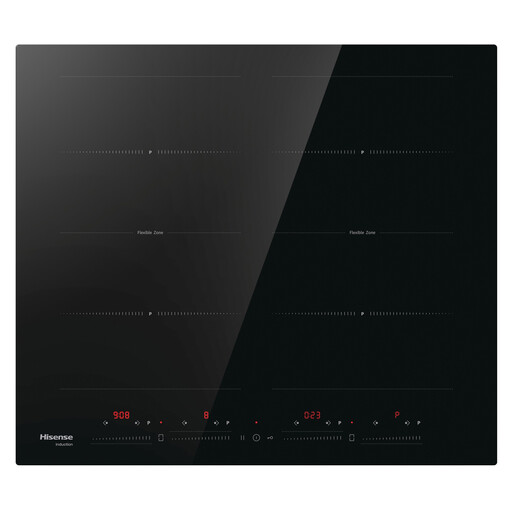 Image unavailable
Area Flex is relevant if a wide tagine or casserole needs a combined cooking area; check that your vessel’s base suits the zones.
Hisense’s specification gives this model a 7.4 kW connected load. Confirm the cut-out and connection requirements for your kitchen.
 Image unavailable
This conventional four-zone layout suits a batch-cooking pot only if its induction-compatible base fits a standard zone.
Bosch specifies PowerBoost and touch controls for this model. Check the cut-out and electrical supply for its hardwired installation.
 Image unavailable
For cooking a tagine alongside another pan, check whether the vessel’s magnetic base fits one of this hob’s zones.
Compare the worktop opening and electrical requirements with the exact appliance instructions before choosing it as a replacement.
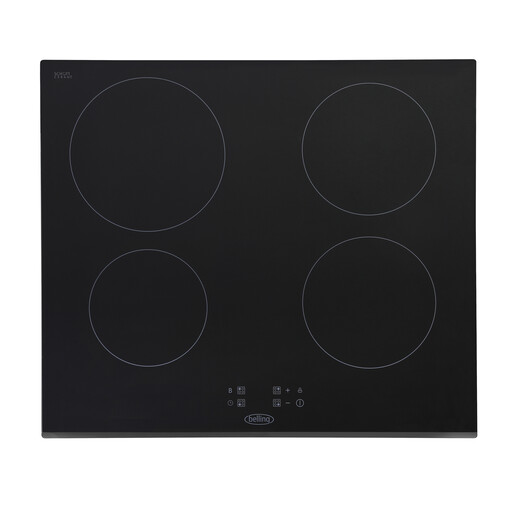 Image unavailable
For a conventional batch-cooking setup, check that your induction-compatible tagine base fits a cooking zone and leaves room for any other pan you use.
Confirm the model’s worktop and electrical installation requirements before replacing an existing hob.
It will work only if its base is induction-compatible and suits the intended zone. Bosch advises using a ferromagnetic base matched to the zone size; check your tagine maker’s instructions and test the base with a magnet before choosing induction.
A bridge or flex zone is useful when your compatible pot base will not fit a conventional zone, but it is not necessary just because you are making several portions. Measure the base and compare it with the exact hob’s zone layout; AEG describes the Bridge function on its TO64IB00FB as joining two zones into a larger cooking area.
Only if the chosen model’s cut-out, clearances and electrical requirements suit that position. Measure the opening, follow the appliance’s installation instructions and arrange an assessment of the electrical supply where the connection requirements call for it.
No. AEG specifies a 7,200 W total electrical load for the TO64IB00FB, while the Bosch PUG61RAA5B is a power-managed 13 A plug-in model with a 3.0 kW maximum connected load. Check the connection and combined-power requirements of the precise model, particularly if several pans will be heated together.
Reduce the hob setting after the initial heat-up and supervise the cooking throughout. Cambridgeshire Fire and Rescue Service advises against leaving pans unattended and recommends keeping the hob free of grease build-up.