Shared-kitchen sauce cooks
If gravy is your main task, look for adjustable heat, a timer you can use as a reminder and a surface you can clean after splashes. Check that your saucepan suits the hob.


For an occasional extra zone to reduce gravy in a shared kitchen, choose a portable single-zone induction hob if your saucepan is compatible and you have a suitable socket and safe worktop position. A built-in multi-zone hob makes more sense when several pans need cooking at once and the kitchen owner can arrange installation; a timer does not make unattended reduction safe.
If gravy is your main task, look for adjustable heat, a timer you can use as a reminder and a surface you can clean after splashes. Check that your saucepan suits the hob.
A storable hob avoids altering the worktop, provided you have a suitable socket, a safe place to use it and induction-compatible cookware.
A built-in hob may suit a planned kitchen refit when simultaneous cooking matters and the kitchen owner can arrange the necessary installation.
Choose it when: You need a temporary or occasional zone for one saucepan and can store the hob after use.
Trade-off: One zone limits simultaneous cooking, and the saucepan must be induction-compatible.
Choose it when: The kitchen is being refitted and several pans need cooking at once.
Trade-off: It is a permanent installation, not a temporary extra zone; the worktop and electrical arrangements need checking.
| Concern | What to check | Who this matters to |
|---|---|---|
| Controlled reduction | Compare manual low-power settings and the timer, not just boost output. Check the stated induction-pan size range. | If I need to bring gravy to a simmer and then reduce the heat, I want controls I can adjust while I stay nearby and stir. Around 36% of consumers put controlled reduction first. |
| Space and clean-up | Check the hob’s footprint, storage space and a suitable worktop position; follow its surface-cleaning instructions. | When the worktop belongs to everyone, I need an extra zone I can put away and clean after splashes. For around 36% of consumers, space and clean-up are the primary concern. |
| Electrical and installation safety | Check the intended socket and lead arrangement. For a built-in hob, confirm property approval and installation requirements. | I need to know the hob can be used safely without overloading a shared socket or making an unauthorised alteration. Electrical and installation safety comes first for around 28% of consumers. |
Bringing liquid up to temperature is only part of reducing gravy; you also need to control the heat afterwards. Tefal UK lists manual settings from 300W to 2100W for its IH210840, but that range does not apply to every portable hob.
Compare the exact model’s manual settings, timer and pan-size requirements before choosing.
Tefal UK warns that small quantities of liquid may boil dry if left unattended. Electrical Safety First also advises against leaving electrical appliances on and unattended.
Use the timer as a prompt to check the gravy, stay nearby and switch the hob off when finished.
Other kitchen appliances may already be drawing power. Electrical Safety First warns against overloading extension devices and daisy-chaining extension leads.
Check the hob and socket arrangement before use, keep leads clear of water and hot surfaces, and stop using a plug, socket or lead that is damaged or shows signs of overheating.
The Neff N70 T58FT20X0 requires hardwiring to a 32 Amp fuse and installation by a qualified engineer. That makes it a different purchase from a portable extra zone.
In a rented or managed shared kitchen, confirm authority to alter the worktop and electrics, then have the exact hob and circuit assessed before buying.
Its IH201840 and IH210840 are portable single-zone induction options for an extra, storable cooking position.
The SDA2771GE is a portable single-induction model.
The N70 T58FT20X0 is a built-in option for a planned kitchen refit rather than a temporary extra zone.
These choices cover portable hobs for an extra gravy-reduction zone and built-in hobs for a planned shared-kitchen refit. Check saucepan compatibility and the installation needs of the exact model before choosing.
 No image available
A portable extra zone to consider if you want manual settings for reducing gravy.
The named variant has eight power levels, a three-hour timer and a stated suitable cookware diameter of 12–26cm. Use an induction-compatible saucepan and stay nearby while cooking.
 No image available
A movable extra zone to consider when storage and shared-worktop space matter.
The product name specifies ten power settings, six functions and a safety lock. If low manual heat or a timer is important to your gravy routine, check those details and the pan-size requirements for this model before buying.
 No image available
A built-in option to consider for a planned kitchen refit, not a temporary sauce station.
The named variant is hardwired. Confirm property approval, installation suitability and the required saucepan size before buying.
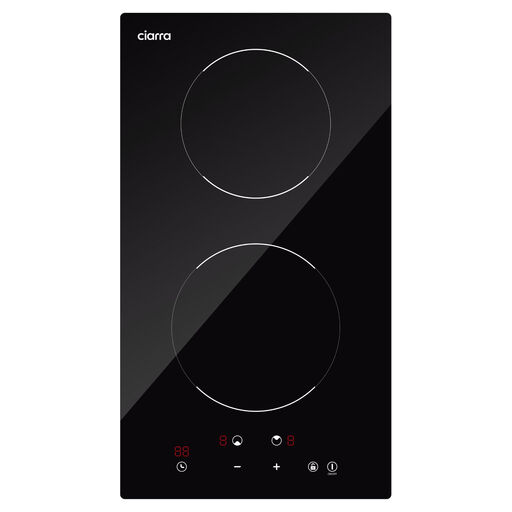 No image available
A built-in option to consider if a planned refit calls for two cooking zones.
The named variant has nine power levels and a timer. Check the required worktop cut-out, electrical installation and cookware requirements for each zone.
 No image available
A built-in option to consider when a refitted shared kitchen needs several pans in use.
The product name identifies four zones and modular power control. Confirm property approval, worktop dimensions, electrical suitability and the pan-size requirements for the zone you intend to use.
It will work only if it is induction-compatible and its base meets that hob’s size requirements. Tefal UK specifies a pan diameter of 12–26cm for the IH210840; check the requirements for the exact model you are considering.
No: stay nearby while the hob is on, even if it has a timer or an automatic programme. Electrical Safety First advises against leaving electrical appliances on and unattended, and Tefal UK warns that small quantities of liquid may boil dry.
Only use an arrangement suitable for the hob and every other connected appliance; do not assume an available extension lead is adequate. Electrical Safety First advises against overloading extension devices or daisy-chaining leads. Check the marked ratings and do not use damaged or overheating equipment.
Not necessarily. GOV.UK’s March 2025 guidance says Great Britain continues to recognise CE marking for qualifying electrical goods alongside UKCA under the Electrical Equipment (Safety) Regulations 2016. The guidance notes that different provisions apply in Northern Ireland, so do not extend the Great Britain marking conclusion there.