An induction hob is a sensible choice for browning chicken, lowering the heat for a fricassee sauce and cooking sides at the same time, provided your pans are compatible and the zones fit them. Consider a five-zone or bridged layout if you regularly use several large pans; ceramic lets you keep non-magnetic cookware but offers less responsive heat changes, according to Bosch and Siemens. Check the worktop cut-out and electrical requirements before choosing either type.
Who is choosing the hob?
Dinner-party multi-pan cooks
If chicken, sauce and sides need heat at once, look beyond the number of marked zones to the space available for your actual pans. A five-zone or bridged layout may help with larger cookware; AEG UK describes bridgeable areas on its 80 cm induction models.
Cooks focused on sauce control
Moving from browning to a gentle simmer puts control at the centre of the decision. Siemens describes responsive induction heating and offers frying assistance on selected models, so check which controls the particular hob provides.
Kitchen-retrofit buyers
An existing cut-out, electrical arrangement or collection of pans may decide what is practical. Bosch notes that induction needs magnetic cookware, while individual built-in hobs have their own dimensions and connection requirements.
What matters when choosing?
Start with the pans you need on the hob together, then decide how much heat control matters for the sauce. Before settling on a layout, check that both the cookware and the kitchen can accommodate it.
| Concern |
What to check |
Who this matters to |
| Pan capacity |
Compare the zone diagram and pan positions with your largest sauté pan, sauce pan and pans for sides; check which zones a bridge function joins. |
If several dishes need separate heat at once, crowded pan positions could hold up the meal. Around 36% of consumers put simultaneous pan capacity first. |
| Heat control |
Compare the available controls for lowering heat after browning; check any frying or temperature-assistance feature on the exact model. |
When I move from searing chicken to simmering a sauce, I want to adjust the heat without an awkward delay. Roughly 29% of consumers make that control their primary concern. |
| Kitchen and pan fit |
Check the installation sheet for the cut-out, clearances, electrical load and connection method; test existing pans with a magnet if considering induction. |
Keeping valued pans and avoiding a hob that cannot fit the kitchen can matter more than an extra zone. About 21% of consumers put compatibility first. |
| Cleaning and extraction |
Read the glass-care instructions and compare the available space for a separate hood or a venting hob. |
After sauce splashes and cooking odours, I want a manageable clean-up and an extraction arrangement that fits the kitchen. Around 14% of consumers prioritise those needs. |
Mistakes to avoid
-
Assuming four zones will fit four large pans
A wide sauté pan can restrict access to neighbouring zones even when each zone has its own control. Bridgeable areas help with particular cookware shapes, but they do not create more independent heat settings.
Compare your pan bases with the model's zone diagram and check which positions remain usable together.
-
Choosing induction without checking the pans
Bosch states that induction needs magnetic cookware. A pan that works on a ceramic hob may therefore be unsuitable for induction.
Test the bases of the pans you intend to keep with a magnet, then consult the hob's cookware guidance for size requirements.
-
Treating a hardwired hob as a plug-in replacement
AEG UK lists its SK85IM0XFB 80 cm model as hardwired, with a 7,350 W total electrical load and a 750 x 490 mm cut-out. Those figures do not establish whether it fits a particular kitchen or circuit.
Take the installation sheet and your kitchen measurements to a qualified electrician before ordering.
Changes to the worktop or electrical circuit may be needed for the chosen model.
-
Overlooking the space below a venting hob
Bosch notes that an integrated venting hob needs additional room beneath the worktop. That can conflict with drawers or the intended cupboard layout.
Compare the installation diagram with the cabinetry and extraction plan before choosing a venting model.
Making room for the housing may mean altering cabinetry or giving up storage space.
Brands and model ranges to compare
AEG
Relevant if an 80 cm induction hob with bridgeable cooking areas suits your pans and worktop.
- AEG UK lists five zones and two bridgeable areas for the SK85IM0XFB.
- That model is hardwired, lists a 7,350 W total load and requires a 750 x 490 mm cut-out; check its installation sheet against your kitchen.
Bosch
Relevant when deciding whether induction, ceramic or integrated venting fits the kitchen and cookware.
- Bosch describes induction options with combinable zones and ceramic options for non-magnetic cookware.
- Features vary by model, and Bosch says venting hobs need additional space below the worktop.
Siemens
Relevant if you want to compare induction widths and model-specific controls for browning and simmering.
- Siemens describes induction models in 60 cm, 80 cm and 90 cm widths, with frying assistance and powerBoost on selected models.
- Check the exact model's features rather than assuming that a sensor or boost function is included across the range.
NEFF
Relevant if flexible induction space and the control arrangement are important to your choice.
- NEFF describes the 80 cm T58TT20N0 with five zones, a flexible cooking area and a removable TwistPad control.
- NEFF's technical overview does not list a frying sensor for that model, so check other models if that feature matters to you.
Joybuy hob choices
These electric hobs offer different ways to allocate pan space for chicken, sauce and sides. Compare their cooking surfaces and controls, then check the installation requirements of the model you are considering.
 No image available
Belling IHL773 BLK 77 cm induction hob with flexible bridge
Consider this layout if you need separate positions for dinner-party pans and a bridge option for larger cookware.
The product title specifies four cooking zones, touch controls and a boost mode. Induction requires magnetic pans; compare your pan sizes with the zone layout and have the installation requirements checked against your kitchen.
View on Joybuy
 No image available
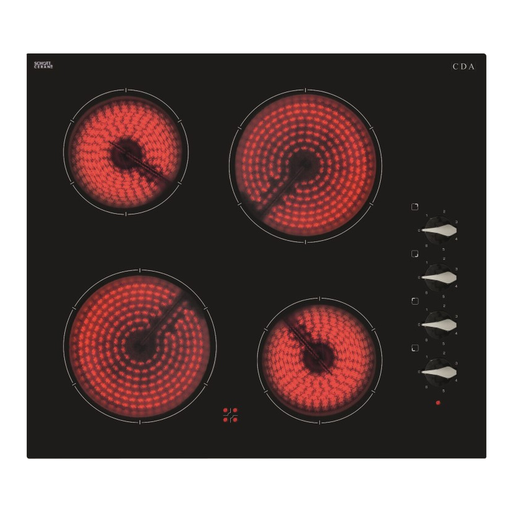
CDA HC6212FR 60 cm four-zone ceramic hob
Consider ceramic if keeping non-magnetic pans matters more to you than the quicker heat changes associated with induction.
This is a frameless, four-zone ceramic model. Check the installation sheet for exact dimensions and electrical requirements, and compare the zone positions with your larger pans.
View on Joybuy
 No image available
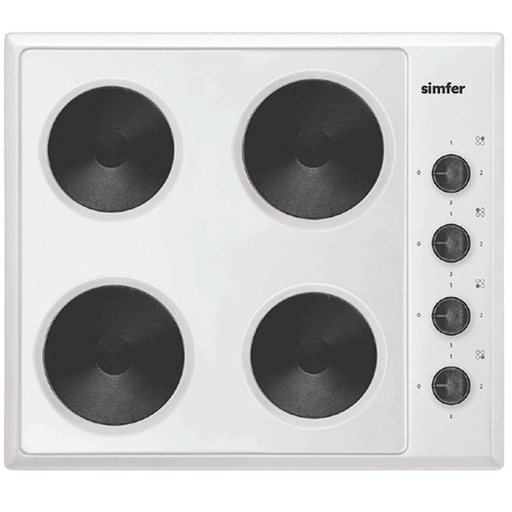
Simfer SP60W 60 cm white solid-plate electric hob
Consider this solid-plate format if separate pan positions matter and you are comfortable managing the sauce heat without relying on induction-style response.
The product title identifies a built-in 60 cm model. Its plates can remain hot after switch-off; check the cut-out, electrical requirements and pan spacing before choosing it.
View on Joybuy
Common questions
Is induction or ceramic more suitable for chicken fricassee?
Induction is worth considering when moving promptly from browning chicken to a gentle sauce simmer matters most. It heats compatible cookware directly; Bosch and Siemens describe ceramic as slower to heat and cool, but ceramic allows you to keep non-magnetic pans.
Will I need new pans for an induction hob?
Only if the pans you want to use are unsuitable for induction. Bosch states that induction needs magnetic cookware, so test each pan base with a magnet and check the chosen hob's guidance on pan size.
Can an existing electric hob be replaced without changing the installation?
Do not assume a new hob will fit the same cut-out or electrical arrangement. Compare its installation sheet with the worktop and have a qualified electrician assess the connection and circuit, particularly for a hardwired model.
When does a venting hob make sense for dinner-party cooking?
A venting hob is worth considering when extraction at hob level suits the kitchen layout. Bosch notes that its housing needs additional space below the worktop, so check the cabinetry and extraction plan before choosing one.
How should I care for an induction hob's glass surface?
Follow the maker's cleaning instructions and wipe spills when the surface is safe to touch. Siemens advises against dragging rough-bottomed pans across its induction glass or using abrasive cleaners.


