One-pan cooks short on worktop space
If you normally cook risotto in one pan and want to clear the surface afterwards, a storable single-zone hob is a sensible starting point. Check its full width and depth as well as where it will go once cool.


For a small worktop, start with a portable single-zone induction hob that fits both your risotto pan and your storage space, with manual heat settings you can adjust while cooking. The NHS Healthier Families mushroom risotto method calls for a medium cook of 20–25 minutes, frequent stirring and gradual stock additions. A second zone is worth the extra space if you regularly want to keep stock warm in another pan; a built-in hob makes more sense when you want a permanent installation.
If you normally cook risotto in one pan and want to clear the surface afterwards, a storable single-zone hob is a sensible starting point. Check its full width and depth as well as where it will go once cool.
If you sauté mushrooms, toast the rice and then adjust the heat as stock goes in, look for manual settings you can change while stirring. A high maximum wattage alone tells you little about those adjustments.
If you regularly keep stock warm beside the rice or cook another dish at the same time, a second zone may justify its larger footprint or a permanent installation.
Choose when: One pan usually suffices and you want to put the hob away after cooking.
Trade-off: You need another way to prepare stock, and your pan must work with induction.
Choose when: You regularly want separate zones for the rice and a stock pan but still need a removable appliance.
Trade-off: The researched Judge dual-zone hob measures 33 × 55 cm, taking up more surface than the compact single-zone examples.
Choose when: You are planning a permanent kitchen installation and will regularly use more than one zone.
Trade-off: A built-in hob cannot be stored away to reclaim the worktop; its installation must suit the cabinet and electrical supply.
| Concern | What to check | Who this matters to |
|---|---|---|
| Worktop and storage space | Measure the hob’s width and depth against the usable surface, then check where it can be stored after cooling. | If I need the worktop for preparation between meals, I want a hob I can move out of the way. Around 40% of consumers put space and storage first. |
| Heat control | Look for manual power or temperature settings you can change while stirring; a timer can serve as a reminder. | When I add stock gradually, I need to manage the cook rather than rely on maximum output. Heat control comes first for around 40% of consumers. |
| Second-pan capacity | Decide whether you routinely need a separate stock pan, then measure the space required for both cooking zones. | I want stock warming beside the rice, or another dish cooking at the same time. Around 20% of consumers make two-pan capacity their primary concern. |
Induction requires a suitable magnetic pan base. Judge’s guidance for its JEA90 portable hob also excludes bases under 12 cm; that size limit should not be applied to every hob.
Check the pan’s induction marking or whether a fridge magnet sticks to its base, then compare the base diameter with the range stated for the exact hob.
An incompatible pan may need replacing even if it remains usable on your current cooker.
A high-output setting does not establish how easily you can manage the sustained medium cook and gradual stock additions in the NHS Healthier Families risotto method.
Compare the stated manual settings and how you would adjust them while stirring. Treat a boost function as an extra, not a substitute for controllable cooking heat.
A second zone provides room for a stock pan, but the researched Judge dual-zone model measures 33 × 55 cm. A built-in option is a different commitment from a hob you can put away.
Mark out the appliance footprint on your worktop and allow usable room to handle the pans before deciding how many zones you need.
A larger hob can leave less preparation space; a built-in choice also involves cabinet-installation work.
The NHS Healthier Families recipe calls for frequent stirring and stock added a little at a time. A timer cannot carry out either step.
Use it as a reminder while you stay with the cooking, and follow the hob manufacturer’s instructions for use and cleaning.
The researched Tefal portable single-zone models include the Everyday Slim IH210840 and Everyday IH201840.
The researched SDA2771 is a portable single-zone induction hob.
The researched Judge options include the portable JEA90 single hob and a larger double induction hob.
These options cover portable single-zone cooking when you want to clear the worktop, plus a built-in two-zone hob for kitchens where keeping stock in a second pan matters more than storing the appliance away. Check each model’s fit and cookware requirements before choosing.
 No image available
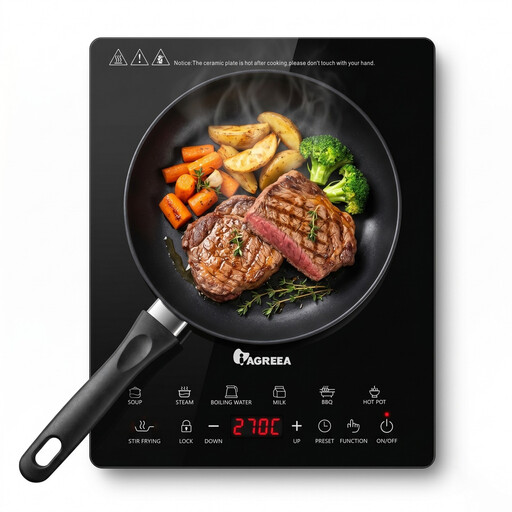
A single-zone option to consider if you want adjustable heat and plan to store the hob after cooking; check its full width and depth against your space.
The named variant lists eight power levels, 60–270°C temperature control, a three-hour timer and a 12–26 cm suitable cookware range. Check that your pan meets its induction requirements.
 No image available
For one-pan risotto, this portable model is worth considering if manual heat adjustment matters; measure the available worktop and storage space before choosing it.
The named variant lists ten power settings, six functions and touch controls. Confirm your pan’s compatibility and check whether the model has a timer if you want a cooking reminder.
 No image available
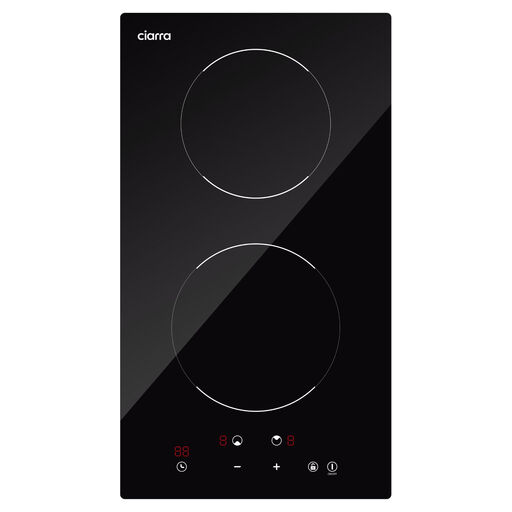
Consider this built-in option if you regularly want one zone for risotto and another for stock, and a permanent installation suits your kitchen.
The named variant lists 2900 W, nine power levels and a timer. Check the full installation dimensions, cabinet ventilation, electrical suitability and pan compatibility before buying; this hob cannot be put away after cooking.
Yes, if your pan is induction-compatible and the hob lets you manage the cooking heat. The NHS Healthier Families method calls for a medium cook of 20–25 minutes while you stir often and add stock gradually; a second zone is convenient for a stock pan, not essential to the rice pan.
Check its induction marking and whether a fridge magnet sticks to the base, as Judge’s portable-hob guidance suggests. Then check the base diameter against the stated range for the hob you intend to buy; Judge excludes bases under 12 cm for its JEA90.
Choose a second zone if keeping stock warm beside the rice is a regular part of your cooking and you have room for both pans. If you usually cook with one pan and need to clear the worktop afterwards, a portable single-zone hob is the more relevant starting point.
Follow the exact model’s instructions for installation, use and maintenance, as Electrical Safety First advises. For a portable hob, check that its placement leaves room to cook and handle pans; for a built-in model, confirm that the cabinet and electrical installation meet the manufacturer’s requirements before fitting it.