Single-pan cooks short on worktop space
If gravy is usually your only pan, a portable induction hob can be put away after it has cooled. IKEA describes its one-zone TILLREDA as movable and suitable for storage between uses.


For onion gravy made in one saucepan, a portable single-zone induction hob lets you clear the worktop after cooking, provided your pan has a magnetic base and you have a suitable place to use it. Choose a narrow built-in two-zone hob if you regularly need another pan alongside the gravy and can accommodate a permanent installation; a wider hob makes more sense for routine multi-pan cooking than for reclaiming worktop space.
If gravy is usually your only pan, a portable induction hob can be put away after it has cooled. IKEA describes its one-zone TILLREDA as movable and suitable for storage between uses.
A narrow built-in two-zone hob can accommodate gravy alongside another pan, but it still occupies worktop space and needs an installation plan. Bosch's two-zone domino model illustrates the format, although that referenced model is no longer available.
Manual power levels and a timer are worth checking if you adjust the heat while softening onions and simmering gravy. Functions such as a temperature probe depend on the exact model; Smeg lists one for its PIC01BLMUK portable hob.
Choose it when: You usually make gravy in one pan and want to clear the worktop afterwards.
Trade-off: It takes up counter space during cooking, offers one zone and needs induction-compatible cookware.
Choose it when: Gravy often cooks beside another pan and you want a narrow, permanent layout.
Trade-off: It needs a worktop cut-out and model-specific installation and ventilation planning; it cannot be stored away.
Choose it when: Gravy is one part of regular cooking with several pans at once.
Trade-off: A wider permanent hob gives up more worktop width than a narrow format. AEG lists both compact two-zone and larger multi-zone induction layouts.
| Concern | What to check | Who this matters to |
|---|---|---|
| Clearing the worktop | Measure the space available while cooking, and consider where a portable hob can be stored once cool. | If I make gravy in one saucepan, I want the counter back for other tasks afterwards; around 42% of consumers would put reclaiming worktop space first. |
| Adjusting the heat | Check the exact model's manual settings and timer, then consider whether its controls suit your saucepan and cooking method. | When softening onions and then simmering gravy, I want to adjust the heat without relying on maximum power; roughly 33% of consumers would make control their primary concern. |
| Cookware and fitting | Check pan compatibility and size for induction; for a built-in hob, obtain its installation diagram and ventilation requirements. | I want to keep using my saucepan or avoid a fitting plan that will not work in my kitchen; about 25% of consumers would prioritise compatibility and installation. |
A radiant ceramic electric hob is another route if keeping a non-magnetic saucepan is the deciding factor. Check the requirements of the particular model: a built-in ceramic hob still needs permanent space and installation planning.
A saucepan without a magnetic base may not work on an induction hob, even if it fits on the cooking area.
Test the base with a magnet and check the hob's supported pan-size range before choosing a model.
Keeping a non-magnetic saucepan may mean choosing a different hob type; otherwise, you may need an induction-compatible pan.
A compact top still needs a suitable cut-out, electrical installation and the clearances specified for that model. Bosch advises using the exact model's installation instructions.
Get the installation diagram before purchase and discuss the worktop, cabinetry and electrical plan with a suitable installer.
Allow for the practical work of preparing the cut-out and providing any required ventilation.
A trailing cable can interfere with work around water and hot surfaces. The instructions for IKEA's cited two-zone TILLREDA also prohibit extension cords and running its cable across working areas.
Follow the manual for your exact hob and position it so its lead can be kept away from the sink, hot surfaces and busy work areas.
The heat adjustments you use for onions and gravy also matter; a maximum-power figure does not tell you how a particular hob will behave at a gentle simmer.
Compare the exact model's manual controls and compatible pan sizes rather than treating wattage as the whole decision.
Its one-zone TILLREDA is an example of a portable induction hob intended to be moved and stored between uses.
The cited IH201840 is a portable single-zone option with manual controls.
Its referenced two-zone domino induction hob illustrates a narrow, permanent alternative to a portable unit.
Its UK induction range spans compact two-zone and larger multi-zone layouts.
Its PIC01BLMUK is a portable single-zone induction model with an external temperature probe.
These choices cover portable induction hobs for a single saucepan and a narrow built-in induction hob for cooking with two pans. Decide whether you need to put the hob away after use before comparing their controls.
 No image available
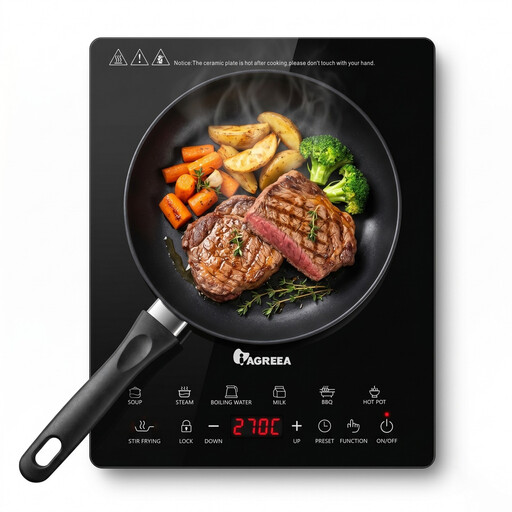
A portable option to consider if gravy usually uses one pan and you want to clear the worktop afterwards.
The title lists 2,000 W, eight power levels, a 60–270°C temperature setting range and a three-hour timer. It specifies cookware of 12–26 cm; check that your saucepan has a suitable magnetic base and that the hob fits your available counter space.
 No image available
This portable hob suits consideration when you cook gravy in one pan and want a unit you can move between uses.
The title lists ten power settings and six functions. Check the hob's footprint, supported pan sizes and whether its controls include the timing functions you want; induction requires compatible magnetic cookware.
 No image available
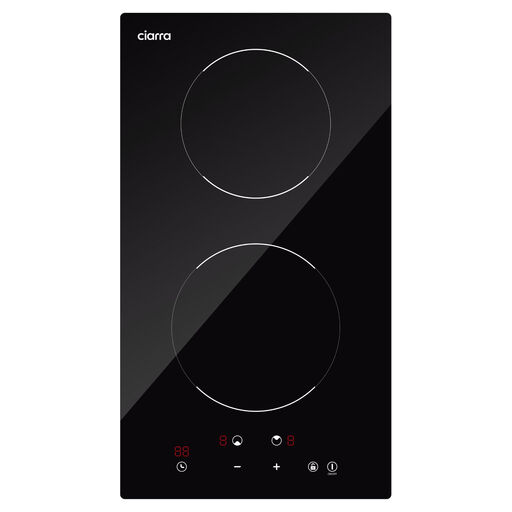
Consider this built-in format if you need a second cooking zone and can dedicate worktop space to a permanent hob.
The title lists two zones, 2,900 W and nine power levels. Check its exact cut-out and ventilation instructions with your installer, as well as cookware compatibility; this hob cannot be put away after cooking.
It needs a magnetic base and must fit the hob's supported pan-size range. Test the base with a magnet and check the exact model's requirements; the product information for the cited Tefal IH201840, for example, gives a 12–26 cm pan range.
Follow the instructions for the exact appliance rather than assuming an extension lead is suitable. The manual for IKEA's cited two-zone TILLREDA prohibits extension cords and cables crossing working areas; keep any portable hob's lead away from water and hot surfaces.
Obtain the exact model's installation diagram and ask a suitable installer to check the worktop, cabinetry, electrical connection and applicable local requirements. A narrow hob still needs a permanent cut-out, and Bosch notes that installation measurements vary by model.
Use the clearances in that model's installation manual, not measurements from another hob. Bosch says installation methods and dimensions vary by model, so have the proposed cabinetry checked against the instructions before the worktop is cut.