Frequent stir-fry cooks
If you regularly adjust the heat as vegetables go into the pan, assess induction first. Bosch describes induction as quicker to heat and easier to clean than radiant electric; you will still need compatible magnetic cookware.


Choose induction for vegetable stir-fry if responsive heat and easier wipe-down cleaning matter most, provided your pan has a suitable magnetic base and the hob fits your kitchen. Radiant ceramic is worth considering if keeping non-magnetic cookware is the priority. With either type, check the cooking-zone layout, pan fit and installation requirements before choosing a model.
If you regularly adjust the heat as vegetables go into the pan, assess induction first. Bosch describes induction as quicker to heat and easier to clean than radiant electric; you will still need compatible magnetic cookware.
If rice, sauces or other dishes cook alongside your stir-fry, look at the space between zones and where your pans will sit. A wider layout or bridge function may matter more to you than one zone’s stated maximum power.
If you want to keep using non-magnetic pans, consider a radiant ceramic hob. It heats through elements beneath the glass rather than heating a magnetic pan directly, so weigh cookware continuity against induction’s quicker heating as described by Bosch.
Consider it when: A flat-bottomed magnetic wok or frying pan is your usual stir-fry pan and a standard-width hob suits the worktop.
Trade-off: A four-zone layout may feel crowded when you use a large pan alongside several others.
Consider it when: You regularly use large or long cookware, or need more freedom to position several pans. AEG describes bridge zones that combine cooking areas; NEFF describes flex zones that detect cookware placement.
Trade-off: A bridge zone does not, by itself, make a round-bottom wok stable on a flat surface, and a wider hob needs an appropriately sized opening.
Consider it when: Keeping non-magnetic cookware is more important to you than induction’s direct pan heating.
Trade-off: Bosch describes induction as quicker to heat and easier to clean; check that the ceramic hob has a zone suited to your stir-fry pan’s base.
| Concern | What to check | Who this matters to |
|---|---|---|
| Heat response | Compare the intended zone’s stated diameter and power, and whether the model offers boost. | If I stir-fry often, I want to change the heat promptly as ingredients go in; around 33% of consumers would put heat response first. |
| Cookware fit | Test an induction pan’s base with a magnet; check whether your wok can sit securely on the particular hob. | I would rather keep my existing wok than replace it to suit a new hob. For around 27% of consumers, cookware fit would be the primary concern. |
| Space for other pans | Compare your usual pan arrangement with the zone layout, including any bridge or flex area. | When rice or sauce cooks alongside the vegetables, I need enough room for both pans; around 20% of consumers would prioritise pan space. |
| Installation fit | Check the installation diagram, worktop cut-out, connection type and electrical loading. | I do not want to choose a hob that cannot fit my worktop or existing supply. Installation fit would come first for around 20% of consumers. |
Induction needs magnetic cookware, while Which? notes that a round-bottom wok does not sit easily on a flat surface. More stated power will not fix a pan-material or shape mismatch.
Test the base with a magnet and check that the wok sits securely. If you use a round-bottom wok, look for a hob specifically designed to accommodate it.
Changing to induction may also mean replacing an incompatible wok.
A nominally suitable hob can still require a different worktop cut-out or electrical connection. AEG lists a 750 × 490 mm cut-out, 7,200 W total loading and hardwired connection for its 80 cm IKX84443CB Bridge model; those figures apply to that model, not every 80 cm hob.
Get the exact installation diagram and ask a qualified installer to assess the opening and electrical supply before ordering.
An unsuitable opening or connection can require worktop or electrical alterations before installation.
Bridge and flex functions address cookware placement, particularly for large or long pans. They are not automatically useful for a single conventional wok.
Picture your usual stir-fry pan and side pans on the published zone layout. Choose the extra flexibility when that arrangement calls for it.
Induction’s direct pan heating does not establish how well a particular zone fits your pan or whether its controls and installation suit your kitchen.
Compare the exact model’s zone dimensions, stated output, controls, cut-out and connection requirements rather than choosing on hob type alone.
A reference point for comparing induction with radiant ceramic built-in hobs.
Relevant when comparing a standard-width induction layout with wider bridge-zone options.
Relevant if you are considering a wider induction hob with flexible pan placement.
These built-in hobs cover standard-width induction, a wider bridge-zone induction option and radiant ceramic choices. Match the type to your cookware first, then compare pan space and installation fit.
 No image available
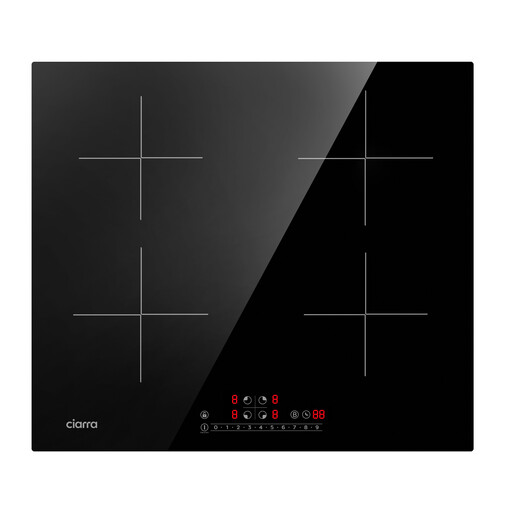
Consider this model for stir-frying with a compatible magnetic pan while keeping separate zones for other dishes.
The product name specifies touch controls, nine power levels and a booster function. Check the cooking-zone sizes against your pan and confirm worktop and electrical fit before ordering.
 No image available
Consider the wider layout if you cook with more than one pan or have a use for a flexible bridge area.
The product name specifies four zones, touch controls and boost mode. Check the opening and electrical requirements, and do not assume a round-bottom wok will sit securely on its flat surface.
 No image available
This standard-width induction option is worth assessing if your stir-fry pan has a suitable magnetic base.
The product name specifies a hardwired connection. Confirm the zone dimensions, worktop cut-out and electrical requirements for this exact model before buying.
 No image available
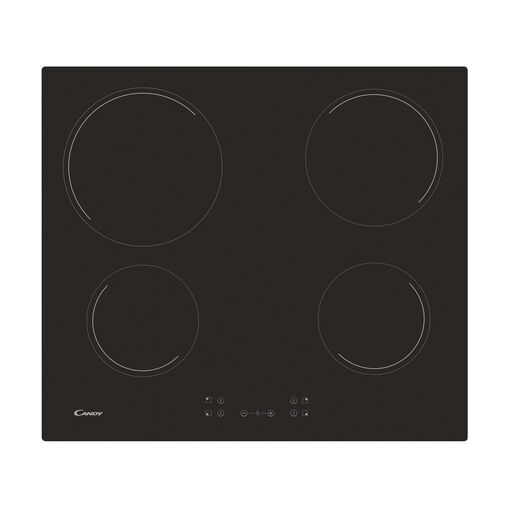
Consider radiant ceramic if keeping non-magnetic stir-fry cookware is more important than induction’s direct pan heating.
Check that a cooking zone suits the base of your pan, and compare the installation diagram with your worktop opening and electrical supply.
 No image available
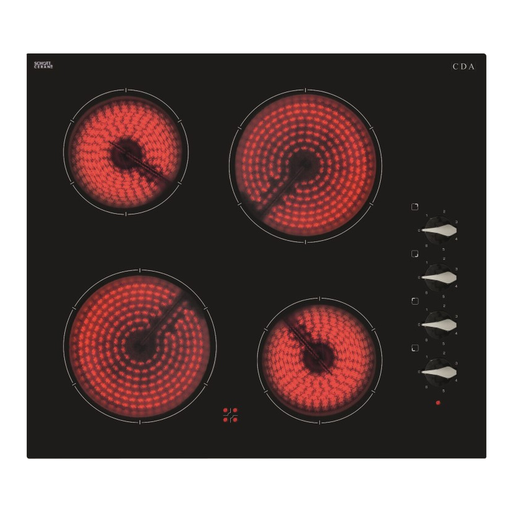
This radiant ceramic option suits a cookware-led choice when you want separate zones for a stir-fry pan and other dishes.
The product name identifies a frameless, four-zone model. Confirm the exact zone dimensions, controls, cut-out and electrical requirements for this variant before buying.
Choose induction if responsive heating and easier wipe-down cleaning take priority and your pan is compatible. Bosch describes induction as quicker to heat and easier to clean than radiant electric; ceramic remains a route if you need to keep using non-magnetic pans. For either choice, check pan fit and installation before settling on a model.
It can work if its base is magnetic and it sits securely on the particular hob. Test the base with a magnet; Which? notes that a round-bottom wok does not sit easily on a flat surface, although some induction hobs have a purpose-made wok indentation.
Not necessarily: a suitable single zone may be enough for one flat-bottomed pan. Bridge or flex functions become more relevant if you use large or long cookware or need greater freedom to arrange several pans; check the exact zone layout against the pans you use.
Measure the existing worktop opening and check the exact model’s installation diagram for cut-out, depth and clearance requirements. Also check its connection type and electrical loading rather than relying on a nominal width such as 60 cm or 80 cm.
The requirements depend on where you live and what installation work is needed. In England, GOV.UK’s Approved Document P explains electrical-safety and notification requirements for dwellings; confirm the route for your planned work with the relevant local authority or a qualified installer before it starts. Do not assume the same requirements apply throughout the UK.