
24/7 Customer Support

Free returns

Same-day & Next-day Delivery

Quality Guaranteed

Unlock Your Welcome Offers: FREE Delivery | Up to 80% OFF | Free 30-day JoyPlus trial
Download the APP
An electric hot pot can cover far more than shared hot pot meals. Depending on the design, it may also handle noodles, soup, rice, stir-frying, stews and steaming. For students, couples, families and people with limited kitchen space, a multifunctional electric cooking pot can reduce the need for several separate appliances.
However, product listings often make comparison difficult. Capacity may be measured differently, wattage does not always indicate practical suitability and a non-stick hot pot may not offer the same flexibility as a stainless steel model. Before buying, focus on the details that affect everyday use rather than relying on promotional wording.
A 5L or 7L label sounds straightforward, but the usable volume is lower once you allow room for bubbling soup, ingredients and safe stirring. A deep pot may also feel less convenient for shared dining than a wider design.
For small households, a compact 1.1–1.2L pot may be sufficient. For a family hot pot or party, a model between 5L and 7L is more suitable, provided your worktop has enough space and the electrical socket is positioned safely.
Wattage indicates electrical power consumption and potential heating output, not the full cooking experience. A 600W portable cooking pot may suit porridge, noodles and small portions, while a 1,500W or 1,600W hot pot cooker is more appropriate for quickly heating a large quantity of stock.
Higher wattage can also mean greater electricity use. To estimate running cost, multiply the appliance’s kilowatt rating by the number of hours used, then multiply by your electricity tariff. For example, a 1,600W appliance uses 1.6kWh if operated continuously for one hour. In real use, thermostatic controls and cycling may reduce the actual time at full power.
Non-stick coatings can make washing easier, but they require suitable utensils and careful cleaning. Metal tools, abrasive pads and overheating can shorten the useful life of the cooking surface. Stainless steel avoids a coating altogether, although food residue and mineral marks may require more attention.
Also check whether the main electrical body can be washed. In many designs, only the removable pot, lid or steam basket is suitable for washing; the powered base should never be immersed.
Choose according to the number of people and the dishes you expect to prepare:
A wider opening makes it easier to add ingredients and retrieve food with chopsticks or a slotted spoon. A deeper pot can help contain liquid, but check the total height if you plan to use it beneath wall cupboards.
A two-setting model may offer high and low heat for basic cooking. A variable control gives more flexibility for simmering, keeping food warm and switching between boiling and gentler cooking.
Look for clearly stated functions such as slow cooker, simmering, steaming or stir-frying rather than assuming every electric pot performs equally well in each mode. A glass lid is useful for monitoring food, but it should be handled carefully when hot and checked for included care instructions.
A non-stick hot pot is convenient for eggs, rice and sauces, but use non-metal utensils and avoid harsh cleaning products. Stainless steel is generally suited to boiling and simmering and does not depend on a non-stick layer. Some tri-ply stainless steel hot pots have composite bases that work on induction, gas, electric and ceramic glass hobs.
Remember that a hob-based divided hot pot is not an electric appliance. It requires a suitable hob, whereas an electric model needs a safe, accessible socket. For UK buyers, confirm the plug type, voltage and supplied instructions before ordering.
The following options match different household needs and cooking habits. Product specifications should be checked on the individual listing before purchase, particularly capacity, dimensions and care instructions.

Why This Fits Their Persona: The compact design suits students, couples, caravans and smaller UK kitchens. It includes a glass lid and steam basket and has high and low power settings.
The listing states a compact capacity for up to three people and gives dimensions, wattage and cable length. Note that the product name says 1.2L while the specification states 1.1L, so confirm the current listing before ordering.
600W high setting, 300W low setting, non-stick interior, auto shut-off with dry-boil protection and dishwasher-safe glass lid and steam basket.
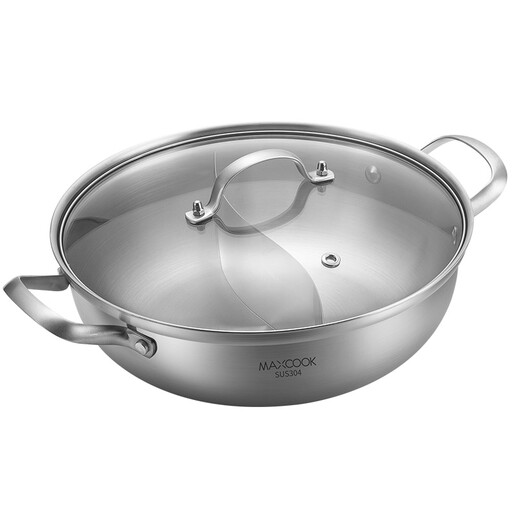
Why This Fits Their Persona: This hob-based option suits cooks who prefer stainless steel, shared dining and two broths in one pan. It is listed for use on induction, gas, electric and ceramic glass hobs.
There is no non-stick coating to damage with suitable utensils and the listing clearly identifies the 304 stainless-steel construction and compatible hob types.
28cm divided layout, dual handles, glass lid, tri-ply base and dishwasher-safe design. Hand-washing with a soft sponge is recommended for maintaining the finish.

Why This Fits Their Persona: The 7L capacity and 1600W rating are suited to group meals, larger families, stews and party dining where a small pot would need repeated batches.
Its capacity, 30.5cm opening and two heat modes are specified clearly. The wide design still requires a stable, heat-resistant surface and careful handling around children.
High and low heat modes, a titanium-uranium non-stick coating, heat-dissipation base and anti-scald structure. The listing specifies a UK plug.

Why This Fits Their Persona: This 5L model is sized for family meals and combines hot pot cooking with slow cooking, stewing and keeping food warm.
The listing provides rated voltage, power, dimensions and operating modes, allowing a more practical comparison than a generic “multi-cooker” label.
1500W power, stepless power selection, detachable power cord, glass lid, non-stick interior and dry-burn protection.
Choose an electric hot pot if you want a self-contained appliance for a student room, rented flat, caravan or kitchen with limited hob space. It can also leave your main hob available for other dishes during a larger meal.
A hob-based model may suit you better if you already have an induction-compatible hob and want a pan that can also be used for ordinary boiling and simmering. A divided hot pot is particularly useful for serving two soup flavours, while a non-divided electric pot generally provides more open cooking space.
For an easy present, a hot pot gift set can be convenient because it may combine an electric cooker, soup bases, sauces and ingredients. Check allergens carefully: the Haidilao set lists soy, cereals containing gluten, peanuts and sesame and its individual components may have separate storage instructions.
We have compiled a complete, real-time list of products that fully satisfy these strict selection criteria and UK safety regulations.
It depends on the appliance’s wattage, cooking time and your electricity tariff. Compare the rated power in kilowatts and the length of each cooking session. A smaller pot may use less electricity for a small portion, while a larger model may be practical when cooking for several people.
Only if the product is designed for hob-based use and specifically states induction compatibility. The MAXCOOK tri-ply stainless steel models listed above are specified for induction, gas, electric and ceramic glass hobs. A plug-in electric hot pot does not need an induction hob, but it does need a suitable UK power connection.
Use wooden or silicone utensils, avoid overheating an empty pot, allow it to cool before cleaning and follow the manufacturer’s washing instructions. Never immerse the powered base, plug or cable in water. If the coating becomes visibly damaged, stop using the cooking vessel and check the product guidance.